
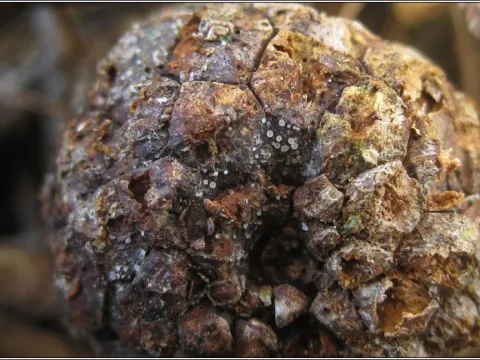
Arachnopeziza
Arachnopeziza
Arachnopeziza is a genus of ascomycete fungi within the order Helotiales. Primarily known as saprotrophs, these fungi can exhibit facultative parasitic behavior under specific conditions, affecting weakened plant tissues.
What the section contains
Arachnopeziza
The name of the genus is derived from Greek words referring to its spider-web-like mycelium and characteristic small, hair-covered apothecia (fruiting bodies) that emerge on the substrate.
Reproduction occurs mainly through wind-dispersed spores, which allow the fungus to colonize new areas rapidly, especially where plant debris provides a suitable nutrient source.
Biologically, these fungi produce enzymes that efficiently degrade complex organic matter like cellulose, which facilitates their survival on decaying stalks and leaves.
In agronomy, Arachnopeziza acts as a latent threat, capable of thriving on crop residues and potentially transitioning to living plants if environmental conditions remain favorable for fungal growth.
The initial symptom of infestation is the appearance of tiny, disc-shaped, yellow or ochre-colored fruiting bodies on the surface of plant stems or leaf sheaths.
A closer look using a magnifier reveals fine hairs (pubescence) on the edges of the apothecia, which is a key diagnostic feature for identifying this fungal genus.
As the infection progresses, the surrounding plant tissue exhibits signs of necrosis and discoloration, turning brown or dark as the internal structure of the plant begins to deteriorate.
High humidity often triggers the growth of a thin, white, web-like mycelium covering the affected areas, which significantly stunts the development of the host plant.
Severe infestations result in tissue softening and brittle stems, which can lead to premature wilting and collapse of the plant, significantly reducing overall vitality and yield.
The development of Arachnopeziza is strictly dependent on moisture levels, with prolonged periods of high humidity and rainfall being the primary catalysts for spore germination.
Cooler temperatures, typically experienced during spring or autumn, favor the reproductive cycles of this fungus, making early or late-season crops particularly susceptible.
Fields with heavy crop residue retention provide an ideal environment for the pathogen to overwinter and accumulate, leading to higher infection pressure in subsequent seasons.
Dense crop stands where air circulation is restricted create a microclimate of high moisture, which is extremely conducive to the rapid spread of the fungus among healthy plants.
Stress factors such as nutritional deficiencies or existing pest damage weaken the plant's natural defense barriers, allowing the fungal hyphae to penetrate the epidermal layers more easily.
The primary harm caused by Arachnopeziza is the destruction of the plant's conductive system, which disrupts the flow of water and nutrients, leading to significant yield losses.
Infested stems often suffer from structural failure, causing lodging in cereal crops, which complicates mechanical harvesting and degrades the quality of the harvested grain.
Fungal byproducts can spoil the quality of agricultural produce, making it highly susceptible to post-harvest decay and reducing its market value and storage stability.
In nursery settings, this fungus can infect seedlings, significantly lowering survival rates and increasing the costs associated with replanting and chemical maintenance.
The accumulation of inoculum in the soil poses a persistent problem for future rotations, necessitating long-term adjustments in soil management and disease prevention strategies.
Implementing a rigorous crop rotation program is the most effective way to break the pathogen's life cycle by eliminating its specific hosts from the field for an extended period.
Deep tillage and efficient incorporation of crop residues into the soil promote rapid decomposition, which effectively limits the fungus's ability to survive and produce new spores.
Balanced fertilization, particularly with appropriate phosphorus and potassium levels, helps strengthen plant cell walls, making them more resistant to fungal penetration.
Monitoring crop density and ensuring proper spacing between plants improves ventilation, which helps reduce the moisture levels required for the fungus to thrive and spread.
When infestation levels become critical, the application of registered fungicides targeting ascomycete fungi can provide control, provided that the label instructions are strictly followed.