
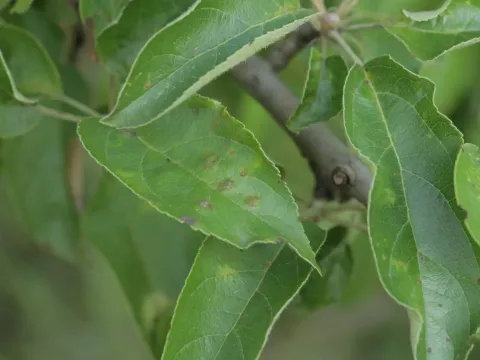
Apple phyllosticta leaf spot
Phyllosticta necatrix
The primary symptom of apple phyllosticta leaf spot is the appearance of distinct lesions on the leaves. These spots are initially small, circular, or irregular in shape, and display a brownish color.
What the section contains
Apple phyllosticta leaf spot
As the disease progresses, the center of the spot turns grey or ash-colored, contrasting sharply with the darker brown margin that surrounds the necrotic tissue.
Tiny black dots, which are the pycnidia (fruiting bodies) of the fungus, become visible to the naked eye on the surface of the infected leaf tissue, serving as a key diagnostic feature.
In cases of severe infection, individual spots merge to cover large areas of the leaf, causing the foliage to yellow, curl, and drop prematurely from the tree.
While the disease primarily targets the leaves, it can occasionally affect the petioles and succulent shoots, leading to localized dieback during periods of high humidity.
The causative agent of this disease is the fungus Phyllosticta necatrix, an ascomycete that thrives on the leaf tissues of various pome fruit species.
The fungus survives the winter primarily as mycelium and pycnidia within fallen leaves on the orchard floor, as well as in crevices on the tree bark.
Once conditions become favorable in the spring and summer, the pycnidia release spores known as conidia, which are disseminated by rain splash, wind currents, and mechanical contact.
The pathogen utilizes these spores to initiate new infections during the growing season, potentially causing multiple cycles of the disease if weather conditions remain conducive.
The fungus is highly adapted to the apple tree host, effectively utilizing its nutrient resources to proliferate and complete its life cycle within the foliage.
High humidity and consistent rainfall are the most critical factors driving the spread and development of phyllosticta leaf spot in apple orchards.
Temperatures ranging between 20°C and 25°C provide an ideal climate for the rapid germination of conidia and the subsequent colonization of host tissues by the fungus.
Poor orchard sanitation, such as failing to clear fallen leaves in the autumn, allows the pathogen to remain present and ready to infect the trees in the following season.
Dense canopy structures resulting from insufficient pruning restrict airflow, creating microclimates with high humidity levels that favor fungal spore germination.
Orchards located in low-lying areas or regions with frequent heavy summer rains are statistically more prone to outbreaks of this disease compared to well-ventilated, drier sites.
The primary impact of the disease is the reduction of the leaf area available for photosynthesis, which prevents the tree from producing the energy required for optimal growth.
Premature leaf drop weakens the tree significantly, limiting its ability to accumulate carbohydrate reserves, which negatively affects cold hardiness during the winter months.
Fruit quality is often compromised indirectly, as the tree struggles to maintain proper nutrient levels for fruit development, leading to smaller or undersized yields.
Constant stress from fungal infection can lead to a long-term decline in tree vigor, making the orchard more susceptible to secondary pathogens and pests.
The economic impact is manifested through both immediate losses in fruit volume and the long-term cost associated with intensive disease management and orchard recovery.
Effective sanitation is the cornerstone of control; removing and destroying infected leaf litter during the autumn significantly reduces the primary inoculum for the next year.
Proper pruning practices are essential to improve canopy ventilation, which allows leaves to dry out faster after rain and suppresses fungal growth.
Preventative fungicide applications, particularly those containing copper, are recommended during the early development stages to create a protective barrier on leaves.
If an outbreak occurs, systemic fungicides should be applied according to local agricultural guidelines to arrest the spread of the pathogen through the canopy.
- Balanced fertilization to strengthen tree immunity.
- Regular monitoring of foliage throughout the summer.
- Use of certified disease-resistant apple cultivars.
- Disinfection of pruning tools between trees.