
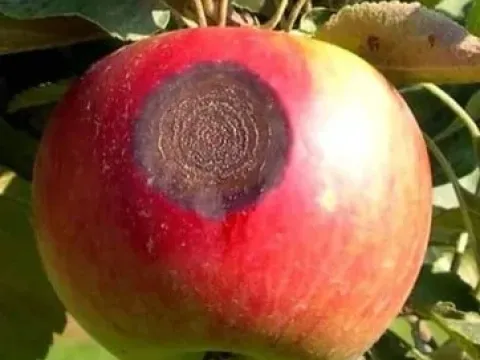
Apple leaf blotch
Alternaria mali
The causative agent of the disease is the fungus Alternaria mali (also known as Alternaria alternata f. sp. mali). It is a necrotrophic pathogen that primarily affects the foliage and fruit of apple trees, causing significant agricultural damage.
What the section contains
Apple leaf blotch
The pathogen overwinters as mycelium or spores within fallen leaves, mummified fruits left on trees, and in the bark crevices of branches. When spring temperatures rise and moisture levels increase, these dormant structures reactivate and begin the infection process.
Spore dispersal occurs via wind, splashing rain, and occasionally through agricultural equipment. Once spores land on susceptible host tissue, they germinate and penetrate the leaf surface directly or through natural openings like stomata.
Alternaria mali is known for producing specific AM-toxins that facilitate tissue colonization. These toxins disrupt cellular processes within the host, leading to rapid cell death and the characteristic formation of necrotic spots on the plant's surface.
Genetic susceptibility varies widely across commercial apple cultivars. Some varieties are highly resistant, while others are extremely vulnerable, necessitating precise management strategies in commercial orchards.
Initial symptoms appear in early summer as small, dark, circular spots on leaves. As the disease progresses, these spots expand, often developing distinct concentric zones and a yellowish halo around the edges.
In high-humidity conditions, a dark, velvety growth composed of fungal spores can be observed on the surface of the lesions. Severe infection leads to premature leaf yellowing and heavy defoliation, significantly stressing the tree.
Fruit symptoms typically manifest as dark, depressed lesions during the ripening stage. These spots can penetrate the flesh of the apple, causing decay that renders the fruit unsuitable for fresh market sale or long-term storage.
On young shoots, the infection may cause reddish-brown lesions or cankers. These areas can girdle the branch, leading to dieback and reduced vigor of the canopy, which further compromises the overall tree health.
Early identification is crucial for effective disease management. Growers are advised to scout the lower and inner canopy regularly, as these areas often show the first signs of the disease due to higher humidity levels.
The development of Alternaria mali is highly dependent on environmental conditions. Optimal infection occurs under warm temperatures ranging from 20°C to 28°C, combined with prolonged periods of leaf wetness or high relative humidity.
Frequent rainfall or persistent morning dew provides the ideal moisture required for spore germination. Consequently, years with high summer rainfall often see more severe outbreaks of apple leaf blotch.
Orchard management practices, specifically those related to canopy density, play a significant role. A dense canopy prevents proper airflow, keeping foliage damp for longer periods and creating a perfect microclimate for the pathogen.
Poor soil health and nutrient imbalances, particularly deficiencies in potassium or calcium, can weaken the tree's internal defense systems, making them more susceptible to fungal invasions.
The presence of excessive debris under the trees provides a permanent reservoir for the fungus. Failing to clear this material ensures a high inoculum pressure every year, perpetuating the cycle of the disease.
The primary economic harm results from severe defoliation, which limits the tree's ability to photosynthesize. This results in reduced fruit size, poor fruit quality, and insufficient energy reserves for the following season's bud development.
Fruit infection leads to direct crop loss. Apples with lesions have little to no commercial value, and any infected fruit that makes it into storage can spread decay to healthy neighboring fruits.
Chronic infection weakens trees over time, leading to reduced growth and decreased longevity of the orchard. This forces growers to implement more aggressive and costly maintenance programs.
Secondary growth stimulated by early leaf drop is often unable to mature before the winter, making branches prone to frost damage. This can lead to significant mechanical loss of productive wood during harsh winters.
The increased reliance on intensive fungicide programs to control Alternaria mali raises production costs and creates regulatory challenges concerning chemical residues and environmental sustainability.
Integrated pest management (IPM) is essential for controlling Alternaria mali. This includes selecting resistant cultivars, improving site drainage, and maintaining an open canopy through diligent pruning.
Sanitation practices are fundamental; removing fallen leaves and pruning out infected twigs reduces the primary inoculum source significantly. Keeping the orchard floor clean is a vital preventative step.
Chemical control programs should focus on protective sprays applied before and during periods of favorable weather for the disease. Using a rotation of different fungicide classes is key to preventing the development of resistant fungal strains.
- Apply copper-based fungicides in the early spring as a preventive measure.
- Utilize systemic fungicides like strobilurins during high-risk periods of rapid growth.
- Ensure thorough coverage of the canopy, especially the interior and lower sections.
- Monitor for disease progression to adjust spraying frequency as needed.
Proper mineral fertilization helps maintain tree vigor and structural integrity. Balancing nitrogen application prevents overly succulent, tender growth that is more easily penetrated by the fungal mycelium.