
Boletus dupainii
Boletus dupainii
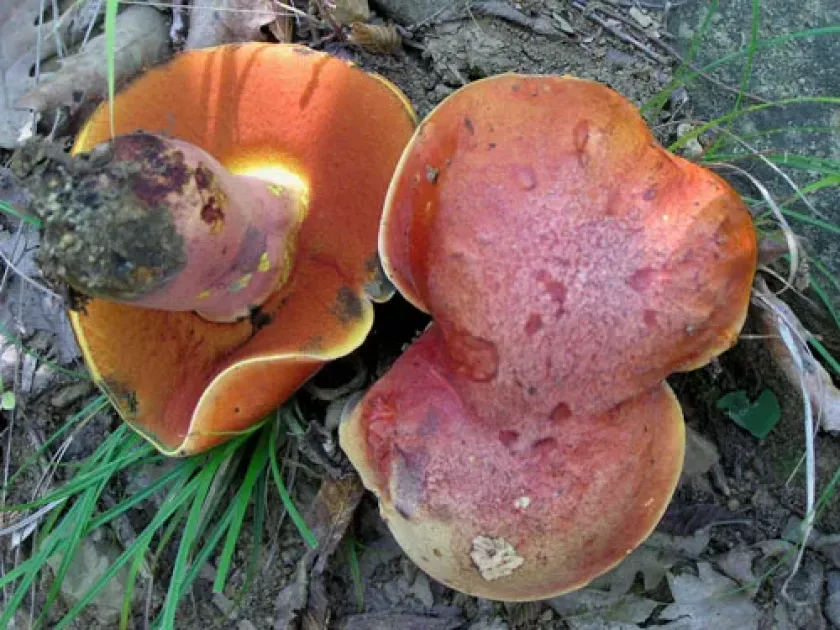
Description
Pathogen
Boletus dupainii is a rare and distinct mushroom species belonging to the Boletaceae family. It is vital to clarify that it is not a plant pathogen or a disease-causing agent for crops.
This fungus exists strictly as a mycorrhizal partner in forest ecosystems. It forms mutually beneficial associations with the roots of certain tree species, primarily hardwoods like oaks.
Unlike parasitic fungi that degrade plant tissues, Boletus dupainii assists trees in nutrient uptake by expanding the reach of their root systems through its extensive mycelial network.
The fungus is highly regarded in the mycological community and is considered rare, often protected under regional conservation laws due to its specific habitat requirements.
Consequently, there are no pathogenic symptoms associated with this fungus, and it requires no control measures within an agricultural or botanical context.
Conditions for development
The development of Boletus dupainii is highly dependent on mature, undisturbed deciduous forest environments where it can establish its symbiotic relationships.
Specific soil chemistry, including a high content of organic matter and leaf litter, is essential for the survival and expansion of its underground mycelium.
Humidity and temperature are major environmental factors, as the fruiting bodies typically emerge during warm, moist periods in the summer and autumn months.
The species prefers sun-dappled forest clearings where the ground temperature is favorable for fungal sporulation and growth without excessive exposure to dry air.
Any disruption to the delicate balance of the forest soil, such as compaction or chemical contamination, is detrimental to the survival of this sensitive fungal species.
Discussion
No discussions yet — be the first.