
Boletopsis leucomelaena
Boletopsis leucomelaena
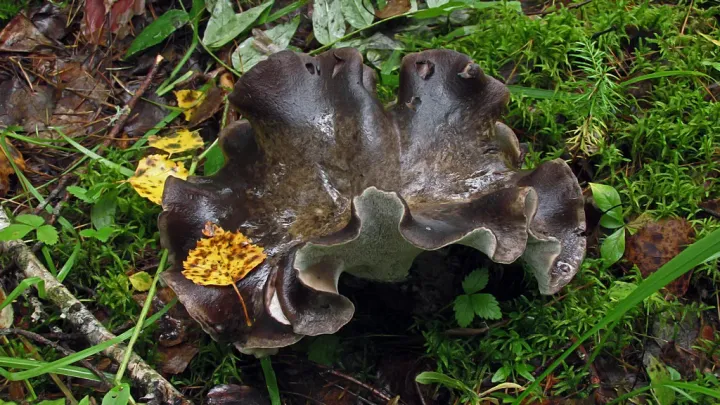
Description
Symptoms
The presence of this fungus is only identifiable during the fruiting season, when the mushrooms appear above the forest floor.
The cap typically exhibits a distinctive black-and-white mottled appearance, often with a wavy or lobed margin that becomes more pronounced as the fungus matures.
The underside of the cap, or the hymenium, consists of fine, white to greyish pores that are quite dense and contribute to the mushroom's solid feel.
Unlike parasitic fungi that cause tissue necrosis or lesions, this species does not induce any visual symptoms of decay or distress in the host trees.
Observation of the species is largely restricted to old-growth coniferous forests with undisturbed, high-quality soil conditions.
Pathogen
Boletopsis leucomelaena is a species of fungus in the family Bankeraceae. It is essential to clarify that this fungus is not a plant disease or a pathogen in any agronomic sense.
This species functions as an ectomycorrhizal partner, forming symbiotic relationships with the root systems of coniferous trees, particularly pine and spruce species.
The fungus provides the host tree with essential minerals and water gathered through its mycelial network, while in exchange, the tree supplies the fungus with carbon compounds.
The fruiting body of this mushroom is characterized by a firm, fleshy to woody texture that maintains its structure long after maturity.
Ecologically, the species is considered a beneficial organism that contributes to the nutrient cycling and overall health of forest soils.
Conditions for development
The species requires a highly specific ecological niche, characterized by stable climatic conditions and a healthy symbiotic relationship with long-lived conifers.
It prefers acidic soils with a substantial layer of forest litter, which provides the necessary moisture and environment for the extensive mycelium.
Sensitive to environmental changes, the fungus is highly vulnerable to nitrogen deposition, heavy metal pollution, and changes in soil pH caused by industrial activity.
Successful fruiting is dependent on consistent autumn precipitation and temperature ranges that allow the fungus to remain active in the substrate.
Fragmentation of its habitat and human-induced soil compaction are primary factors that inhibit its growth and development in wild areas.
Why it matters
Boletopsis leucomelaena does not cause any harm to agricultural crops, ornamentals, or commercial timber plantations.
It is not categorized as a pest or a disease, and there is no economic loss associated with its presence in the forest environment.
On the contrary, its role in nutrient exchange makes it a vital component of the ecosystem, supporting the vitality and resilience of forest trees.
There is no evidence suggesting that this fungus causes root rot or any form of degradation to the woody plants with which it associates.
In various conservation contexts, it is the fungus that requires protection from human activity, rather than the plants needing protection from the fungus.
Protection
No control measures are necessary, as the presence of this fungus is a positive indicator of ecological health in coniferous forests.
Management practices should focus on habitat conservation, such as minimizing soil disturbance and avoiding the use of broad-spectrum chemical inputs in its proximity.
The protection of the forest floor, including leaf litter and undisturbed soil profiles, is the best method to ensure the survival of this species.
There is no requirement for fungicides or any other prophylactic treatment, as the species is ecologically neutral to beneficial in all human-managed systems.
Educational efforts should emphasize that this fungus is a protected element of biodiversity and should be preserved in its natural environment.
Discussion
No discussions yet — be the first.