
Bolbitius
Bolbitius
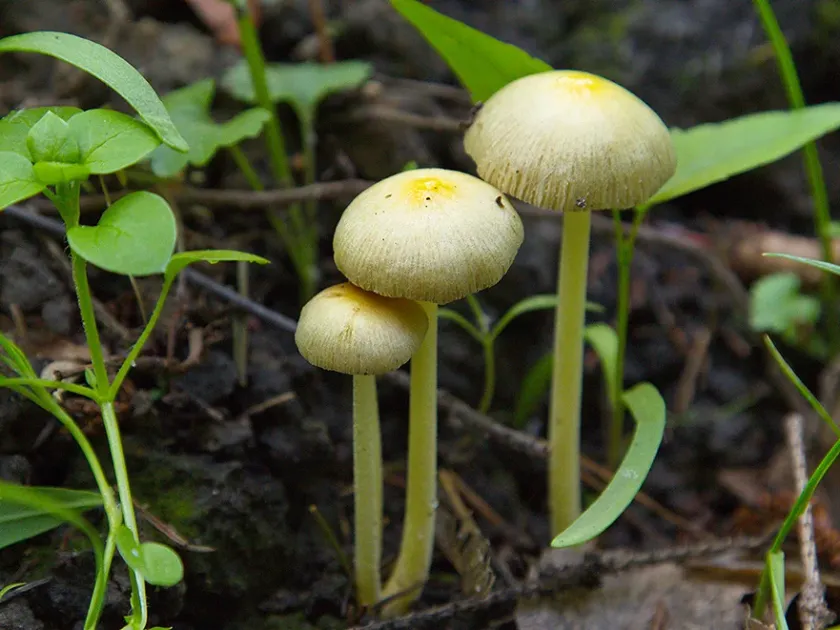
Description
Symptoms
The most visible sign is the sudden emergence of small, delicate fruit bodies after periods of heavy rainfall.
The caps of the mushrooms are typically yellow or ochre in color and have a fragile, membrane-like texture that quickly dries out in sunlight.
These mushrooms grow either individually or in small clusters directly from the soil or from compost piles and manure-rich areas.
The fruit bodies are short-lived and usually collapse or disintegrate within a day or two, especially under direct sunlight or heat.
Their presence is a visual indicator of high soil microbial activity rather than a sign of pathology or plant stress.
Pathogen
It is critical to understand that Bolbitius is not a plant disease, nor is it a pathogen. It is a genus of mushrooms that functions primarily as saprotrophs, living on decomposing organic matter.
The mycelium of these fungi grows exclusively in substrates rich in decaying plant material, humus, or manure, breaking down complex organic compounds into nutrients.
They lack the biological mechanism to infect or derive nutrition from living plant tissue, meaning they cannot cause any form of plant disease.
The most well-known species, Bolbitius titubans, is commonly found in gardens, pastures, and fields where high-quality organic matter is present.
Therefore, treating Bolbitius as a plant disease in agricultural documentation is a misclassification, as these fungi are strictly decomposers.
Conditions for development
The development of Bolbitius is primarily driven by high moisture levels, which are essential for the growth of the fungal mycelium.
Frequent rainfall or irrigation, combined with the presence of organic debris, provides the ideal environment for the mushrooms to sprout.
A sufficient quantity of carbon-rich substrate, such as rotting straw or organic garden mulch, is required for the mycelium to establish itself.
The fungi typically appear during moderate weather conditions, often in the spring and summer months when humidity remains elevated.
The absence of soil-disrupting chemicals allows these fungi to naturally inhabit the top layer of the soil where organic matter is readily available.
Why it matters
Bolbitius does not pose any threat to agricultural crops; it does not cause wilting, lesions, necrosis, or any other signs of plant sickness.
In fact, their role in decomposing organic material helps cycle nutrients back into the soil, potentially benefiting plant growth over the long term.
There is no evidence that Bolbitius competes with crops for water or nutrients, as its ecological niche is separate from that of living plants.
These fungi do not secrete toxins that could interfere with root development or the physiological processes of agricultural plants.
In essence, seeing Bolbitius in a field is a sign of a healthy, biologically active soil environment rather than a cause for concern for yield losses.
Protection
No agricultural control measures are required for Bolbitius, as it is a beneficial organism rather than a pest or disease vector.
If the appearance of mushrooms is considered unsightly, improving field drainage to prevent water stagnation is the most effective preventative measure.
Ensuring that fresh manure or organic fertilizers are well-composted before application will significantly reduce the appearance of these fungi.
Hand-picking or mowing the fruit bodies is sufficient if one wishes to remove them from a specific area for aesthetic reasons.
The use of fungicides to eliminate Bolbitius is highly discouraged, as it disrupts beneficial soil biology and offers no agronomic advantage.
Discussion
No discussions yet — be the first.