
Brown spot needle blight
Lecanosticta
Description
Symptoms
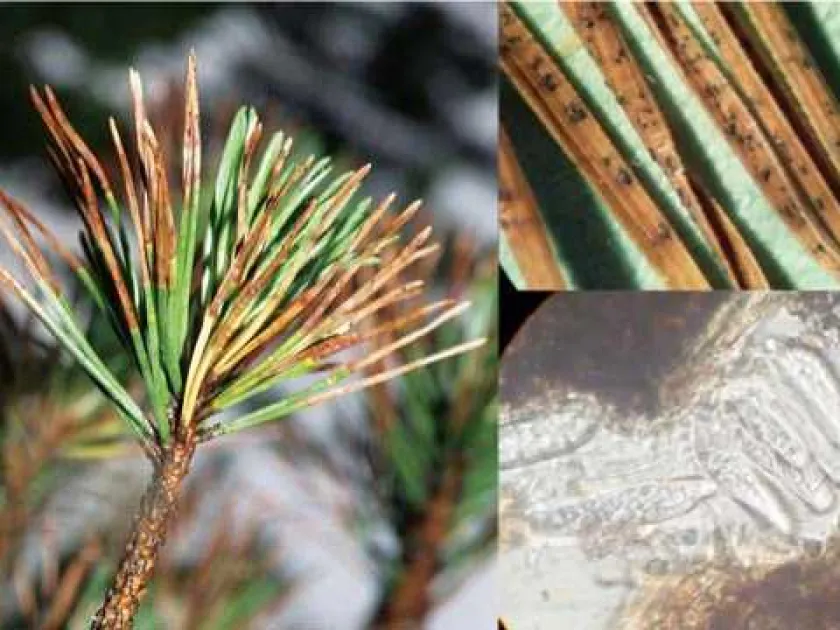
Initial symptoms include the appearance of small, yellowish-green spots on the needles, which eventually expand and turn reddish-brown or dark brown.
Distinctive dark transverse bands often form on the needles, causing the portion of the needle above the band to die and wither completely.
Needle shedding occurs prematurely, starting from the lower parts of the crown and progressing upward as the infection becomes more severe.
Black pycnidia appear on the necrotic tissues of the needles, which serve as a diagnostic feature to distinguish this disease from physiological browning.
In advanced stages, the tree crown appears sparse, and the overall growth rate is significantly reduced compared to healthy, uninfected specimens.
Pathogen
The causal agent of this disease is the ascomycete fungus Lecanosticta acicola (formerly known as Mycosphaerella dearnessii), which is a serious pathogen affecting pine species worldwide.
The fungus propagates through spores that are dispersed by wind and rain splashes, allowing the pathogen to spread across plantation areas during favorable weather conditions.
Inside the infected needles, the pathogen develops fruit bodies called pycnidia, which emerge as tiny black spots indicating the maturity of the fungal life cycle.
The fungus can survive for long periods in fallen needles and forest litter, making it a persistent threat that can initiate new infections every spring.
This pathogen is under strict quarantine regulation in many countries due to its potential to cause severe economic damage to nursery stock and forest ecosystems.
Conditions for development
High humidity, frequent rainfall, and moderate temperatures are the most critical factors driving the rapid development and spread of Lecanosticta acicola.
Plantations with low air circulation, such as densely packed nursery beds, provide the perfect microclimate for fungal spores to germinate and colonize the needles.
The accumulation of debris and old needles beneath the trees creates an ideal reservoir for the fungus to persist through winter and resume activity during the spring.
Trees experiencing stress from drought, poor soil fertility, or mechanical injury are far more susceptible to infection than vigorous, well-maintained trees.
Extended periods of cool, wet weather, particularly during the budding phase of pines, increase the risk of massive outbreaks significantly.
Why it matters
The disease causes significant needle loss, which impairs the tree's ability to photosynthesize, leading to a progressive decline in health and vigor.
Repeated annual infections can kill young saplings and cause permanent dieback in mature trees, eventually leading to the death of the entire plant.
For forestry and nursery operators, this disease results in substantial financial losses due to plant mortality and the necessity of expensive chemical treatments.
The aesthetic value of ornamental pines is completely lost once the foliage becomes brown and sparse, making them unsuitable for landscaping purposes.
Increased vulnerability to secondary pests and pathogens often follows a brown spot outbreak, as the weakened tree lacks the energy to repel subsequent attacks.
Protection
Sanitation is the most important control method: all fallen needles and debris must be raked and destroyed to remove the primary source of the inoculum.
Chemical control involves the application of copper-based fungicides or appropriate systemic fungicides during the early spring and early autumn growth cycles.
Improving air circulation through proper spacing and pruning of low-hanging branches can create an unfavorable environment for the fungal pathogen.
Maintaining tree vitality through balanced fertilization and adequate watering helps the plant develop stronger resistance against fungal pathogens.
- Regular inspection for early symptoms in spring.
- Removal and destruction of infected twigs and debris.
- Preventative fungicide spraying when conditions are humid.
Discussion
No discussions yet — be the first.