
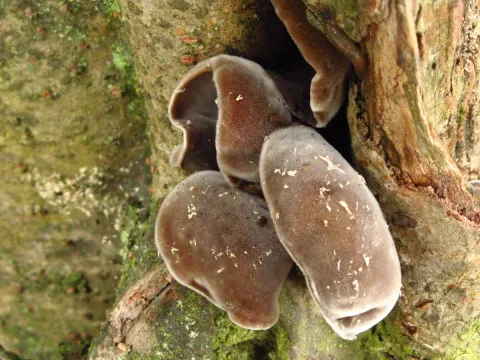
Auricularia polytricha
Auricularia polytricha
Auricularia polytricha is a species of edible jelly fungus in the Auriculariaceae family, which acts as a wood-decay pathogen causing white rot in various tree species.
What the section contains
Auricularia polytricha
The pathogen spreads through airborne basidiospores that settle on wounds, pruning cuts, or broken branches, allowing the mycelium to colonize the wood tissues.
Once established, the mycelium breaks down lignin and cellulose, which are the fundamental structural components of wood, leading to internal decay.
The fungus is characterized by its ear-like, reddish-brown to dark brown fruiting bodies, which have a distinctive hairy or velvety surface.
While often associated with dead or dying timber, it is a significant opportunistic pathogen that can severely impact the health and longevity of living landscape and orchard trees.
The most prominent sign of an infestation is the presence of gelatinous, ear-shaped fruiting bodies protruding from the bark of trunks or large branches.
Infected wood often displays visible symptoms of white rot, where the tissue loses its density, becomes bleached, and develops a fibrous or sponge-like texture.
Affected trees may exhibit progressive crown dieback, yellowing leaves, and a significant reduction in annual shoot growth as the internal vascular system fails.
Bark in the infected areas may eventually become brittle and peel away, revealing the white or grayish mycelial mats spreading beneath the surface.
- Velvety ear-shaped fruiting bodies
- Soft, bleached wood texture (white rot)
- Stunted growth and thinning canopy
Auricularia polytricha thrives in warm, humid environments, with optimal development occurring at temperatures between 20°C and 28°C and high relative humidity.
Excessive moisture in the wood, often caused by stagnant water, poor drainage, or physical injuries to the bark, provides an ideal environment for colonization.
Lack of proper aeration in dense plantings or overgrown orchards creates a microclimate that allows fungal spores to persist and germinate effectively.
Mechanical stress, including storm damage or improper pruning techniques, creates entry points that significantly increase the susceptibility of trees to infection.
Stressed trees, particularly those suffering from nutrient deficiencies or drought, lack the defensive vigor needed to compartmentalize and restrict the spread of the fungal mycelium.
The primary harm caused by this fungus is the loss of structural integrity, which significantly increases the risk of limb failure and trunk collapse under pressure.
Damage to the sapwood and vascular tissues disrupts the tree's ability to transport water and nutrients, eventually leading to tree death if left untreated.
Orchards face substantial economic losses due to the decreased yields and the necessity of removing large, established trees that have become structural hazards.
The fungus acts as a persistent source of inoculum in the environment, endangering nearby healthy trees through the continuous release of spores during rainy seasons.
Once the decay becomes advanced, the wood loses all economic value for timber or landscaping use, and the tree becomes a safety liability in inhabited areas.
Prevention starts with good arboricultural practices, such as clean pruning, disinfecting tools after each use, and avoiding unnecessary bark injuries.
Wounds larger than a few centimeters should be treated with appropriate sealants or wound paints to prevent spore entry and facilitate rapid healing.
Regular monitoring of the canopy and trunks allows for the early detection and removal of affected limbs, which is crucial for stopping the spread of the fungus.
Maintaining tree vigor through balanced fertilization and proper irrigation helps the tree's natural defense systems remain active against fungal pathogens.
In cases of severe infestation, the tree may need to be removed completely and the site sanitized to prevent the spread of spores to healthy neighboring vegetation.