
Auricularia cornea
Auricularia cornea
Description
Symptoms
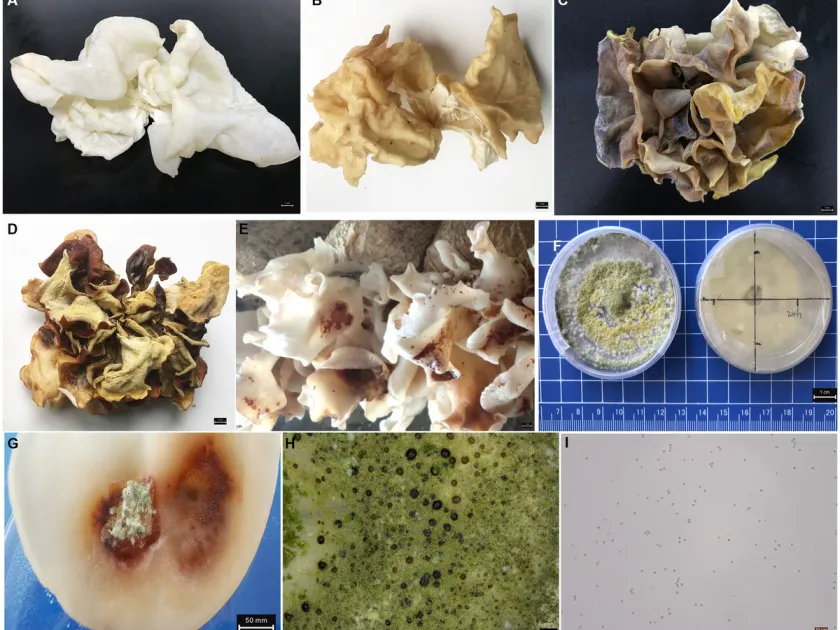
Visible signs of infestation include the appearance of small, gelatinous, ear-shaped structures clustered on the bark of trunks or larger branches.
The bark in the affected areas may appear discolored, loose, or cracked, often peeling away to reveal the mycelium growing underneath.
Internally, the wood undergoes structural changes, becoming soft, spongy, and brittle, which is indicative of advanced wood rot.
During periods of high humidity, the fruit bodies become very prominent, often appearing bright and slippery, covering large patches of the tree surface.
General tree health declines, often manifesting as sparse foliage, premature leaf drop, or stunted growth of the terminal shoots.
Pathogen
Auricularia cornea is a species of jelly fungus in the Auriculariaceae family. In agronomy, it is classified as a wood-decaying fungus that primarily targets weakened woody tissues.
This pathogen acts as a saprotroph, but it can aggressively colonize stressed or damaged trees, utilizing the wood as a substrate for its nutritional needs.
The fungus produces ear-shaped fruit bodies with a gelatinous texture, which eventually harden into a horn-like, rigid structure as the fungus matures or dries out.
It propagates via basidiospores that are spread effectively by wind, rain splashes, or insects throughout the growing season.
Biological degradation of the tree occurs through the secretion of enzymes that break down the complex lignocellulosic matrix of the wood.
Conditions for development
High humidity levels (above 70%) are the most critical factor for the successful colonization and growth of Auricularia cornea.
Moderate temperatures ranging from 15°C to 25°C provide an ideal environment for the mycelium to spread rapidly within the wood tissues.
Trees with existing open wounds, unsealed pruning cuts, or frost-damaged bark are highly susceptible to initial spore infection.
Poorly ventilated planting sites where moisture lingers on the bark surface are at a much higher risk of fungal outbreaks.
Environmental stress, such as waterlogging or nutrient deficiencies, weakens the natural defense mechanisms of the tree, making it vulnerable to the pathogen.
Why it matters
The primary damage caused by this fungus is the loss of structural integrity of the tree, creating a significant safety risk due to branch breakage.
Productivity in fruit trees is severely affected, as the pathogen interferes with nutrient transport, leading to lower yields and poor fruit quality.
The systemic weakness caused by the fungal infection makes the tree highly susceptible to other secondary pests and pathogens, accelerating tree death.
In forestry, the presence of the fungus significantly reduces the commercial value of the timber due to the internal decay of the woody tissues.
If left unmanaged, the continuous decay can eventually lead to the complete collapse and mortality of the affected tree within a few growing seasons.
Protection
Rigorous sanitation practices are essential, including the immediate removal and destruction of all infected limbs and dead wood from the site.
All pruning cuts and accidental bark wounds must be promptly sealed with appropriate wound dressings or antiseptic pastes to prevent spore entry.
Maintaining optimal tree vitality through proper irrigation and balanced fertilization programs can significantly improve the tree's natural resistance.
Physical removal of visible fungal fruit bodies is necessary to reduce the spore load in the immediate environment and limit further spread.
Preventative applications of copper-based fungicides can provide a protective barrier on the bark, preventing spore germination and subsequent colonization.
Discussion
No discussions yet — be the first.