
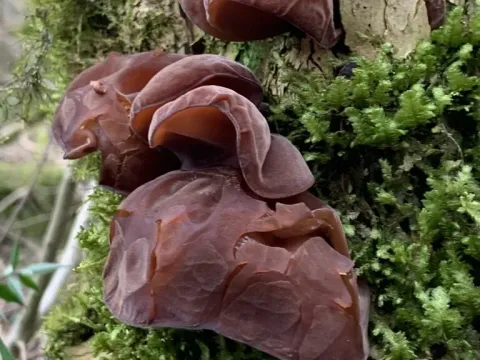
Auricularia
Auricularia
The disease is caused by fungi of the genus Auricularia. These are wood-rotting organisms (saprotrophic or weakly parasitic) that primarily target weakened, stressed, or decaying deciduous trees and woody debris.
What the section contains
Auricularia
In forestry and orchard management, this fungus is often identified as a secondary invader. It colonizes the internal tissues of the tree, breaking down complex organic compounds like lignin and cellulose, which eventually leads to structural loss.
The biological structure of the fungus is defined by its ear-shaped fruiting bodies. These bodies are gelatinous in texture when fresh and become hard or leathery when dry, allowing them to withstand various climatic shifts.
Propagation occurs primarily through basidiospores that are released into the air and dispersed by wind. Once these spores land on wounded bark or exposed wood, they germinate and begin to develop into a complex mycelial network.
The fungus grows deep within the trunk and branches, often remaining invisible to the observer for long periods. The internal colonization phase is crucial for the fungus's life cycle before it produces external reproductive structures.
The most prominent sign of infestation is the emergence of distinctive ear-shaped fruiting bodies on the bark of the trunk or branches. These are typically brown, reddish-brown, or dark in color.
Signs of wood degradation include soft, pulpy bark or bark that peels away easily from the tree. This indicates that the underlying cambium and sapwood have been thoroughly compromised by the fungal mycelium.
- Presence of clusters of ear-like fungal growths on trunks.
- Discoloration and localized rot in the woody tissue.
- Premature wilting of leaves during the growing season.
- Brittle branches that snap under minor pressure or wind.
In dry conditions, the fungal growths may shrink significantly, making them difficult to spot. However, after heavy rainfall or high humidity, they swell up and regain their recognizable shape, indicating the fungus is still active.
Internal rot can be confirmed if tapping the tree results in a hollow sound. This suggests that the fungus has hollowed out the core, leaving the structural integrity of the tree significantly weakened.
High humidity and consistent moisture are essential for the growth of Auricularia. It thrives in environments with frequent rainfall, fog, or in shaded areas where airflow is restricted, leading to high local humidity.
Wounds in the tree bark are the primary entry points for the pathogen. Damage caused by improper pruning, frost cracks, sunscald, or rodent feeding creates the perfect entry for fungal spores to colonize the tree.
Moderate temperatures, generally ranging from 15°C to 25°C, promote the fastest development of the fungal mycelium. While it can survive cold winters in a dormant state, active growth peaks during the temperate months.
Trees that are poorly managed, suffering from nutrient deficiencies, or enduring prolonged drought periods have weakened immune systems. This makes them significantly more susceptible to colonization compared to healthy, vigorous trees.
Poor orchard sanitation, such as leaving old stumps or decaying logs on site, acts as a primary source of inoculum. These debris items serve as continuous reservoirs that spread spores to surrounding healthy plants.
The primary harm is the destruction of the tree's vascular system and structural wood. This leads to the eventual death of branches or the entire tree, as the fungus disrupts the transport of water and nutrients.
Infected trees act as hotspots for disease spread. By releasing massive amounts of spores, they put all neighboring trees at risk of infestation, particularly if those trees already have minor wounds or scars.
Economically, the presence of these fungi reduces the overall productivity of orchards. A tree affected by rot redirects its energy towards survival and defense rather than fruit production, leading to smaller, lower-quality yields.
Structurally compromised trees pose a safety risk. Due to the degradation of the core wood, trees can fall unexpectedly during windstorms, which may cause damage to property or injury to individuals nearby.
The aesthetic and commercial value of the timber is completely lost once the decay sets in. Eventually, the owner is forced to remove the tree entirely to prevent the infection from spreading further.
Strict sanitation is the most effective control strategy. All infected branches or dead trees must be pruned or removed and disposed of immediately, preferably by burning, to eliminate the fungal source.
Proper pruning techniques are crucial. Always use sharp, sterilized tools and ensure that all pruning cuts larger than 2 cm in diameter are treated with a suitable antifungal wound paint to seal the tissue from potential infection.
Regular maintenance, including whitewashing trunks, helps protect the bark from environmental damage. Healthy bark acts as a natural shield, preventing spores from ever reaching the vulnerable inner wood.
Improving plant vigor through balanced fertilization and proper irrigation helps trees maintain their natural defenses. A healthy tree can often compartmentalize minor infections and prevent them from becoming lethal.
For early-stage infections, systemic fungicides may be applied to support the tree's health. However, successful management requires a long-term approach focused on reducing environmental stressors and removing potential points of entry.