
Description
Symptoms
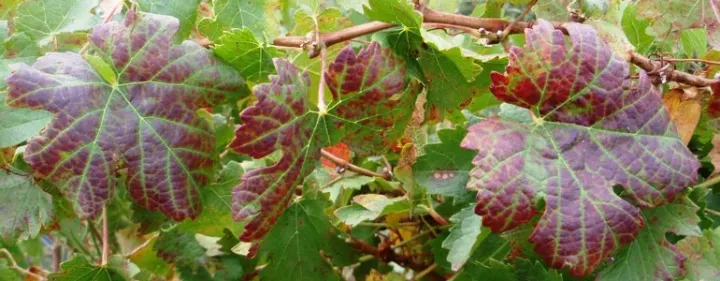
Initial signs of the disease appear during the period of active shoot growth. Leaves on affected vines begin to yellow (in white varieties) or turn red (in red varieties), with leaf margins curling downward, often resembling the shape of a small boat.
A key diagnostic feature is the failure of shoots to lignify. By autumn, the wood remains herbaceous, green, and watery, making the vines extremely susceptible to winter frost; they often die back even during mild cold spells.
Significant fruit set failure occurs, with massive flower and berry drop leading to severe yield losses. Remaining berries are small, often deformed, sour-tasting, and accumulate very little sugar, making them unsuitable for winemaking.
The root system of affected vines also deteriorates, with fine feeder roots dying off. Eventually, the overall weakening of the vine leads to its complete death over the course of several growing seasons.
Sometimes symptoms may be cryptic or confined to specific arms of the vine, which complicates visual diagnosis in early stages and promotes the spread of the infection within the vineyard blocks.
Pathogen
The causative agent of the disease is a phytoplasma belonging to the grapevine yellows group. It is an intracellular microorganism that parasitizes exclusively in the sieve tubes of the plant's phloem, disrupting the transport of essential nutrients and photoassimilates.
The disease is classified as a systemic phytoplasmosis. The infection spreads throughout all plant organs, moving via the vascular system from the initial inoculation sites to the root system and the tips of the shoots.
The primary vectors of the pathogen in natural conditions are insects from the order Hemiptera, specifically leafhoppers. By feeding on the sap of infected plants, they acquire the pathogen and transmit it to healthy vines during subsequent feeding sessions.
The phytoplasma can persist in the vector throughout its entire lifespan, ensuring the pathogen remains present in the vineyard environment. Within the vine, the pathogen overwinters in the roots and woody tissues, becoming active again when sap flow begins in the spring.
Unlike fungal diseases, Australian grapevine yellows is not transmitted mechanically during pruning, but it can be spread through the use of infected propagation material, such as cuttings and rootstocks.
Conditions for development
The spread of the disease is directly linked to the population density of insect vectors. The most intense spread occurs in years with favorable climatic conditions for leafhopper reproduction, especially during warm and humid periods.
High planting density and the presence of weeds in rows create an optimal microclimate for the survival of vectors. Weeds often serve as natural reservoirs for phytoplasma, maintaining the infection cycle throughout the year.
Active migration of insects between wild plant hosts and commercial grapevines accelerates the infection rate. Optimal temperatures for pathogen reproduction within plant tissues range between 20 and 28 degrees Celsius.
Neglected vineyards, where pest control is not implemented, are the most susceptible to the rapid spread of the disease. Furthermore, failing to monitor the quality of planting material leads to the constant introduction of new infection sources.
Poor agricultural practices that weaken the overall health of the vine make plants more susceptible to phytoplasma infection and speed up the manifestation of symptoms in an epiphytotic form.
Why it matters
The damage caused by Australian grapevine yellows is severe because the disease is incurable. Systemic damage to the vascular system leads to the gradual exhaustion of the vine and its inevitable death.
Economic losses arise from the total loss of yield on infected vines and the costs associated with grubbing out diseased plants. In cases of mass infection, large parts of the vineyard must be removed, requiring significant investment for replanting.
The quality of wine production drops to a critical level, as berries from affected vines lack the necessary sugar, acidity, and aromatic compounds required for premium wine production.
The disease disrupts the metabolic processes of the vine, hindering the accumulation of carbohydrates. This causes chronic plant stress, which reduces winter hardiness and resistance to secondary pathogens.
Economic efficiency is compromised due to continuous expenditures on monitoring and protection measures, which serve only to contain the spread rather than cure the already infected vines.
Protection
The primary method of control is strict adherence to phytosanitary regulations. Using exclusively certified, virus-free planting material is the best guarantee against introducing the infection when establishing new vineyards.
Regular monitoring of the vineyard allows for the timely identification of symptoms. All affected vines must be immediately removed and destroyed (burned) to eliminate the source of infection for the rest of the planting.
Controlling insect vectors is an essential part of the defense strategy. Applying insecticides during the peak activity of leafhoppers helps to significantly limit the transmission of the phytoplasma.
Maintaining high agricultural standards, including consistent weed control, helps eliminate infection reservoirs. Clean inter-row spaces make the vineyard less attractive to migrating leafhoppers.
- Use of healthy, certified nursery stock.
- Regular inspection of the vineyard.
- Removal and burning of diseased vines.
- Controlling leafhopper populations with insecticides.
- Eliminating weeds in and around the vineyard.
Pathogens and affected parts
Affects crops · 1
Discussion
No discussions yet — be the first.