
Auriscalpium vulgare
Auriscalpium vulgare
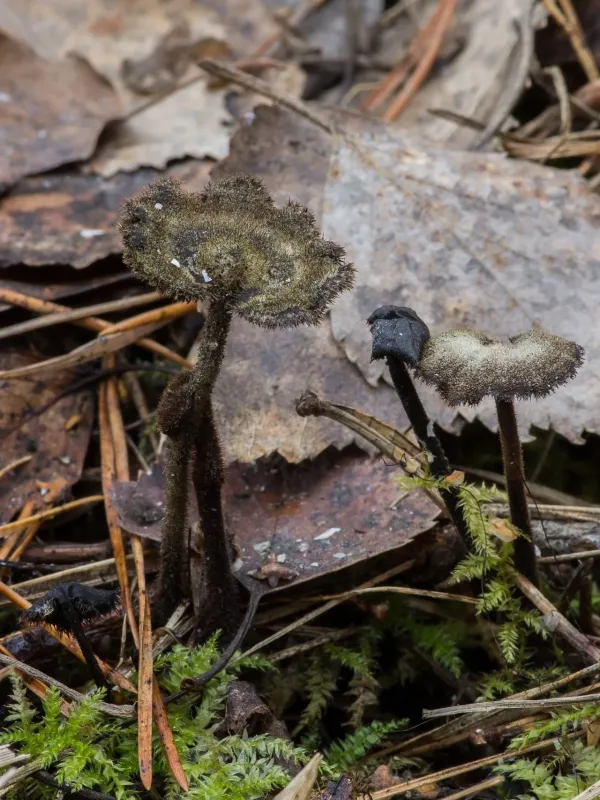
Description
Pathogen
Auriscalpium vulgare, commonly known as the pine cone mushroom, is a species of fungus in the family Auriscalpiaceae. It is strictly a saprophytic organism and is not a plant disease.
The fungus feeds exclusively on decaying organic matter, specifically on cones of conifers (mostly pine cones) that have fallen onto the forest floor.
The fruiting body is characterized by a small, fuzzy-haired cap and a hymenium featuring numerous small spines, which is the site of spore production.
Unlike parasitic fungi, Auriscalpium vulgare does not infect living plant tissues, meaning it causes no harm to trees, shrubs, or crops.
In terms of biology, it plays a vital role in forest ecosystems by decomposing tough lignified tissues in cones that other microorganisms might struggle to break down.
Conditions for development
The fungus thrives in moist, shaded forest environments where old, partially buried conifer cones are present in the leaf litter.
Fruiting bodies typically appear during the growing season when high humidity levels allow the mycelium to produce visible structures on the cone scales.
Soil moisture and stable microclimates are the primary factors that dictate the density and spread of this fungus within a forested area.
Because it is a specialist saprotroph, it is rarely found outside of its natural habitat where its specific substrate (decaying cones) is available.
There are no environmental conditions related to agricultural crops that facilitate the growth of this fungus, as it is biologically restricted to forest litter.
Why it matters
This fungus poses absolutely no threat to agricultural crops, gardening plants, or forestry health. It is not an agent of any plant disease.
It lacks the enzymes and physiological mechanisms necessary to attack living plant cells or cause necrosis in agricultural commodities.
There is no economic damage associated with this fungus. Its presence in a field or garden is merely an indication of decaying woody debris.
Because it only consumes dead organic matter, it is viewed as a beneficial decomposer rather than a pest or pathogen.
Growers should not treat this organism as a threat, as it does not compete with crops or impact plant yield in any capacity.
Protection
No control measures are necessary for Auriscalpium vulgare, as it does not cause harm to plants.
The use of fungicides or other chemical treatments would be entirely ineffective and unnecessary against this saprophytic fungus.
If you wish to prevent its appearance, simply clearing away old, rotting pine cones from your garden beds is sufficient.
The fungus does not form resistance, does not spread to living vegetation, and requires no integrated pest management strategies.
In summary, Auriscalpium vulgare is a fascinating element of natural decomposition and does not require any agricultural intervention.
Discussion
No discussions yet — be the first.