
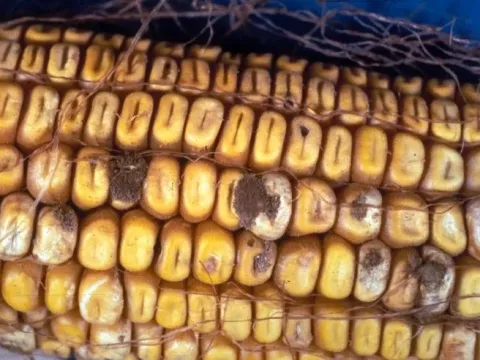
Aspergillosis
Aspergillus oryzae
The causative agent of the disease is the fungus Aspergillus oryzae, a member of the diverse Aspergillus genus. While primarily a saprophyte that decomposes organic matter in soil, it acts as a facultative parasite that opportunistically attacks weakened or stressed plant tissues.
What the section contains
Aspergillosis
This fungus reproduces through the widespread release of conidia (asexual spores), which are highly resilient and can remain dormant in soil or on crop residues for extended periods. Their ability to disperse through air currents makes them ubiquitous in agricultural environments.
The biological success of Aspergillus oryzae stems from its robust enzymatic profile. It secretes various hydrolases that break down complex carbohydrates and proteins, effectively liquefying the plant cell structure to facilitate the spread of its mycelium.
Under laboratory conditions, the fungus forms dense, fuzzy colonies that shift color as conidia mature, usually appearing yellowish-green or olive. This pigmentation is a reliable morphological marker for identifying the presence of the pathogen.
A critical concern is the metabolic production of mycotoxins during the colonization process. These secondary metabolites are not only toxic to the plant, potentially causing necrosis, but also pose significant health risks to humans and livestock if contaminated crops enter the food chain.
The most prominent sign of aspergillosis is the emergence of a powdery, fuzzy mycelial mat on the surfaces of seeds, fruits, or stems. Initially appearing white, this mat eventually takes on the distinct greenish or olive hue of mature spore masses.
In stored grains, the infection manifests as the clumping of seeds together, often accompanied by a distinct, unpleasant musty odor. The seed coat may lose its natural luster and become brittle, signaling that the inner endosperm has been compromised by fungal digestion.
Field-grown crops like corn or legumes may exhibit rot symptoms, particularly at the site of insect damage or physical wounding. The affected tissues turn soft, mushy, and darkened, eventually collapsing under the pressure of secondary infections.
When seedlings are affected, they often fail to emerge or show signs of damping-off. Brown lesions appear on the hypocotyl near the soil line, and the root system shows signs of browning and stunted development, leading to rapid plant death.
- Fuzzy surface growth (white to olive-green)
- Seed clumping and reduced grain luster
- Distinct musty or moldy odor
- Seed decay and reduced germination vigor
- Stunting and death of seedlings
Environmental moisture is the primary driver of aspergillosis development. The fungus requires high relative humidity, typically exceeding 75–80%, to initiate spore germination and sustain rapid mycelial expansion across plant surfaces.
Temperature is a key physiological factor, with Aspergillus oryzae thriving in mesophilic ranges between +25°C and +35°C. These temperatures are common in summer climates and grain bins, providing a stable window for explosive fungal growth.
Poor ventilation within storage facilities creates microenvironments of high humidity and stagnant air. These conditions are ideal for the pathogen to establish colonies, which can then spread rapidly throughout the entire bulk of the stored material.
Mechanical injury is a significant entry point for infection. Harvesting equipment, insect bites, or hail damage create wounds on grain and fruit, allowing the fungus easy access to the nutrient-rich tissues where it can bypass the plant's natural external barriers.
Delayed harvesting during rainy or humid weather leads to pre-harvest infection. When plants remain saturated in the field, they are highly susceptible to colonization, often entering the storage phase already heavily loaded with the pathogen.
The primary agricultural impact of aspergillosis is the dramatic reduction in seed viability. By consuming the nutrient reserves within the seed's endosperm, the fungus kills the embryo, leading to severe stand losses and the need for costly replanting.
Product quality degradation represents a massive financial hit. Grains or produce contaminated with Aspergillus oryzae are often rejected for food use due to the risk of mycotoxin contamination, necessitating costly processing or complete disposal of the batch.
In animal agriculture, the use of contaminated fodder can lead to toxicosis. Animals consuming infected feed exhibit reduced growth rates, digestive disorders, and suppressed immune functions, leading to significant economic losses for producers.
Logistical challenges arise as contaminated produce acts as a source of inoculum for healthy stocks. A single infected area in a storage silo can lead to a rapid chain reaction, jeopardizing the entire inventory if monitoring is insufficient.
The cumulative damage includes not only the physical loss of harvest weight but also the expenses related to fungicide applications, facility disinfection, and waste management to prevent the spread of spores.
Effective moisture management is the cornerstone of control. Drying grain to safe moisture levels (typically below 14%) and maintaining those levels throughout storage is the most successful strategy to render the environment unsuitable for the fungus.
Seed treatment using systemic fungicides prior to planting offers a crucial protective barrier. This prevents soil-borne spores from infecting the seed during the critical germination phase, ensuring a healthy start for the crop.
Maintaining high hygiene standards in storage facilities is essential. Regular cleaning and disinfection of silo walls, equipment, and transport bins drastically reduce the background spore count and the probability of re-infection.
Advanced aeration systems in grain silos allow for the active monitoring and control of temperature and moisture gradients. Early detection of heating pockets enables producers to circulate air or cool the grain before an outbreak becomes unmanageable.
Good agricultural practices, such as timely harvesting and the use of resistant varieties where available, help minimize exposure. By reducing the time crops spend in damp field conditions, growers can naturally limit the pathogen's ability to take hold.