
Asian soybean rust
Phakopsora
Description
Symptoms
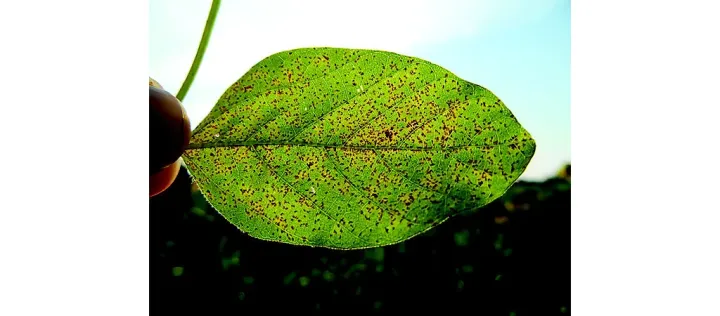
Symptoms of Asian soybean rust usually appear first on the lower leaves of the soybean plant as the canopy closes and flowering begins. Initial signs include small, grey to tan, or reddish-brown flecks on the leaf surface.
The most diagnostic feature is the development of small, raised pustules known as uredinia on the underside of the leaves. These pustules contain masses of spores that erupt, creating a powdery appearance which is the primary indicator of the disease.
As the infection progresses, these small spots enlarge and merge, eventually covering significant areas of the leaf. This damage destroys photosynthetic tissue, leading to chlorosis, necrosis, and premature defoliation of the plant.
In severe cases, pustules may also be found on petioles, stems, and pods. This widespread colonization weakens the plant significantly, disrupting nutrient transport and reducing the overall vitality of the crop.
As the infection spreads upward through the canopy, the field may take on a prematurely yellow or brown appearance. This accelerated senescence prevents the plants from reaching their full yield potential due to the loss of leaf area.
Pathogen
The causal agent of Asian soybean rust is the obligate biotroph fungus Phakopsora pachyrhizi. As an obligate parasite, it requires living host tissue to complete its life cycle and cannot survive in dead organic matter or soil between cropping seasons.
The fungus reproduces via urediniospores, which are easily disseminated by wind currents over vast distances. This efficient dispersal mechanism allows the disease to spread rapidly across large agricultural regions once initial infection occurs.
Beyond soybeans, the pathogen can infect a wide range of legume species, including kudzu, common beans, and lupines. These alternative hosts serve as a reservoir for the fungus, enabling its survival and adaptation throughout the year.
The life cycle of Phakopsora pachyrhizi is relatively short, taking approximately 7 to 10 days from infection to new spore production. This short cycle facilitates rapid population growth, leading to severe epidemics under favorable conditions.
High genetic diversity among pathogen isolates makes breeding for durable resistance extremely challenging. The pathogen continuously evolves, resulting in new races that can overcome specific resistance genes introduced in commercial soybean cultivars.
Conditions for development
The development and spread of Phakopsora pachyrhizi are heavily dependent on specific climatic conditions. The pathogen requires moisture on the leaf surface, typically provided by dew, rain, or high humidity, to initiate the germination of spores.
The optimal temperature range for infection and fungal growth is between 20 and 25 degrees Celsius. When these temperature conditions coincide with high humidity, the risk of rapid disease expansion increases significantly.
Prolonged periods of overcast weather and frequent rainfall are highly conducive to the survival and transmission of urediniospores. These conditions allow the disease to thrive even in environments that might otherwise be restrictive.
Dense crop canopies create a specialized microclimate with reduced airflow and trapped moisture. Such environments are ideal for the fungus, as they protect the spores from desiccation and provide consistent moisture for colonization.
While extreme temperatures above 30 degrees Celsius can inhibit the development of the fungus, microclimates within the crop canopy often allow the pathogen to persist even when ambient field conditions are less than optimal.
Why it matters
Asian soybean rust is considered one of the most destructive diseases in soybean production globally. If left unmanaged, the disease can cause yield losses ranging from 30 to 80 percent depending on the timing and severity of the outbreak.
The primary driver of yield reduction is premature defoliation. When plants lose their leaves before the pods have fully filled, the seeds remain small, underdeveloped, and lighter, resulting in a significant drop in total yield.
Additionally, the disease reduces the number of pods and seeds per plant. The lack of photosynthesis during the critical pod-filling stage means the plant cannot invest enough energy into seed development, impacting both quantity and quality.
The quality of the harvested grain is also compromised, often showing lower oil and protein content. This reduction in quality makes the grain less marketable and less suitable for food processing or export purposes.
The economic impact extends to the high costs of implementing multiple fungicide applications during the season. These inputs, while necessary, significantly increase production costs for soybean farmers worldwide.
Protection
Effective management of Asian soybean rust requires an integrated approach starting with proactive scouting and monitoring. Detecting the disease early is crucial for timely intervention before the infection reaches the upper canopy.
The use of effective fungicides, such as triazoles, strobilurins, and SDHIs, remains the primary method for controlling the disease. Applying these products at the R1-R3 stages of plant development is typically recommended to maximize efficacy.
Cultural practices, including the selection of early-maturing varieties and optimizing plant density, can help create a less favorable environment for the pathogen. Improving airflow through the canopy reduces the duration of leaf wetness.
The deployment of resistant cultivars is a high priority for researchers, though durability remains an issue. Combining host resistance with appropriate fungicide programs is currently the best practice for sustainable production.
Regional cooperation, including the sharing of disease monitoring data, is essential. Tracking the migration of spores helps growers time their fungicide applications more accurately, preventing unnecessary costs and minimizing the spread of the pathogen.
Discussion
No discussions yet — be the first.