
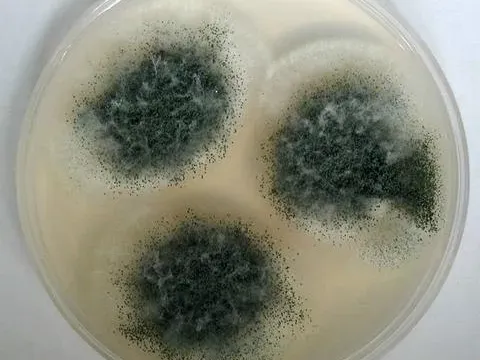
Aspergillus clavatus
Aspergillus clavatus
The pathogen is a microscopic fungus Aspergillus clavatus, belonging to the Ascomycota division. This saprotrophic soil fungus often exhibits pathogenic properties when storage conditions for agricultural products are compromised.
What the section contains
Aspergillus clavatus
The mycelium grows rapidly, forming characteristic club-shaped conidiophores that ensure active spore distribution in the environment. These spores are the primary source of infection for seeds and stored grain products.
The biology of the pathogen is closely tied to the accumulation of organic debris. The fungus possesses high enzymatic activity, allowing it to break down complex polymers, which makes it a dangerous decomposer of plant tissues.
A crucial feature of this species is its ability to produce secondary metabolites. The pathogen is known for producing dangerous mycotoxins, such as patulin and citrinin, posing a direct threat to feed safety.
The life cycle includes asexual reproduction, during which a vast number of gray-green conidia are produced. These spores are easily transported by air currents, infecting storage facilities and warehouses.
The development of Aspergillus clavatus depends directly on substrate moisture. Optimal conditions for spore germination are grain moisture levels above 15-16 percent and ambient temperatures ranging from 20 to 30 degrees Celsius.
Poor ventilation in grain silos contributes to localized increases in temperature and humidity, creating an ideal incubator for the development of fungal colonies.
Infection often occurs in the field when grain comes into contact with soil particles or plant debris infected with conidia. However, massive fungal proliferation is predominantly observed during the storage phase.
Insufficient cleaning of grain masses to remove weed impurities and broken kernels significantly accelerates the colonization process. Dust and fine debris serve as a nutrient medium, facilitating the fungus's entry into the grain mass.
A lack of monitoring for grain bulk temperature leads to self-heating, which provides a powerful impulse for the rapid spread of the infection throughout the entire stored volume.
The main danger lies in the high toxicity of the infected grain and feed. Mycotoxins released by the fungus can cause severe poisoning in livestock and poultry, triggering conditions such as the tremors syndrome.
The infection causes a significant loss of seed germination energy. Infected seeds lose their viability, and seedlings often die at early development stages due to the direct impact of fungal toxins.
Products affected by Aspergillus clavatus lose their market value, acquiring a distinct musty odor and discoloration, making the grain unsuitable for food or feed industries.
The fungus is capable of affecting not only grains but also vegetable crops if storage protocols are violated. The degradation of tissues leads to rotting, resulting in direct economic losses for farms.
Beyond direct damage to crops, fungal spores pose a serious health risk to storage facility personnel, as they may trigger allergic reactions and respiratory diseases upon inhalation.
The key protection method is the strict adherence to temperature and humidity controls during grain drying and storage. Grain mass must be dried to a moisture content of less than 14 percent to prevent fungal growth.
Regular cleaning and disinfection of storage facilities are required, including the use of specialized fungicidal treatments for walls and equipment before storing a new harvest.
Agrotechnical measures include harvesting crops efficiently to minimize the duration of contact between the plant and the moist soil environment.
Utilizing modern ventilation systems and constant monitoring of grain piles allows for the timely detection of self-heating hotspots, preventing mass contamination.
- Cleaning grain from impurities before storage.
- Using high-quality seed dressings before planting.
- Maintaining cleanliness in the surrounding storage area.
- Monitoring mycotoxin levels in prepared feed.