
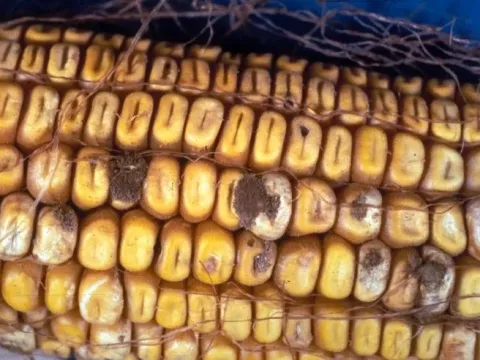
Aspergillus melleus
Aspergillus melleus
The causative agent of this disease is the microscopic fungus Aspergillus melleus, a member of the Ascomycota division. This pathogen is well-known in agricultural microbiology for its saprotrophic nature and its ability to act as a latent parasite.
What the section contains
Aspergillus melleus
The fungus reproduces primarily through the formation of conidia, which are tiny spores easily dispersed by wind and mechanical equipment. Under favorable conditions, the mycelium grows rapidly, forming dense, colored colonies on various substrates.
Aspergillus melleus possesses a robust enzymatic system, allowing it to break down complex organic materials including cellulose and proteins. This biological efficiency makes it a significant risk factor in the post-harvest storage sector.
The metabolic activities of this species include the production of various secondary metabolites. Some of these are toxic compounds that contribute to the pathogenicity of the fungus towards seeds and stored crops.
The survival strategy of the pathogen involves the production of resilient structures that can withstand environmental fluctuations. This persistence ensures that the fungus remains a constant threat in storage facilities and agricultural fields.
The primary symptom of infection is the emergence of a yellowish, honey-colored, or ochre-toned mold on the surface of seeds or grains. As the colony matures, this mold becomes denser and forms a powdery layer of spores.
Infected seeds often lose their luster, appearing dull or shriveled. Microscopic examination reveals the growth of mycelium threads that penetrate the seed coat, leading to tissue degradation.
A notable sign of advanced infection is the presence of a distinct musty or earthy odor emanating from the stored crop. This smell indicates that the fungus is actively breaking down the nutritional components of the substrate.
In field conditions, seedling blight can occur if contaminated seeds are planted. The germinating seeds fail to emerge or show stunted, discolored sprouts covered in fungal hyphae.
Diagnostic identification of the pathogen is confirmed by observing characteristic conidial heads under a microscope. These structures are the distinct morphological markers that differentiate Aspergillus melleus from other related mold species.
The development of the fungus is strictly dependent on moisture levels in the substrate. Seed moisture content above 14-15% is the critical threshold for the rapid proliferation of the pathogen.
Temperature plays a crucial role in disease progression, with the optimal growth range for Aspergillus melleus being between 25°C and 30°C. While it can survive at lower temperatures, its metabolic rate remains highest in this warmer range.
Poor storage conditions, such as high humidity and lack of ventilation, are the primary triggers for outbreaks. Stagnant air allows heat and moisture to accumulate, creating a perfect environment for fungal colonization.
Mechanical damage to seeds, often caused during harvesting or transport, provides entry points for the fungus. These wounds allow the mycelium to bypass the natural protective barriers of the plant tissue.
The presence of soil debris and previous crop residues serves as a natural reservoir for the fungus in the field. Effective field hygiene is essential to keep the inoculum levels below the threshold of economic impact.
The most significant impact of Aspergillus melleus is the spoilage of stored grain and seeds. This leads to substantial losses in seed germination viability and overall market value of the harvested crops.
Beyond physical damage, the fungus poses a health risk by producing mycotoxins. These toxins are hazardous to both humans and animals, rendering contaminated batches unfit for food or feed processing.
In agricultural production, the disease leads to poor crop stands if infected material is used for sowing. This requires reseeding and increases overall costs for the farmer.
Economic damage is further compounded by the necessity of disposing of contaminated product batches. Large-scale infestations in grain elevators can cause significant financial disruption.
Additionally, the fungus facilitates the degradation of grain quality, which triggers lower classification grades during inspections. This reduces the profitability of the grain trade for producers and distributors.
The most effective strategy for managing the disease is strict moisture control during the drying and storage phases. Keeping grain dry is the single most important preventive measure.
Storage hygiene, including the systematic cleaning and disinfection of silos and warehouses, is mandatory. Using active ventilation systems helps maintain uniform temperature and prevents moisture hotspots.
Seed treatment with authorized broad-spectrum fungicides prior to sowing protects the crop during the vulnerable germination stage. This ensures early protection against both soil-borne and seed-borne fungal infections.
Proper field management, including the timely harvest and effective incorporation of crop residues, reduces the availability of survival sites for the pathogen.
Ongoing monitoring of stored grain batches allows for early detection of potential mold growth. If signs of infestation appear, measures such as cooling, aeration, or moving the grain to different storage cells must be taken immediately.