
Aspergillus carbonarius rot
Aspergillus carbonarius
The causal agent of the disease is the microscopic mold fungus Aspergillus carbonarius. This saprotrophic pathogen belongs to the group of black aspergilli and possesses a high ability to survive in various ecological niches.
What the section contains
Aspergillus carbonarius rot
The fungus belongs to the category of pathogens that affect fruits at late ripening stages. Its biological feature is the active production of specific metabolites known as mycotoxins.
The mycelium of the fungus develops inside plant tissues, gradually destroying cellular structures. Reproduction occurs through the formation of conidia, which are dispersed by wind or insects over long distances.
The pathogen can persist for a long time in soil and on plant debris, making it extremely resistant to adverse environmental factors.
A specific feature of Aspergillus carbonarius is its narrow specialization in producing ochratoxin A, making it an object of strict phytosanitary control in the winemaking industry.
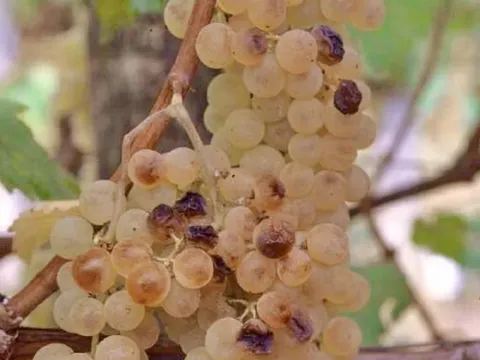
The first signs of the disease appear as the formation of a loose, powdery black coating on the berry surface. These are clusters of fungal spores that easily detach from the substrate upon contact.
Affected areas of the berries quickly lose their firmness, become watery, and begin to emit a specific acidic smell. The tissue decay process proceeds very rapidly, engulfing the entire cluster.
Externally, the infection often resembles other types of rot, but the presence of a dense black coating is a distinctive sign of this specific type of aspergillosis.
At later stages, berries shrivel and dry up, turning into mummified structures. Infection can start from individual berries damaged by pests or hail and quickly spread throughout the cluster.
Internal tissues of the fruit, upon deep infection, acquire a dark color and an unpleasant consistency, indicating the destruction of cell walls by fungal enzymes.
The main condition for infection development is high air temperature combined with high humidity. The fungus optimally develops at temperatures ranging from +25°C to +35°C.
Mechanical damage to the berry skin, caused by insects, birds, or cracking due to humidity fluctuations, plays a crucial role. Spores penetrate the fruit through these micro-cracks.
Dense canopies and lack of proper ventilation in the cluster zone create a microclimate that promotes the rapid spread of the pathogen.
The grape ripening period is a critical time for infection. High sugar content in the berries during this period creates a nutrient medium ideal for the growth of Aspergillus carbonarius colonies.
The inoculum load can accumulate in the soil, so rainy weather before harvest significantly increases the risk of epiphytotics.
The primary danger lies not so much in the loss of crop mass, but in the accumulation of ochratoxin A. This is a dangerous mycotoxin that is a potent nephrotoxin and carcinogen for humans.
The presence of this pathogen on grapes makes the production of high-quality wines impossible, as mycotoxins pass into the must and the final product.
The disease causes a decrease in produce quality, making the crop unsuitable for processing or long-term storage due to rapid berry spoilage.
Economic losses for vine growers increase due to the need for additional raw material sorting and laboratory analyses for toxin content.
The damage caused by Aspergillus carbonarius can have long-term effects, undermining the export potential and reputation of a winery in the international market.
A primary measure is maintaining optimal agrotechnical practices aimed at canopy ventilation, including shoot thinning and timely removal of excess leaves in the cluster zone.
It is necessary to conduct effective pest control, particularly against pests that damage berry skin and open entry points for infection.
Harvesting should be carried out at optimal times, avoiding exposure to late autumn rains that trigger disease outbreaks.
Thorough sorting of clusters during harvest is recommended to prevent infected berries from entering the batch during processing.
The use of fungicides should be strictly limited by regulations and applied only during the early stages of cluster development to avoid residues in the final product.