
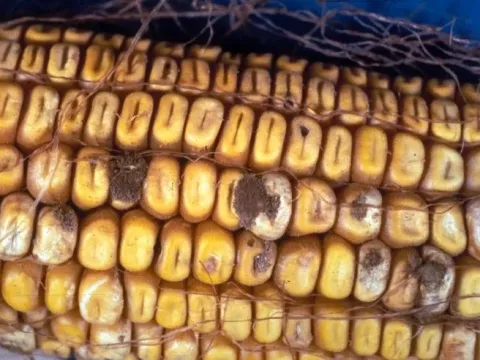
Aspergillus japonicus
Aspergillus japonicus
The primary symptom of infection is the development of a dusty, characteristic fungal growth on plant surfaces. This fungal mat typically appears as a dark brown to black coating due to abundant spore production.
What the section contains
Aspergillus japonicus
In stored seeds and grains, the infection manifests as intense molding. The colonies gradually penetrate the grain tissues, leading to the decay of the seed coat and the destruction of the embryo.
Under field conditions, the fungus often acts as an opportunistic pathogen on damaged plant parts. Affected areas show necrotic lesions covered with dark, powdery spore masses.
When fruits and vegetables are infected, tissue softening occurs, often accompanied by a musty, distinct odor characteristic of fungal rot diseases.
Seedlings may experience pre-emergence or post-emergence damping-off, resulting in thin, uneven plant stands and reduced crop emergence rates.
The pathogen is the microscopic fungus Aspergillus japonicus, a member of the black aspergilli group. It is primarily a saprotroph that can act as a facultative parasite under conducive conditions.
The fungus reproduces asexually by forming conidiophores carrying dark conidia. These spores are highly resistant to environmental stress and can persist in soil and crop debris for extended periods.
It produces potent enzymes that break down complex organic materials, including cellulose and starch, allowing it to thrive on both living tissues and harvested agricultural products.
The pathogen grows mycelium deep within host tissues, which protects it from contact-based fungicides and complicates disease management efforts.
Aspergillus japonicus is widely distributed globally, showing high adaptability to various substrates and diverse climatic conditions, especially in intensive farming systems.
High relative humidity and substrate moisture are the most critical factors for the development of the infection. The fungus requires moisture to initiate spore germination.
The optimal temperature range for rapid mycelial growth and sporulation is between +25 and +32 degrees Celsius, making the pathogen particularly aggressive during warm seasons.
Poor storage conditions, characterized by inadequate ventilation and moisture accumulation, create an ideal microclimate for significant Aspergillus outbreaks.
Mechanical damage from harvesting equipment or wounds caused by insect pests provide the essential entry points for the fungus to infect healthy plant tissues.
Leaving crop residues on the soil surface encourages the accumulation of inoculum, increasing the risk of infection in subsequent planting seasons.
The primary economic impact of Aspergillus japonicus is the deterioration of harvested products during storage, leading to substantial post-harvest losses.
The fungus is capable of producing harmful mycotoxins that contaminate grain and produce, rendering them unsafe for human consumption or animal feed due to health risks.
Infection of seeds leads to a significant decrease in germination energy and viability, which negatively impacts plant population density and total yield potential.
In the horticultural sector, the disease causes rapid rotting of fruits, severely limiting their shelf life and viability for long-distance transportation.
Increased disease pressure leads to additional costs for chemical control and potential losses in overall farm productivity and produce quality standards.
Strict moisture management in warehouses is the most effective strategy for preventing fungal growth and preserving the quality of stored crops.
Utilizing high-quality, fungicide-treated seeds serves as a vital preventive measure to protect plants during the early, most vulnerable stages of development.
Effective integrated pest management (IPM) practices help minimize mechanical and insect-induced wounds, reducing the avenues for fungal infection.
Adhering to proper crop rotation and deep incorporation of plant debris into the soil significantly lowers the overall pathogen pressure in the field.
- Regular monitoring of temperature and humidity levels in storage facilities.
- Harvesting crops during dry conditions to reduce initial moisture levels.
- Sanitation of equipment and storage containers to prevent cross-contamination.