
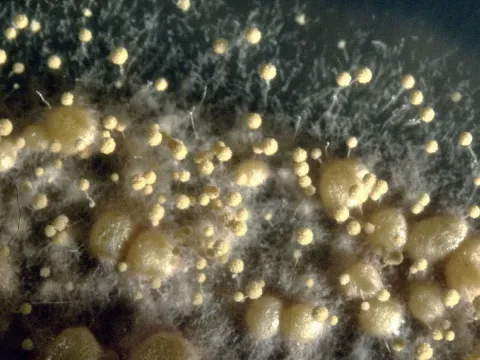
Yellow Aspergillus
Aspergillus ochraceus
The causal agent of this disease is the fungus Aspergillus ochraceus, a member of the diverse Ascomycota phylum. It is a cosmopolitan saprotrophic organism that acts as an opportunistic pathogen when environmental conditions become suitable for colonization.
What the section contains
Yellow Aspergillus
The fungus reproduces primarily through conidial spores, which are produced on conidiophores. These spores exhibit a distinct ochre or yellow color, giving the characteristic appearance of colonies growing on infected organic matter.
Aspergillus ochraceus is biologically adept at utilizing a wide variety of substrates. In agricultural systems, it is most frequently encountered on stored cereal grains, legumes, oilseeds, and various dried agricultural products.
Its survival strategy relies on the production of highly resilient conidia. These spores can persist in dust, cracks in storage containers, and organic debris for extended periods, ready to germinate when moisture levels permit.
It is classified as a prominent storage fungus. Unlike field fungi that infect plants during the growing season, this pathogen typically establishes itself post-harvest, particularly if the product has not been adequately dried or protected.
The primary driver of Aspergillus ochraceus infection is excessive moisture within the product. When the moisture content of grain exceeds 14-15%, the fungus rapidly begins to develop its mycelial network.
Temperature is another critical factor. The fungus is a mesophilic organism, meaning it flourishes in temperatures ranging from +20°C to +30°C. However, it can remain active over a wider range if humidity is high.
Poor ventilation within storage facilities creates pockets of high humidity and stagnant air. These conditions encourage "hot spots" where the metabolic activity of the fungus causes localized heating, further accelerating the colonization process.
Mechanical damage to the seed coat during harvesting or processing significantly increases susceptibility to infection. Damaged seeds are much more easily penetrated by fungal hyphae compared to intact, healthy specimens.
The presence of contaminants such as weed seeds, chaff, or broken grain kernels acts as a nutritional springboard for the fungus. These impurities absorb moisture faster than healthy grain and often serve as the primary ignition points for contamination.
The most significant impact of Aspergillus ochraceus is its ability to produce ochratoxin A, a dangerous mycotoxin. This toxin is known to have nephrotoxic and hepatotoxic effects, posing severe health risks to humans and livestock.
The infection leads to the physical degradation of the product, resulting in discoloration, a musty odor, and a reduction in seed viability. This renders the produce unsuitable for commercial use or human consumption.
In large storage facilities, the fungus can cause significant mass loss. The mycelium binds grain kernels together, forming clumps that block airflow and reduce the quality of the entire batch, leading to substantial economic losses.
Regulatory standards for grain export and trade are strict regarding mycotoxin levels. The presence of A. ochraceus and its toxins often results in the rejection of entire shipments, causing immense financial consequences for producers and traders.
Consumption of mycotoxin-contaminated feed by livestock causes acute and chronic poisoning. This leads to diminished health, poor feed conversion ratios, and reduced animal productivity, which negatively impacts the entire animal husbandry sector.
Effective prevention centers on maintaining low moisture levels during storage. Grain must be dried immediately after harvest to moisture levels that inhibit the germination of fungal spores, typically below 13%.
Temperature management is crucial. The use of aeration systems and temperature monitoring equipment helps identify and eliminate early-stage hot spots, preventing the spread of fungal colonies throughout the grain mass.
Maintaining high sanitary standards in storage facilities is essential. Thorough cleaning of bins and equipment, combined with appropriate disinfection protocols, reduces the spore load in the environment.
Pre-storage cleaning to remove chaff, dust, and broken kernels is a vital step. By eliminating debris and damaged material, the environment becomes significantly less favorable for the growth of Aspergillus ochraceus.
- Routine lab testing for mycotoxin levels in stored batches.
- Use of chemical preservatives for high-moisture grain storage.
- Strict adherence to grain moisture and temperature management protocols.
- Investment in modern storage infrastructure with advanced ventilation.