
Yellow rust
Puccinia striiformoides
Description
Symptoms
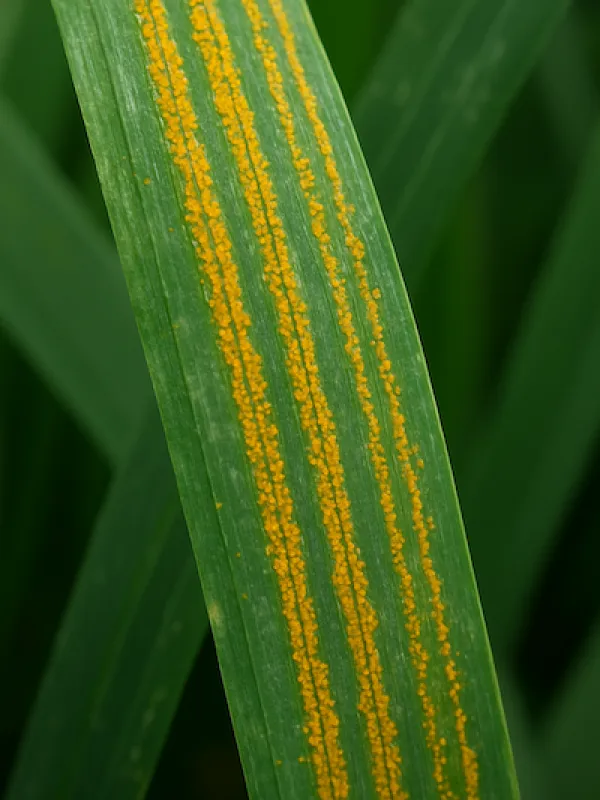
The primary symptom is the formation of bright yellow to orange-yellow pustules arranged in clear, parallel lines along the leaf veins. This distinct "stripe" pattern is the hallmark of the disease.
Infections usually begin on the lower leaves but can quickly spread to leaf sheaths, stems, and even the glumes of the ear. The overall appearance of the field may become stunted and chlorotic as the disease progresses.
As the pustules mature, the epidermis ruptures, releasing a mass of yellow spores. This mass of spores is often visible to the naked eye and can easily rub off onto fingers or clothing.
At the end of the season, black teliospores may appear as small dark streaks under the epidermis. This stage signifies the end of the active infection phase as the fungus prepares for the next season.
It is critical to distinguish yellow rust from brown rust (leaf rust). Yellow rust pustules are consistently linear and bright yellow, whereas brown rust pustules are typically random and brownish in color.
Pathogen
The causal agent of this disease is the obligate biotroph fungus Puccinia striiformoides. This pathogen is highly specialized and primarily attacks wheat, barley, rye, and various wild grass species.
The life cycle involves the production of urediniospores, which can be dispersed by wind over hundreds of kilometers. This makes the disease a major threat that can spread across entire regions within a short timeframe.
As an obligate parasite, the fungus extracts nutrients directly from the living plant tissue. This process disrupts the plant's metabolism, leading to significant stress and reduced energy available for grain development.
The pathogen is known for its high genetic diversity, with numerous races capable of overcoming resistance genes in wheat varieties. Constant monitoring is essential to detect the emergence of new, more virulent strains.
The fungus survives the winter as dormant mycelium on winter cereal crops or volunteer plants. When spring temperatures rise, the pathogen resumes its cycle, infecting new leaves and spreading throughout the field.
Conditions for development
Yellow rust thrives in cool, humid conditions. The optimal temperature range for spore germination and infection is between +5°C and +15°C, making early spring the peak period for disease development.
High relative humidity and the presence of dew or fog are essential for the spores to germinate and enter the leaf tissue through the stomata. Rain splash and wind are the primary vectors for local spread.
Dense crop stands create a humid microclimate that favors the rapid multiplication of the pathogen. Poor air circulation within the canopy allows moisture to persist longer, providing more time for fungal penetration.
Inadequate crop rotation and the presence of volunteer cereals provide a "green bridge" for the fungus to persist throughout the year. Controlling these reservoir hosts is a key component of integrated pest management.
Excessive nitrogen fertilization can lead to overly lush, succulent growth that is more susceptible to fungal infection. Maintaining a balanced nutrient program, particularly with potassium, can improve plant health.
Why it matters
The economic impact of yellow rust is largely driven by a reduction in the leaf area available for photosynthesis. This depletion of energy significantly limits the plant's ability to fill the grain.
Severe infections can reduce grain yield by up to 50% or more. The grains produced are typically small, shriveled, and have lower quality, resulting in poor milling and baking characteristics.
The disease causes premature senescence, leading to the early death of leaves. This limits the supply of carbohydrates to the developing head, which is particularly damaging if the infection occurs during the flowering stage.
Plants affected in the autumn often suffer from reduced winter hardiness, leading to higher rates of winterkill. This forces farmers to invest in costly remedial measures or replanting.
Additionally, the costs associated with fungicide applications and the logistics of crop protection significantly increase the total cost of production, putting further pressure on farm profitability.
Protection
The most effective strategy is the use of resistant or tolerant cultivars. Breeders continuously work to incorporate new resistance genes, though farmers should use a variety of sources of resistance to minimize risk.
Good agronomic practices, including the elimination of volunteer cereals and proper seeding rates, are essential. Avoiding overly dense stands helps keep the canopy dry and reduces the disease's growth rate.
Chemical control involves the application of systemic fungicides, such as triazoles or strobilurins. These should be applied preventively or at the very first sign of pustules to stop the outbreak early.
Regular field scouting is vital during the stem elongation phase. Targeted applications allow for effective control while minimizing the environmental impact and cost of chemical inputs.
- Monitor fields closely during cool, wet weather.
- Use certified, high-quality seeds.
- Incorporate crop rotation to break the disease cycle.
- Apply fungicides as soon as the disease threshold is reached.
Discussion
No discussions yet — be the first.