
Yellow leaf blister
Taphrina lutescens
Description
Symptoms
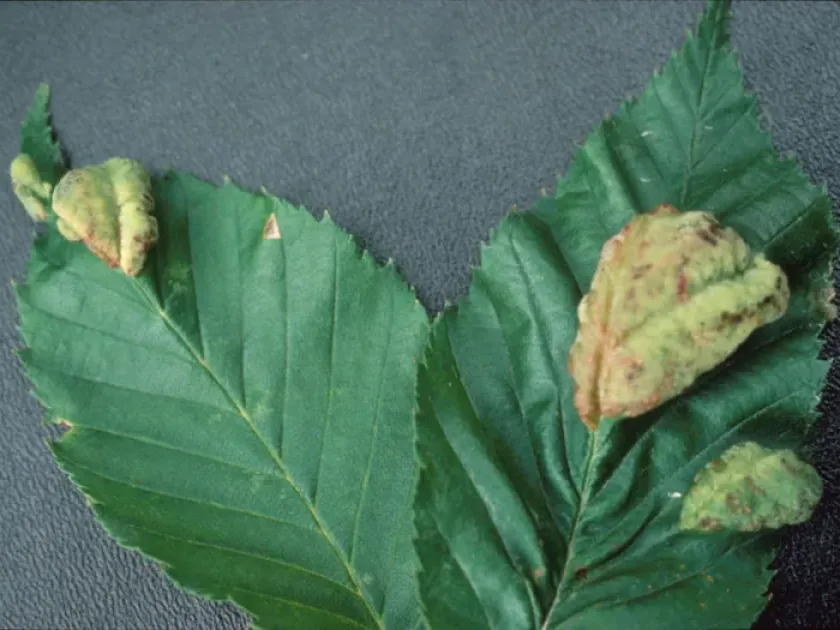
The most distinctive symptom of the infection is the appearance of bright yellow or golden spots on the leaves during the early spring.
The affected areas of the leaf blade become thickened, curled, or distorted, giving the foliage a sickly, uneven appearance.
A fine, powdery bloom may appear on the undersides of the leaves; this is the fungal spore layer and is a clear indicator of active infection.
Over time, these spots can expand and merge, leading to chlorosis and potential tissue necrosis across the entire leaf surface.
Severely affected leaves often turn brown, become brittle, and drop prematurely, which is a common late-stage reaction to the disease.
Pathogen
The disease is caused by the fungus Taphrina lutescens, an obligate parasite that specifically infects trees of the birch family.
The pathogen completes its life cycle within the leaf tissues, forming a mycelium that stimulates abnormal cell growth, resulting in the characteristic deformation of the foliage.
The fungus overwinters as mycelium or spores within the tree's buds, awaiting the favorable conditions of the upcoming spring season to resume activity.
During the onset of vegetative growth, the spores are disseminated via wind or water droplets, making it a highly contagious disease in moist environments.
The parasite does not cause systemic structural damage like witches' brooms; instead, it focuses its impact on the leaf surface area.
Conditions for development
Taphrina lutescens thrives in cool, wet weather conditions, particularly during the early spring when buds are opening.
High humidity levels and consistent rainfall are essential for the germination of spores and the successful invasion of young, tender leaves.
Poor air circulation within the tree canopy creates a persistent microclimate that favors fungal development and spore transmission.
Periods of sunshine and lower humidity effectively inhibit the spread of the disease, explaining its seasonal nature in affected areas.
Site selection and proper tree spacing are critical factors, as shaded and damp locations are much more susceptible to recurring outbreaks.
Why it matters
The primary impact of the disease is the reduction of the photosynthetic capacity of the tree due to leaf damage and premature drop.
Repeated annual infections weaken the overall vigor of the host plant, making it more susceptible to environmental stress and other pests.
The aesthetic value of trees is significantly compromised, which is a major concern for landscape designers and municipal tree maintenance.
Stunted growth and reduced annual shoot development can occur as a direct result of the metabolic drain caused by the parasite.
In extreme cases, young trees may suffer significant dieback if the cumulative stress from the disease is combined with poor growing conditions.
Protection
Preventive application of copper-based fungicides before bud break is the most effective way to control the spread of the disease.
Sanitation practices, such as the removal and destruction of all infected fallen leaves, are vital to reducing the inoculum for the next year.
Proper pruning techniques should be employed to open up the canopy, improve airflow, and decrease moisture retention around the leaves.
Avoid excessive nitrogen fertilization, as it stimulates the growth of tender leaves that are highly susceptible to infection.
Monitoring the tree during the early growth stages allows for the timely identification of symptoms and the implementation of targeted chemical control.
Discussion
No discussions yet — be the first.