
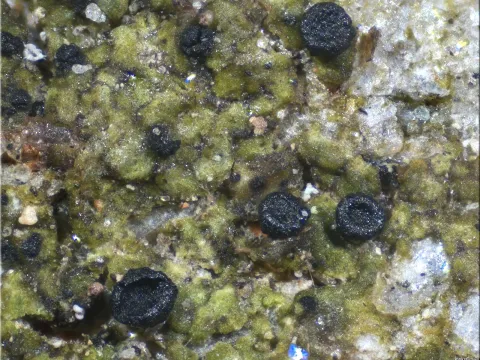
Arthrorhaphis
Arthrorhaphis
The genus Arthrorhaphis refers to a group of lichenized fungi belonging to the class Ascomycetes. It is important to clarify that this organism is not a plant disease and does not act as a pathogen.
What the section contains
Arthrorhaphis
These are strictly lichenized organisms that typically thrive on soil, mosses, or decaying wood. They obtain their nutrients through symbiosis with algae rather than by parasitizing vascular plants.
The thallus of the organism is structured for autotrophic nutrition. Unlike phytopathogenic fungi, they lack the enzymatic pathways required to degrade living plant tissues or induce systemic infections.
In mycological classification, they occupy a specific niche within the Arthrorhaphidaceae family. Their biological processes are oriented toward nutrient cycling within stable forest or tundra environments.
As these fungi do not cause damage to crops, they are not listed in phytosanitary records as causative agents of plant diseases.
Arthrorhaphis species are highly sensitive to environmental stressors. They are primarily found in pristine, unpolluted areas where atmospheric conditions are stable and humidity levels are consistent.
The presence of industrial pollutants, such as sulfur dioxide, proves fatal to these organisms. Consequently, they are rarely found in intensive agricultural landscapes where chemical applications occur.
They prefer substrates with specific pH ranges and microclimates provided by mosses or organic debris. High levels of fertilizers or pesticides significantly disrupt their growth environment.
Their slow growth rate and reliance on specific ecological niches make them excellent bioindicators of environmental health rather than agricultural pests.
The ecological requirements of Arthrorhaphis are the opposite of the conditions needed for the development of aggressive plant pathogens, which typically thrive in disturbed ecosystems.
Arthrorhaphis poses no threat to agricultural crops, ornamental plants, or forestry. There is no evidence of these lichens causing yield loss or physiological damage to vegetation.
They do not engage in competitive behavior with crop plants. Since they do not colonize living plant hosts, there is no risk of disease transmission or infection cycles within a farm field.
Agricultural professionals do not need to implement any protective or eradication measures against these lichens, as they are ecologically neutral or beneficial in terms of soil building.
Any observation of Arthrorhaphis should be regarded as a sign of environmental stability in the nearby habitat. They have no negative impact on modern agricultural practices.
In conclusion, Arthrorhaphis is a harmless and scientifically interesting genus of lichens that remains strictly outside the scope of agricultural pest management.