
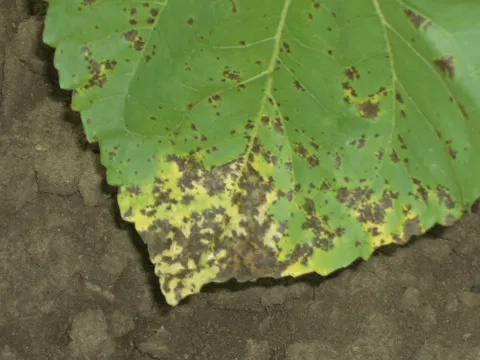
Alternariosis
Alternariaster
The causative agents of this disease are fungi belonging to the genus Alternariaster. These fungi produce characteristic chains of dark-pigmented conidia that serve as the primary source of infection for various agricultural crops.
What the section contains
Alternariosis
The fungus survives as mycelium and spores in crop residues, soil, and on contaminated seeds. Its ability to persist in diverse environments allows it to remain a constant threat to agricultural production systems worldwide.
The life cycle involves the release of conidia, which are disseminated by wind, rain splashes, or contaminated equipment. Upon landing on a suitable host, the spores germinate and invade plant tissues through stomata or mechanical wounds.
The pathogen is highly adaptable and can infect a wide range of host plants, including cereals, oilseeds, vegetables, and fruit trees. This broad host range facilitates the continuous survival and spread of the fungus in varied ecological settings.
Genetic diversity within the Alternariaster genus contributes to its persistence and potential for developing resistance to certain chemical control agents, requiring integrated disease management strategies.
The most recognizable symptom of alternariosis is the formation of necrotic spots, often exhibiting concentric rings that resemble a target. These lesions can occur on leaves, stems, petioles, and fruits.
Under humid conditions, the lesions become covered with a velvety, olive-to-black fungal mat. This mass consists of conidiophores and conidia, which indicate active sporulation and further spread of the pathogen.
Infected leaves often turn yellow, curl, and drop prematurely. Severe defoliation significantly reduces the photosynthetic capacity of the plant, directly impacting growth and subsequent yield potential.
On fruits and tubers, the disease manifests as sunken, dark lesions that may expand, leading to rot and rendering the produce unmarketable. This is particularly critical for crops intended for long-term storage.
Stem infections can lead to girdling, which disrupts the transport of water and nutrients, causing the plant to wilt and, in extreme cases, resulting in lodging or total plant death.
Alternariosis development is strongly favored by high relative humidity and moderate temperatures. The ideal range for rapid infection is typically between 20°C and 28°C with prolonged leaf wetness.
Rainy weather, heavy dews, and morning fogs provide the necessary conditions for fungal sporulation and infection. Persistent moisture on plant surfaces is a key driver of disease outbreaks.
Poor field management, such as excessive plant density and inadequate aeration, creates a microclimate that traps moisture and facilitates the rapid spread of the fungus within the canopy.
Crop residues left on the soil surface serve as a major reservoir for the pathogen. Failure to implement proper sanitation and crop rotation allows the inoculum to build up over consecutive seasons.
Plants under physiological stress—due to nutrient deficiency, drought, or pest damage—are significantly more susceptible to infection compared to healthy, vigorous crops.
The economic impact of alternariosis is significant, often resulting in yield losses ranging from 30% to 50% during severe epidemics. The reduction in leaf area directly leads to smaller fruits and lower seed weights.
Beyond yield reduction, the disease severely compromises the quality of the harvest. Infected seeds may show reduced germination rates and low vigor, impacting the success of future plantings.
Produce with lesions is highly prone to secondary infections during storage, leading to high post-harvest losses. This significantly affects the profitability of vegetable and fruit producers.
Increased production costs arise from the need for intensive fungicide applications throughout the growing season to mitigate the effects of the disease and prevent quality degradation.
In regions where alternariosis is prevalent, it can dictate the selection of crops and varieties, often forcing farmers to move away from high-value but susceptible cultivars to maintain stability.
Implementing a robust crop rotation plan is the foundation of disease management. Rotating away from susceptible hosts for at least 3–4 years helps reduce the inoculum load in the soil.
Using high-quality, fungicide-treated seeds is essential for preventing the introduction of the pathogen into new areas and protecting early plant growth from seedling blight.
Timely application of systemic or contact fungicides, based on weather forecasts and monitoring, is crucial for managing the disease during the vegetative growth stages.
Good agricultural practices, including weed management, proper irrigation schedules, and the removal of infected plant residues, are critical for maintaining field sanitation.
The use of resistant or tolerant crop varieties is the most sustainable long-term strategy for managing alternariosis, effectively reducing the need for chemical intervention.