
Amanita battarrae
Amanita battarrae
Description
Symptoms
Since Amanita battarrae is not a disease, there are no symptoms of infection by this fungus in agronomic practice.
Under natural conditions, the signs of the fungus's presence are limited to the appearance of fruiting bodies in the forest litter. This is a visual indicator of a healthy mycorrhizal forest system.
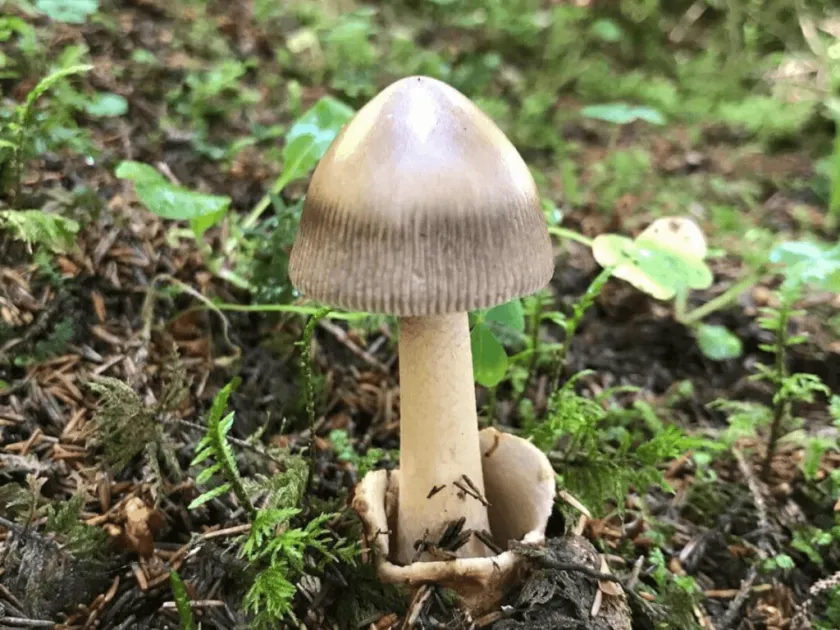
The appearance of the mushroom includes a cap up to 10 cm in diameter and a cylindrical stem. The presence of a sac-like volva at the base of the stem is a key visual identifier for the species.
Plants neighboring the mycelium do not show signs of wilting, necrosis, or tissue deformation. Mycorrhiza provides them with additional access to water and mineral substances.
The presence of this fungus in a shelterbelt near a field or garden is a sign of ecological health and good soil quality.
Pathogen
Amanita battarrae is a mushroom from the Amanitaceae family, which is incorrectly classified as a plant disease. In reality, this species is not a pathogen of agricultural crops.
Biologically, the tawny grisette is a symbiotic fungus that forms ectomycorrhiza with tree species. During its life cycle, it does not damage plant tissues; rather, it engages in a beneficial interaction with them.
The mushroom has a characteristic brown-yellow cap with a striated margin, which distinguishes it from other members of the Amanita genus. The stem of the mushroom lacks a ring, which is an important systematic feature of this taxon.
The scientific community classifies it as a mycorrhiza-forming fungus that contributes to the nutrition of forest trees. It does not infect agricultural crops, vegetables, or fruit plants.
Therefore, this object does not have phytopathogenic status and cannot be considered a cause of any plant disease.
Conditions for development
The development of the fungus is closely linked to the presence of coniferous and deciduous trees, with whose roots it forms symbiotic connections.
It prefers acidic, well-drained soils characteristic of forest ecosystems. High humidity and moderate temperatures are necessary for the appearance of fruiting bodies.
The mycelium of Amanita battarrae actively develops in the layer of forest litter, processing organic remains and receiving carbohydrates from the host tree.
Spore dispersal occurs through the air during the summer-autumn period. Optimal conditions require a stable microclimate under the forest canopy.
The fungus is highly sensitive to agrochemicals, so its appearance in anthropogenic landscapes is usually limited.
Why it matters
Amanita battarrae poses no threat to agriculture. It is a completely safe forest species for cultivated plants.
It does not compete with crops for resources and is not a vector for the transmission of phytopathogenic viruses or bacteria.
The economic significance of this species lies exclusively in its role in maintaining forest biocenosis and the nutrient cycle.
The lack of harm is confirmed by mycological studies, according to which Amanita battarrae is an obligate symbiont of tree species.
Misperceiving this fungus as a pathogen can lead to unnecessary control measures that would disrupt the biological balance in shelterbelt zones.
Protection
No special protection or preventive measures are required against Amanita battarrae, as it is neither a disease nor a pest.
Controlling this fungus with fungicides is inappropriate and ecologically unjustified.
Agronomists recommend viewing the presence of such fungi in shelterbelts as a marker of ecosystem stability.
If agricultural work must be performed near mycorrhizal zones, excessive use of mineral fertilizers should be avoided, as these may suppress beneficial microflora.
Maintaining natural forest cover promotes a mycorrhizal balance, which is beneficial for the drought resistance of forest shelterbelts.
Discussion
No discussions yet — be the first.