
Amanita battarae
Amanita battarae
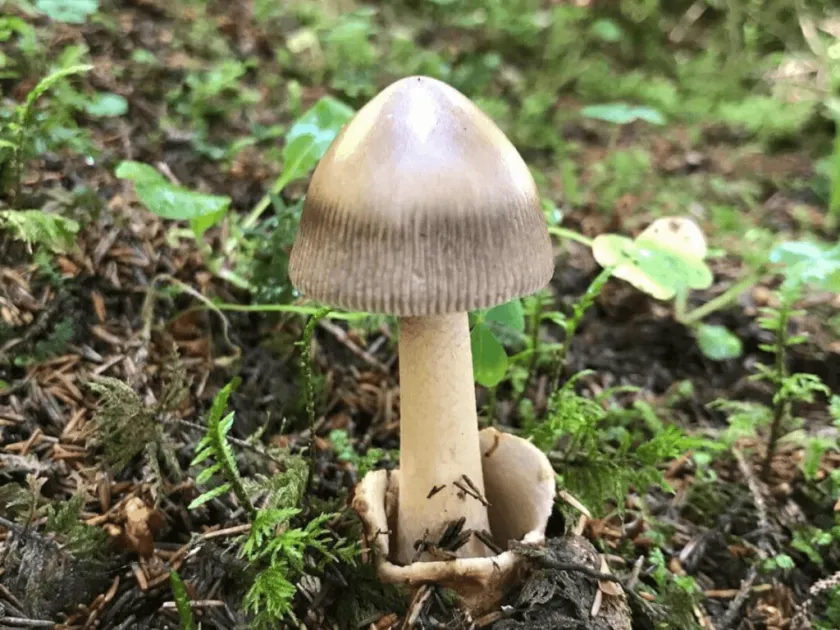
Description
Pathogen
Amanita battarae, commonly known as Battarra's Amanita, is not a plant pathogen or a disease-causing agent. It is a saprotrophic and mycorrhizal mushroom belonging to the Amanitaceae family.
This species forms symbiotic relationships known as ectomycorrhiza with various tree species, facilitating nutrient exchange that enhances the health of forest ecosystems.
Biologically, it is not capable of invading, consuming, or damaging the tissues of living plants, distinguishing it fundamentally from pathogenic fungi like rusts or blights.
The mushroom is characterized by a greyish-brown cap with striations at the margins and the notable absence of a ring on the stipe, which helps in its identification.
From an agronomical perspective, this species is purely ecological and does not require management or control measures in any agricultural setting.
Conditions for development
Amanita battarae thrives in forested environments, particularly where there is a thick layer of organic litter, which provides the necessary substrate for its mycelium.
Favorable conditions for its growth include high humidity and stable, cool soil temperatures, typical of mature temperate forests.
The species prefers acidic soil conditions and relies on the presence of specific tree partners with which it can establish successful mycorrhizal connections.
The lifecycle of the mushroom is closely linked to seasonal fluctuations, with sporulation occurring primarily during periods of high rainfall.
Natural dispersal of spores via air currents ensures the continued presence of the fungus in areas where environmental conditions remain undisturbed.
Why it matters
Amanita battarae presents no harm to agricultural crops, ornamental plants, or fruit trees. It is not associated with any wilting, rotting, or necrosis in plants.
There is no economic damage associated with this species; it does not compete for resources that would limit crop yield or reduce the quality of agricultural produce.
As a mycorrhizal fungus, it serves as a beneficial organism that contributes to soil enrichment through the decomposition of woody debris and organic material.
The fungus does not act as a vector for viruses, bacteria, or other pathogens, making it completely neutral in the context of plant disease management.
Farmers and foresters should recognize that its presence is an indicator of soil health rather than an sign of an infestation requiring intervention.
Protection
No protection or control measures are necessary for Amanita battarae, as it does not pose a threat to plant health in any capacity.
The application of fungicides or chemical treatments aimed at this mushroom would be ecologically counterproductive and harmful to beneficial soil microbiota.
Good agricultural practice dictates that one should preserve natural soil biodiversity, including such mycorrhizal fungi, to maintain an efficient growing environment.
Management activities should focus on genuine agricultural pests and diseases, avoiding any unnecessary actions against harmless indigenous fungi.
If the visual presence of the mushroom is undesirable in specific areas, simple manual removal is sufficient, though it is usually recommended to leave it as part of the ecosystem.
Discussion
No discussions yet — be the first.