
Amanita brunnescens
Amanita brunnescens
Description
Symptoms
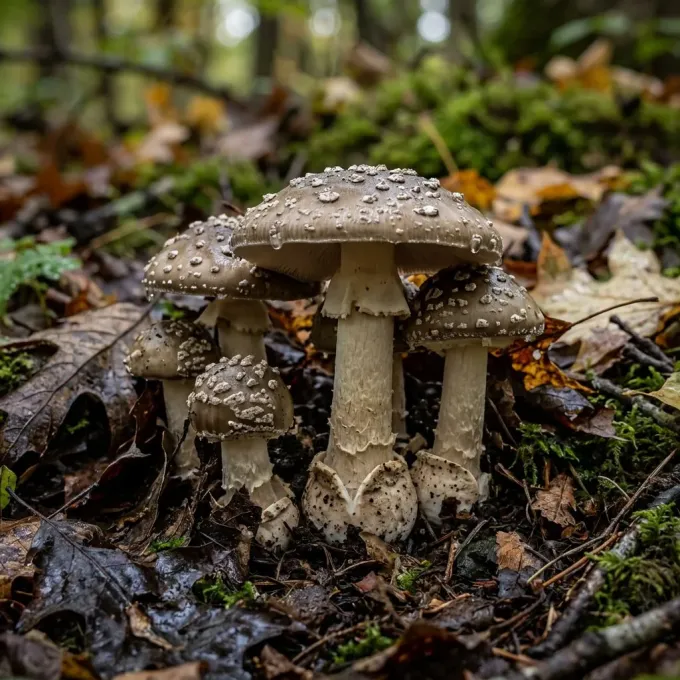
The most prominent sign of this species is the presence of its fruiting bodies, which exhibit a distinctive brownish color that darkens when bruised.
The stem base typically features a bulbous structure, which is a critical morphological trait for distinguishing it from other Amanita species.
Mycelial mats are often found buried in the leaf litter, appearing as white, string-like structures that weave through the organic matter.
Under close observation, the cap may show small patches or remnants of the universal veil, which are characteristic of this genus.
- Brown-colored cap surfaces.
- Flesh bruising to a darker color.
- Distinct bulbous base on the stipe.
Pathogen
Amanita brunnescens is a species of gilled mushroom in the family Amanitaceae, recognized primarily for its role as a mycorrhizal partner in forest ecosystems.
It is not classified as a plant disease pathogen, as it does not invade or destroy plant tissues to obtain nutrients, unlike parasitic fungi.
The organism develops a symbiotic relationship with tree roots, aiding in the exchange of minerals and carbohydrates, which supports tree growth.
Its biological cycle is dependent on forest soil conditions, where mycelial networks form dense connections with plant root systems.
Agronomists distinguish it from harmful root-rot pathogens by analyzing the lack of symptoms such as wilting or tissue necrosis on the host plant.
Conditions for development
Amanita brunnescens thrives in moist, temperate forest environments where acidic soil conditions prevail.
The presence of organic debris and accumulated leaf litter provides the necessary nutrient base for the mycelium to expand.
Optimal fruiting usually occurs in late summer through autumn, coinciding with periods of high rainfall and moderate temperatures.
As a mycorrhizal fungus, it requires the presence of specific host trees, such as oaks or pines, to sustain its lifecycle.
High levels of soil compaction or drainage issues can significantly influence the distribution and density of these fungal colonies.
Why it matters
This species poses no direct threat to agricultural crops as it lacks the physiological mechanisms to parasitize living plant structures.
The primary concern regarding this fungus is its toxicity; it contains alkaloids that are dangerous if ingested by humans or livestock.
In forest nurseries, high density of fruiting bodies might be considered a nuisance but does not compromise the structural health of seedlings.
No economic loss in crop yield is associated with this fungus, making it ecologically neutral in terms of agricultural productivity.
The main impact is limited to the potential risk of misidentification by individuals harvesting edible fungi in the wild.
Protection
Since Amanita brunnescens is not a crop disease, standard fungicide applications are unnecessary and counterproductive to soil health.
If management is desired for aesthetic or safety reasons, physical removal of fruiting bodies before sporulation is the most effective approach.
Improving soil drainage and maintaining consistent levels of organic matter management can discourage the proliferation of fungal mats.
Public awareness and education regarding the identification of toxic versus edible species remain the best defensive measure.
Maintaining the biodiversity of the soil microbiome is preferred over chemical intervention, as it keeps natural ecological processes in balance.
Discussion
No discussions yet — be the first.