
Alternaria leaf spot of zinnia
Alternaria zinniae
Description
Symptoms
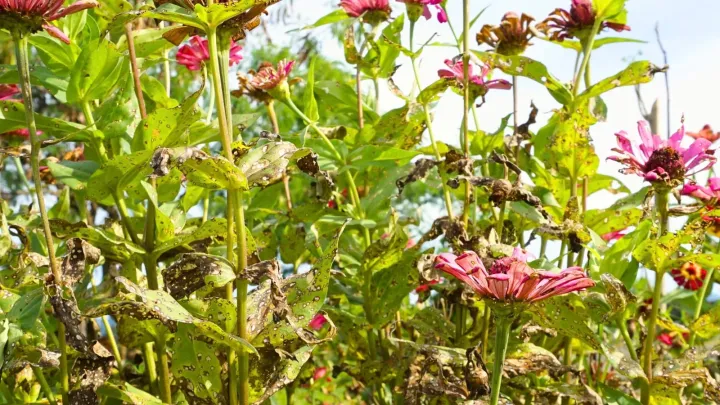
Early symptoms appear as small, circular or irregular spots on the leaves. These spots are typically reddish-brown to dark brown and often feature a distinct yellow halo.
As the infection progresses, these lesions enlarge and may coalesce, leading to significant portions of the foliage drying out or turning necrotic.
During humid conditions, a velvety dark-olive to black fungal growth may appear on the center of these spots, which represents the sporulation of the fungus.
Stem cankers are another common sign, appearing as elongated dark depressions. These cankers can girdle the stem, causing the upper part of the plant to wilt and collapse.
Flowers are also highly susceptible; infection causes the petals to brown and rot, resulting in premature decay of the blooms and a loss of aesthetic quality.
Pathogen
The disease is caused by the fungus Alternaria zinniae, a common plant pathogen known for its ability to affect various ornamental plants, specifically zinnias.
This fungus is classified as an anamorphic fungus that survives in debris, soil, or infected seeds. It attacks all aerial parts of the zinnia plant, causing necrosis and tissue death.
The lifecycle involves the production of conidia (spores) that are easily dispersed by water splashes, air currents, and insect movement, facilitating rapid spread within a planting area.
It can remain dormant as mycelium in dead plant tissues, allowing it to re-emerge when favorable environmental conditions return in the next growing season.
The pathogen is highly aggressive under conditions of moisture and moderate warmth, successfully colonizing host tissues by secreting toxins that break down plant cell structures.
Conditions for development
High humidity and prolonged leaf wetness are the primary drivers of this disease. Rain, heavy dew, or overhead irrigation creates the perfect environment for spore germination.
The disease thrives in warm temperatures, typically between 20°C and 28°C (68°F–82°F), which accelerates the fungal metabolism and shortens the infection cycle.
Crowded plantings that lack adequate airflow retain moisture on the leaf surfaces for longer periods, significantly increasing the risk of widespread fungal development.
Plants that are stressed due to poor soil fertility, drought, or extreme temperature fluctuations become more susceptible to invasion by the fungus.
Failure to remove infected plant parts allows the pathogen to survive the winter, creating a reservoir of inoculum that threatens the next generation of plantings.
Why it matters
The primary economic and aesthetic damage is the destruction of foliage and blooms, which renders the zinnia plants useless for landscaping or commercial floral production.
Severe infections lead to rapid leaf drop, which reduces the plant's photosynthetic capacity, resulting in stunted growth and a decline in flower production.
Stem infections can cause severe lodging, where the plants bend or break, making it difficult to maintain orderly garden beds or healthy field crops.
The presence of Alternaria zinniae in the soil makes it increasingly difficult to grow zinnias in the same location without intensive chemical or biological intervention.
The infection can significantly reduce the vitality of the entire plant population if not checked early, leading to total failure in susceptible cultivars.
Protection
Cultural management is the first line of defense. This includes crop rotation and the removal and destruction of all infected plant materials at the end of the season.
Promoting good airflow by ensuring proper plant spacing and avoiding overhead watering helps to keep foliage dry, limiting the opportunity for spores to infect the plant.
The use of fungicide sprays, particularly those containing copper or systemic active ingredients, can protect plants if applied preventively or at the very onset of symptoms.
Maintaining high plant health through balanced fertilization and proper moisture management helps the plants resist fungal invasion more effectively.
- Use certified disease-free seeds.
- Remove and discard any symptomatic leaves immediately.
- Water at the base of the plant to prevent leaf wetness.
- Apply fungicidal treatments according to label directions.
Discussion
No discussions yet — be the first.