
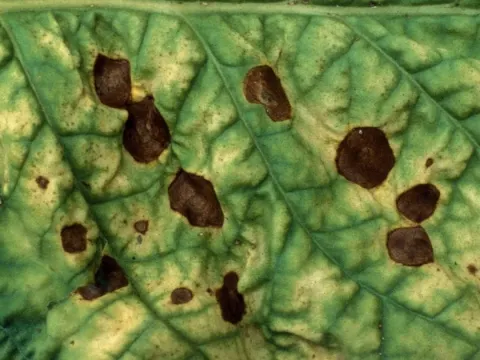
Alternaria leaf spot
Alternaria chartarum
The causative agent of the disease is a fungus from the genus Alternaria, specifically the species Alternaria chartarum. This pathogen is a well-known opportunistic fungus in plant pathology.
What the section contains
Alternaria leaf spot
The fungus survives in soil, on crop residues, and in seeds as mycelium and conidia. It can persist as a saprotroph for extended periods until a suitable host plant is available.
Infection spreads primarily through airborne conidia, which are easily dispersed by wind, rain splashes, or through farm equipment during routine agricultural activities.
The fungal mycelium penetrates plant tissue through natural openings like stomata or via mechanical wounds, initiating the colonization process within the plant cells.
The biological cycle involves rapid sporulation under suitable environmental conditions, allowing the pathogen to quickly establish its presence across entire fields.
The initial symptoms typically manifest as small, brown, circular or angular spots on the lower foliage. These spots expand over time and often develop concentric rings.
A distinctive dark, velvety-black coating frequently appears on the lesions, which consists of fungal spores and conidiophores, confirming the presence of the pathogen.
As the infection progresses, individual spots may merge, leading to extensive yellowing and necrosis of the leaf blades, followed by premature defoliation of the plants.
The fungus also affects stems, petioles, and fruits, causing dark, sunken necrotic lesions that can degrade the structural integrity and quality of the crop.
In reproductive organs, the infection leads to misshapen produce, lower seed viability, and internal seed decay, significantly impacting harvest quality.
Development of Alternaria leaf spot is favored by moderate temperatures, typically ranging between 20 to 28 degrees Celsius, which are optimal for fungal metabolism.
High humidity and prolonged periods of leaf wetness, such as morning dew, fog, or frequent rainfall, are critical factors that trigger spore germination and infection.
Poor field management, including overcrowding or lack of proper ventilation in dense plantings, creates a humid microclimate that accelerates disease propagation.
Plants under nutrient stress or those weakened by insect damage are significantly more susceptible to successful fungal penetration and subsequent tissue degradation.
Weather fluctuations that cycle between moist periods and warm sunlight provide the perfect conditions for constant cycles of sporulation and infection waves.
The primary damage caused by this pathogen is the destruction of leaf tissue, which severely limits photosynthesis and reduces the plant's overall energy production.
Yield loss is significant, as the infected plants produce smaller, lower-quality fruits or seeds that often fail to meet market standards for weight and appearance.
For cereal crops, the infection results in shriveled grains and compromised seed health, which negatively impacts both germination rates and industrial processing.
Infected crops are highly prone to storage rots, as the fungus facilitates secondary bacterial or fungal infections that ruin harvested goods during transit and storage.
The economic impact involves both the reduction in marketable yield and the increased expenditure required for repeated fungicide applications to save the crops.
Implementing a diverse crop rotation is a primary defense strategy to prevent the buildup of fungal spores in the soil and on crop debris over time.
Sanitation practices, such as the removal and destruction of crop residues post-harvest, are essential for eliminating the primary inoculum sources for the next season.
Farmers should prioritize the use of certified, treated seeds and select cultivars that exhibit higher genetic resistance or tolerance to fungal pathogens.
Optimal spacing and balanced fertilization are crucial agronomic practices that ensure robust plant growth and minimize the microclimatic conditions favorited by fungi.
When environmental conditions signal high risk, protective or curative fungicide applications should be performed strictly following local label guidelines.