
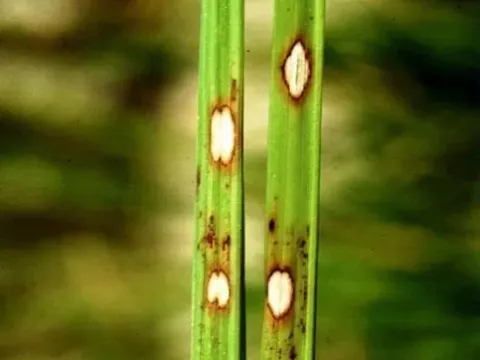
Rice Alternaria leaf spot
Alternaria padwickii
The disease is caused by the fungus Alternaria padwickii (teleomorph Trichoconiella padwickii), which is a common seed-borne pathogen affecting various cereals, including rice.
What the section contains
Rice Alternaria leaf spot
The mycelium of the fungus is capable of surviving for extended periods within infected seeds, plant debris, and soil, serving as the primary reservoir for infection in the next season.
Spread of the pathogen occurs primarily through conidia, which are disseminated by wind, rain splashes, and irrigation water, reaching susceptible tissues of the rice plants.
Seed transmission is particularly critical; infected seeds often result in poor germination, seedling blight, or systemic infection of the developing plant.
The biological lifecycle of Alternaria padwickii allows it to thrive in various conditions, making it a persistent challenge in rice-growing regions worldwide.
Symptoms typically appear on leaves as small, oval or elongated spots that are brown in color, frequently surrounded by a noticeable yellow halo.
As the infection progresses, these spots expand and may coalesce, leading to significant necrotic areas on the leaf surface. A dark, sooty mold composed of fungal spores often covers these spots.
On grain panicles, the disease causes discolored, dark spots on the glumes. Infected kernels often appear shriveled, deformed, and covered with mycelial growth.
Seedling blight symptoms include dark lesions on the coleoptile and roots, leading to the yellowing and death of young plants soon after emergence.
In mature plants, severe infection leads to premature leaf senescence, reducing the plant's photosynthetic capacity and ultimately impacting yield.
The development of the disease is highly favored by high relative humidity (typically above 85%) and warm temperatures, which are common in many rice-producing environments.
Frequent rainfall or persistent dew during the booting and grain-filling stages provides ideal conditions for conidial germination and host penetration.
High-density planting that restricts airflow contributes to a humid microclimate within the canopy, facilitating the rapid spread of the fungus.
Imbalanced soil fertility, specifically excessive nitrogen application, promotes succulent growth that is more prone to fungal attacks compared to properly nourished plants.
The presence of susceptible weeds and continuous cropping of rice in the same fields significantly increases the inoculum potential of Alternaria padwickii.
The economic impact of the disease includes substantial yield losses, primarily due to poor grain filling, low kernel weight, and increased sterility in panicles.
Seed quality is severely compromised, with reduced germination rates and weakened seedling vigor, leading to poor stand establishment in subsequent seasons.
The presence of fungal growth and associated mycotoxins in the harvested grain reduces its market value and can pose safety risks for human or animal consumption.
Increased susceptibility of weakened plants to other secondary pathogens further exacerbates yield decline and overall crop health.
Losses can be particularly severe in seed production fields, where the purity and health of the seed lot are of paramount importance for the industry.
The primary management strategy involves the use of high-quality, disease-free certified seeds, combined with effective seed treatments using broad-spectrum fungicides.
Crop rotation with non-host crops is essential to break the infection cycle and reduce the amount of primary inoculum surviving in the field.
Deep plowing and proper field sanitation help decompose infected crop residues, significantly reducing the survival of the pathogen in the soil.
Balanced fertilization, ensuring adequate potassium levels, helps improve the inherent resistance of the rice plants to fungal leaf spots.
- Application of foliar fungicides during critical stages of rice development.
- Optimizing plant spacing to ensure better air circulation and lower humidity.
- Implementing integrated weed management to eliminate alternative host plants.