
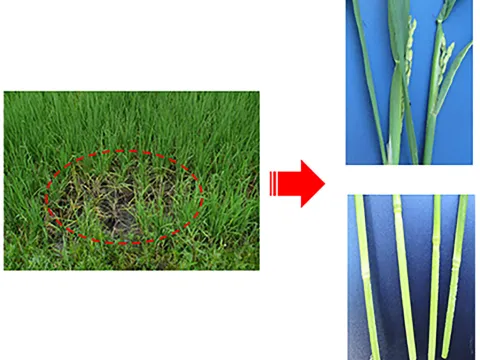
Rice black-streaked dwarf
Rice black-streaked
Rice black-streaked dwarf virus (RBSDV) is the causal agent of this disease, classified within the Fijivirus genus of the Reoviridae family. It contains a double-stranded RNA genome and primarily impacts various cereal species.
What the section contains
Rice black-streaked dwarf
The virus cannot be transmitted via seeds, soil, or mechanical contact. Instead, it is an obligate virus transmitted by planthopper vectors, most notably the small brown planthopper, Laodelphax striatellus.
The virus survives the winter in perennial grasses and winter cereals. Planthoppers acquire the virus by feeding on these infected reservoirs, and they become capable of transmitting the pathogen for the duration of their lifespan.
The virus undergoes replication within the vector, ensuring persistent transmission. Once a planthopper is viruliferous, it can efficiently spread the disease to healthy rice plants during its feeding activity in the field.
Understanding the interaction between the virus, the vector, and the environment is crucial. Successful disease management relies heavily on disrupting this biological chain to prevent the virus from reaching the susceptible rice crops.
The primary symptom of the disease is severe stunting, where affected plants exhibit significantly reduced height and shortened internodes. This gives the plants a compressed, dwarf-like appearance compared to healthy ones.
A hallmark sign is the presence of waxy, whitish or translucent galls on the veins of leaf blades and stems. These galls often darken to a deep brown or black color as the plant tissue matures, leading to the name of the disease.
Early-stage infection leads to excessive tillering, but these tillers are often deformed and stunted. The panicles frequently fail to emerge properly from the leaf sheath, and when they do, they are often barren or produce malformed, sterile spikelets.
Root systems are poorly developed in infected plants, frequently showing signs of necrosis. Chlorosis (yellowing) of the leaves is a common symptom, which progresses into necrosis if the plant is severely impacted by the viral load.
Infected fields show uneven growth patterns, with patches of stunted, yellowing, or dead plants amidst normal vegetation. These clusters are often more prevalent near field margins where planthoppers initially colonize.
The incidence of the disease is strictly correlated with the population dynamics of Laodelphax striatellus. Mild winters that allow higher survival rates of both the virus in grasses and the insect vectors are key drivers of outbreaks.
The migration timing of planthoppers is influenced by regional climate patterns. Rainy or humid springs often encourage the reproduction of these vectors, leading to increased pressure on rice seedlings during their most vulnerable stages.
Agricultural practices that promote high moisture levels, such as certain irrigation regimes, can create a favorable microclimate for planthoppers. They thrive in environments where rice canopy density maintains high humidity near the base of the plant.
Delayed planting or asynchronous planting within a region can attract migratory populations of planthoppers to early-stage rice crops. Such conditions often lead to higher infection rates compared to synchronous planting strategies.
Weedy fields and the presence of alternate hosts (like winter wheat or grasses) near rice paddies provide the necessary bridges for the virus to move into the new season's rice crop. Field hygiene is therefore a critical environmental factor.
Rice black-streaked dwarf is a destructive disease capable of causing substantial yield losses. Infected plants fail to produce grain, directly reducing the harvestable volume and farm profitability.
Economic damage ranges from partial yield loss to complete crop failure in severe epidemic years. The disease can decimate fields, forcing farmers to bear the cost of replanting or absorbing the total loss of the investment.
Beyond quantity, the quality of the grain is severely degraded. Grains from infected plants are often lighter, shriveled, and have lower nutritional or processing value, which reduces the marketability of the product.
The physiological stress caused by the virus renders plants more susceptible to other secondary pathogens and environmental stresses like drought or heat. This results in a cumulative decline in plant health and survival rates.
The presence of the virus can lead to trade restrictions, as international markets often enforce strict phytosanitary measures against affected regions. This hampers export opportunities and places additional pressure on the agricultural sector.
The most effective strategy involves controlling the planthopper vector. Timely application of systemic insecticides during the peak migration periods of L. striatellus is essential to suppress the spread of the virus.
Sanitation practices, such as removing weeds around rice paddies and irrigation canals, reduce the primary reservoir of the virus. Maintaining clean field borders prevents the insect population from building up before migrating to rice.
Breeding and planting resistant or tolerant rice varieties is the most sustainable approach. Genetic resistance minimizes the impact of the virus, even in areas where the vector population is prevalent.
Adjusting the planting schedule to avoid the peak periods of planthopper migration is a powerful management tool. Coordinating planting times across the entire region can minimize the overlap between susceptible crops and migratory vectors.
Integrated monitoring programs, including the use of yellow sticky traps or sweep netting to track vector density, allow for data-driven interventions. Early detection and rapid response are critical to preventing a field-wide outbreak.