
Rice blast
Pyriculariaceae
Description
Symptoms
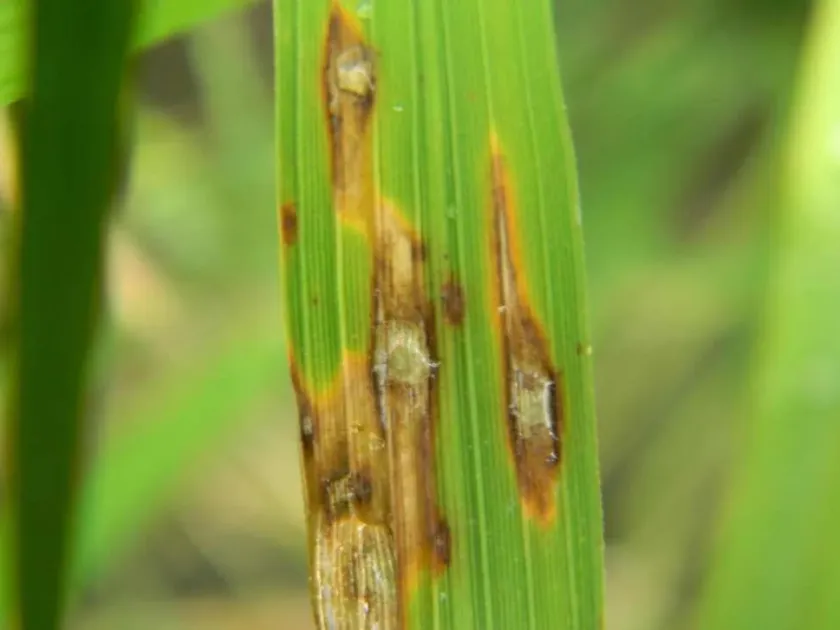
The primary symptoms appear as spindle-shaped or diamond-shaped lesions on leaves. Initially, these spots are grayish-green, but they turn brown or gray with a necrotic center as the disease progresses.
Under high humidity, a characteristic olive-gray fungal mat, composed of conidiophores and conidia, develops over the lesions, facilitating further transmission of the pathogen.
Infection of the nodes (node blast) results in dark, brittle stems that often collapse, preventing nutrients from reaching the upper parts of the plant and causing wilting.
Neck blast occurs when the pathogen infects the panicle base. This leads to the discoloration of the neck and premature death of the entire panicle, resulting in grain sterility.
Panicles affected by blast often turn whitish-gray and fail to fill properly, resulting in shriveled, lightweight, or empty grains that significantly reduce harvest yield.
Pathogen
Rice blast is caused by the ascomycete fungus Magnaporthe oryzae (anamorph Pyricularia oryzae). It is recognized as one of the most destructive diseases affecting cereal crops globally.
The pathogen primarily infects rice plants, but it is also capable of colonizing wheat, barley, rye, and various species of wild grasses that act as alternative hosts.
The disease cycle begins with the production of conidia, which are dispersed by wind, rain splashes, or irrigation water to healthy plant tissues, initiating infection upon contact.
The fungus can persist in crop residues, infected seeds, and weeds, allowing it to survive between growing seasons and emerge as a source of inoculum.
Genetic plasticity is a key feature of the pathogen, enabling it to evolve rapidly, overcome plant resistance genes, and adapt to different environmental conditions and management practices.
Conditions for development
The disease thrives under conditions of high relative humidity, typically exceeding 90%, which is essential for spore germination and infection establishment.
Optimal temperatures for the development of Pyricularia oryzae range from +25°C to +28°C. Frequent dew or prolonged leaf wetness periods are critical for rapid disease spread.
Excessive application of nitrogen-based fertilizers promotes lush, succulent plant growth, which increases the susceptibility of tissues to fungal penetration and colonization.
Dense planting patterns restrict airflow within the canopy, maintaining higher humidity levels around the foliage and creating an ideal environment for the pathogen.
Cloudy, rainy weather during the booting and flowering stages of the plant significantly increases the likelihood of a widespread epidemic.
Why it matters
Rice blast causes significant stand loss during the seedling stage, leading to poor crop establishment and the potential necessity for field reseeding.
The reduction in photosynthetic area due to leaf spotting inhibits the plant's ability to store carbohydrates, resulting in stunted growth and weakened stalks.
In severe cases of neck blast, yield losses can range from 50% up to 100% in susceptible varieties, as the grain fails to develop adequately.
The economic impact is exacerbated by the reduction in grain quality, including lower milling yields, increased breakage during processing, and overall decline in market value.
Farmers are often forced to invest heavily in multiple fungicide applications, which increases production costs and may lead to environmental and resistance management challenges.
Protection
The most sustainable strategy is the cultivation of resistant or tolerant rice varieties, which have been bred to withstand specific local races of the fungus.
Implementing good agricultural practices, such as balanced fertilization, proper plant spacing, and effective weed management, helps minimize disease pressure.
Seed treatment with high-quality fungicides is essential to eliminate seed-borne inoculum and protect the crop during the early stages of development.
Chemical control using systemic fungicides, applied at the booting and heading stages, is a common practice to suppress pathogen activity and protect the panicles.
Sanitation measures, including the removal or deep incorporation of infected crop residues, are vital to reduce the primary inoculum load for subsequent planting seasons.
Discussion
No discussions yet — be the first.