
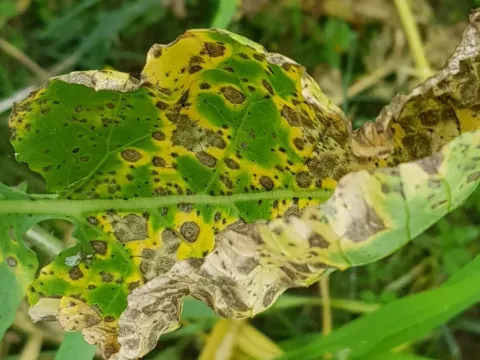
Alternaria leaf spot
Alternaria maritima
The disease is caused by the fungus Alternaria maritima, a member of the diverse Alternaria genus known for causing various leaf spots. This pathogen is particularly well-adapted to coastal and humid environments where environmental moisture levels are consistently high.
What the section contains
Alternaria leaf spot
The fungus overwinters in soil debris and infected plant tissues as dormant mycelium or spores (conidia). These survival structures are highly resistant to environmental stress and become active as soon as favorable temperature and moisture conditions return in the growing season.
Dissemination occurs through wind dispersal of conidia and water splashing during rainfall. Once landed on a host plant, the spores require a film of water to germinate and penetrate the epidermis through natural openings or small wounds caused by insects or mechanical damage.
Inside the plant tissue, Alternaria maritima secretes phytotoxins that kill host cells, facilitating its colonization. This necrotic process creates the characteristic brown or black spots that serve as the focal points for further spore production and infection spread.
The pathogen's biological strategy involves rapid colonization of weakened tissues, making monitoring and early identification essential for effective field management. Understanding its lifecycle is key to breaking the cycle of infection between growing seasons.
Initial symptoms include the appearance of small, dark, circular spots that eventually expand to form larger lesions. A classic sign is the presence of concentric rings within the necrotic spots, often described as a target-pattern appearance, indicating periodic fungal growth.
The foliage is the primary target, where spots can quickly coalesce and lead to yellowing (chlorosis) of the leaves. Severe infections often result in premature leaf drop, which significantly impacts the plant's overall energy balance and growth potential.
During periods of high humidity, an olive-black, velvety layer of conidiophores and conidia develops on the surface of the lesions. This fungal growth is the main source of secondary inoculum that spreads the infection across the field.
In addition to leaves, stems and petioles may also exhibit elongated, dark, sunken lesions. If these lesions encircle the stem, they can interrupt nutrient and water transport, leading to wilting and death of the plant parts above the infection site.
In reproductive stages, the pathogen can infect blossoms and fruit, causing spotting, shriveling, and rot. If the infection reaches the seeds, it can affect viability or act as a primary source of contamination for future plantings.
High relative humidity, typically exceeding 75–80%, is the primary requirement for Alternaria maritima to develop effectively. Prolonged leaf wetness due to rain, irrigation, or heavy morning dew provides the necessary environment for spore germination.
Optimal temperatures for the fungus generally range between 20°C and 28°C. In this range, the pathogen's metabolic activity is at its peak, allowing for the rapid invasion and destruction of host tissues within a short period.
Dense planting patterns that restrict airflow create a stagnant microclimate within the crop canopy. This lack of ventilation keeps leaves wet for longer periods, significantly increasing the probability of successful infection and secondary spread.
Nighttime and early morning fog are major contributing factors in coastal and low-lying areas, maintaining a moist environment on leaf surfaces. These conditions are critical for the survival and colonization process of the pathogen.
Poor plant nutrition and lack of crop vigor can exacerbate the disease. Plants lacking adequate potassium or subjected to environmental stress are less able to build strong cell walls, making them highly susceptible to fungal penetration.
The most immediate harm from the disease is the reduction of total photosynthetic area, which leads to stunted growth and reduced crop yields. By limiting the plant's ability to produce sugars, the fungus directly impacts fruit size and quality.
Economic losses are compounded by the cost of chemical control and potential market rejection of spotted, low-quality produce. In epidemic years, yield losses in sensitive crops can range from significant to devastating if left unmanaged.
The infection can lead to post-harvest issues as well. Fruits or vegetables with hidden Alternaria infections have poor storage life and are prone to secondary rotting by opportunistic bacteria or other fungi during transport and storage.
Persistent infection in the field depletes plant reserves, which is particularly problematic for perennials and long-season crops. This weakness can leave the crop vulnerable to other pests and diseases, creating a complex health issue for the grower.
Seed contamination is a significant long-term risk. Infected seeds act as carriers for the pathogen, ensuring that the disease is introduced into new fields or seasons, complicating management efforts over multiple cycles.
Crop rotation is the first line of defense; moving away from host crops for 3–4 years helps reduce the soil-borne inoculum level. This practice is essential for breaking the survival cycle of Alternaria maritima in the field.
Sanitation practices, including the deep burial or destruction of crop residue after harvest, significantly decrease the amount of overwintering pathogen. Removing weeds that might serve as alternative hosts also helps in managing the disease.
Fungicide applications, when timed correctly based on weather patterns and disease incidence, are highly effective. Using protective treatments before high-humidity events can prevent the initial infection and stop the subsequent spread.
Maintaining balanced fertilization, particularly with potassium and phosphorus, strengthens the structural integrity of the plant. Healthy, vigorous plants have a much better chance of resisting initial invasion and containing minor infections.
Selecting resistant cultivars or hybrids is a sustainable strategy to mitigate the risk of severe disease. Combining this with high-quality seed treatments ensures a healthy start for the crop and reduces the potential for early-season infections.