
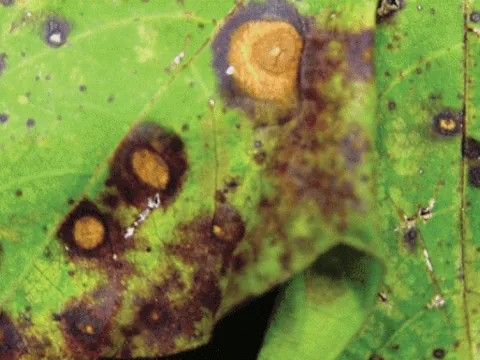
Alternaria leaf spot of cotton
Alternaria macrospora
The causal agent of Alternaria leaf spot is the fungus Alternaria macrospora, a well-known pathogen in cotton-growing regions worldwide. This fungus is a facultative parasite that thrives on cotton tissues throughout the growth cycle.
What the section contains
Alternaria leaf spot of cotton
The pathogen overwinters as mycelium and conidia in infected crop residues left in the soil after harvest. Seed transmission is also a critical pathway, as contaminated seeds can introduce the fungus into previously disease-free fields.
During the growing season, the fungus spreads via airborne conidia, which are easily dispersed by wind, splashing rain, or agricultural machinery. These conidia land on cotton leaves and under favorable conditions, germinate and infect the plant.
Once the fungal hyphae enter the plant tissue, often through stomata or mechanical wounds, they begin to colonize the interior space. The pathogen produces toxins that cause cell death, resulting in the characteristic spotting observed on the foliage.
Understanding the life cycle of Alternaria macrospora is essential for implementing effective crop protection programs. Because the pathogen can survive for long periods, management must focus on reducing initial inoculum levels.
Initial symptoms typically appear on cotyledons and lower leaves as small, brown, circular spots. Over time, these spots expand, often reaching several millimeters in diameter as the infection progresses.
A diagnostic feature of this disease is the presence of distinct concentric rings within the spots, giving them a target-like appearance. As the infection ages, the center of the spot may turn grey or necrotic, surrounded by a yellowish chlorotic halo.
Under conditions of high humidity or prolonged dew, a dark, velvety layer of sporulation develops on the surface of the lesions. This mass of conidia and conidiophores is a source of secondary infection throughout the cotton field.
Severe infestations lead to widespread leaf blighting, where large portions of the canopy turn brown and prematurely abscise. This loss of foliage significantly compromises the plant's ability to perform photosynthesis.
Bolls can also be affected, showing sunken, dark brown to black lesions. These boll infections can result in poor fiber development, decay, and direct contamination of the lint, impacting both yield and quality.
Warm and humid environments are optimal for the development and spread of Alternaria macrospora. The disease is most severe when temperatures range between 20°C and 28°C during the peak vegetative stage.
Persistent high relative humidity, frequent rainfall, or heavy evening dews create the perfect microclimate for conidial germination. Periods of wet weather allow the fungus to infect plant tissues efficiently.
Poorly ventilated fields, often caused by excessively high planting densities or inadequate weeding, retain moisture longer. This elevated moisture creates a favorable environment for the pathogen to thrive and spread rapidly.
Cotton plants suffering from nutrient deficiencies, especially low potassium levels, show increased susceptibility to the disease. Stress factors weaken the plant's natural defense mechanisms, making them easier targets for infection.
Continuous cropping of cotton on the same land facilitates the buildup of the fungus in the soil. Without a proper crop rotation system, the population of Alternaria spores increases annually, raising the risk of infection.
The primary economic impact of Alternaria leaf spot is the significant reduction in crop yield caused by premature defoliation. Without adequate leaf surface area, the plant cannot effectively fill the bolls with energy reserves.
Boll infections degrade the quality of the harvested cotton fiber. The fibers may be shorter, weaker, and discolored, which lowers their market value and makes them less desirable for the textile industry.
In severe cases of epidemic development, yield losses can reach 30% to 50% if left unmanaged. Such losses have a direct impact on the profitability of the agricultural enterprise and long-term land productivity.
Secondary infections of the seed can lead to poor stand establishment in the following season. Farmers who do not address the disease in the current season may face increased costs and lower production in future cycles.
Increased susceptibility to other pests and opportunistic pathogens often occurs in plants weakened by Alternaria. This creates a complex management scenario that requires integrated pest and disease control strategies.
Implementing a rigorous crop rotation program is the first line of defense to disrupt the pathogen's life cycle. Deep plowing to bury crop residues helps reduce the source of primary inoculum in the field.
Using high-quality, fungicide-treated seeds is crucial for preventing early-season infections. Seed treatment provides an initial protective barrier that helps ensure healthy seedling emergence.
Maintaining optimal plant density and balanced soil fertility, particularly potassium, strengthens plant immunity. Properly managed fields are less prone to the prolonged humidity needed for fungal proliferation.
If monitoring indicates the presence of the disease, timely application of registered fungicides is required. Using preventative or early-curative products is more effective than trying to manage a fully established outbreak.
- Practice at least a 3-year crop rotation.
- Promptly remove and destroy infected plant debris.
- Use resistant or tolerant cotton cultivars when available.
- Monitor fields regularly for early spot symptoms.
- Ensure balanced application of N-P-K fertilizers.