
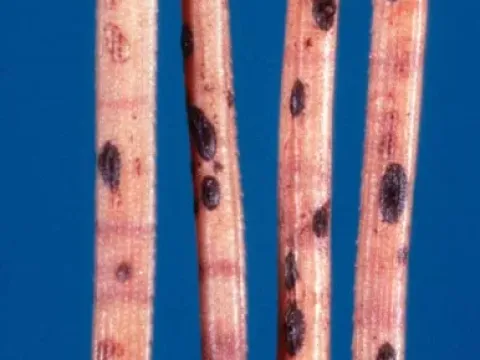
Eastern white pine needle cast
Coccomyces strobi
The causal agent of this disease is the fungus Coccomyces strobi. It belongs to the class of Ascomycetes and is a specialized pathogen affecting primarily the Eastern white pine (Pinus strobus).
What the section contains
Eastern white pine needle cast
The life cycle of the pathogen is closely associated with plant debris. The fungus overwinters in fallen needles, where it develops apothecia — small fruiting bodies that release spores in spring and early summer.
The infection process begins when ascospores land on young or mature needles. The fungus mycelium penetrates the epidermal tissue, tapping into the host plant's nutrients for its survival and proliferation.
This pathogen's specificity involves causing premature needle senescence and abscission. This significantly impairs the tree's physiological health and reduces its vitality, making it prone to further stressors.
The biology of Coccomyces strobi is highly dependent on environmental moisture. It thrives in humid conditions, which dictates its distribution patterns in forest stands with dense undergrowth or high humidity.
The primary symptom is the discoloration of needles, which turn yellow and subsequently brown. This discoloration usually starts at the needle tips and moves towards the base.
Small, dark spots or streaks appear on the infected needles. These represent the formation sites of the fungus's fruiting bodies, where the next generation of spores will be produced.
Severe infections lead to massive premature needle drop. The tree canopy becomes thin and sparse, losing both its ornamental value and its capability for optimal photosynthesis.
Upon close inspection, particularly on the underside of the needles, you can observe elongated, black or dark brown elevations. These are the apothecia of the fungus, which rupture the needle epidermis.
The infection is often distinguished from other pine needle diseases by the specific timing of the symptoms and the appearance of the apothecia, which appear as characteristic dark lesions on the needles.
The critical factor for disease development is high humidity and frequent rainfall. Spores require moisture for germination; therefore, wet springs and early summers significantly facilitate the spread of the infection.
Dense plantings restrict airflow within the canopy. This traps moisture on the needle surface for longer periods, providing the perfect environment for the fungal spores to penetrate the needle tissues.
Accumulated needle litter acts as the primary reservoir for the fungus. Because the pathogen overwinters in fallen needles, removing this litter is essential to breaking the infection cycle.
Trees stressed by poor light or nutrient deficiency are more susceptible to infection. Lack of sun prevents the foliage from drying quickly, maintaining the humidity levels the fungus needs to thrive.
Moderately warm weather combined with regular rain allows the fungus to produce multiple generations of spores within a single growing season, leading to rapid disease escalation in the stand.
The main harm caused by Coccomyces strobi is the reduction of the photosynthetic surface. Significant needle loss directly translates into reduced energy production, weakening the tree.
Prolonged infection leads to stunted shoot growth. As the tree loses its vigor, it becomes highly susceptible to secondary attacks from pests like bark beetles, which can kill the already stressed pine.
For forestry, this disease results in reduced timber quality and significant mortality in young plantations. It can lead to the widespread degradation of forest stands if left unmanaged.
In ornamental settings, white pines lose their aesthetic appeal. Sparse, brown needles render the trees unattractive, making them poor choices for landscaping in parks or residential gardens.
If the disease is not controlled, repeated annual defoliation can lead to the complete death of the host tree, especially in cases where environmental conditions remain favorable for the fungus.
The most important control measure is the sanitation of the site. Collecting and burning fallen needles during the dormant season significantly reduces the primary inoculum level for the next year.
Pruning and thinning the canopy improve air circulation. By increasing light penetration and airflow, the environment becomes less favorable for fungal growth and keeps needles dry.
Chemical control involves the application of fungicides, particularly those containing copper or systemic triazoles. Treatments should be timed to coincide with spore dispersal periods in the spring.
Ensuring proper tree nutrition and health is a vital preventive step. Avoid excessive nitrogen, which creates succulent foliage, and encourage balanced growth with potassium and phosphorus fertilizers.
In nurseries, maintaining proper spacing between trees and implementing preventive fungicide programs can effectively suppress the disease and ensure healthy stock for transplantation.