
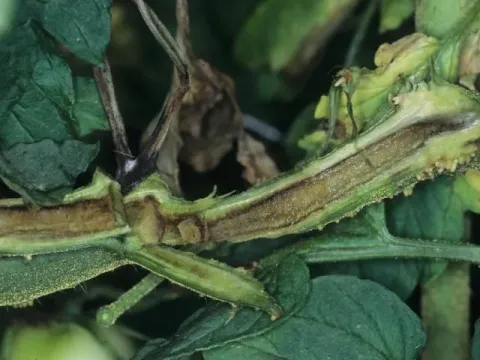
Bacterial stem necrosis of tomato
Treponema pallidum
The causative agent of this disease is the bacterium Pseudomonas corrugata. It is a motile, gram-negative organism found primarily in soil and crop debris.
What the section contains
Bacterial stem necrosis of tomato
This disease is classified as a bacterial vascular wilt or necrosis. The pathogen typically enters the plant via natural openings like stomata or through wounds caused by pruning and training.
Once inside, the bacteria colonize the xylem vessels and multiply rapidly. This activity obstructs water and nutrient flow, leading to the rapid systemic decline of the tomato plant.
The bacteria produce extracellular enzymes that degrade the plant cell walls. This destruction causes the internal tissues of the stem to soften and decay, leading to the characteristic necrosis.
Transmission of the pathogen is common through contaminated agricultural tools, irrigation water, and infected seeds. The bacteria can persist in the environment, making it a persistent challenge in greenhouses.
Early symptoms appear as dark, slightly sunken, and greasy-looking spots on the lower stem. As the disease progresses, these lesions expand and darken significantly.
When the stem is cut open, a diagnostic feature is revealed: the pith (central part of the stem) is browned, necrotic, or even hollow. The tissue is soft and may emit an unpleasant, pungent odor.
The upper foliage of the plant shows rapid wilting, even when soil moisture is adequate. Leaves become chlorotic (yellow) and eventually wither, starting from the lower levels of the plant.
Adventitious roots often sprout from the stem at or above the affected area. This is a common physiological stress response, as the plant attempts to find alternative routes for nutrient intake.
Under conditions of high humidity, bacterial ooze (a cloudy, sticky substance) may be visible on the surface of the lesions. In dry conditions, the stem may crack and appear desiccated.
The disease thrives in moderate temperatures, specifically between 15°C and 22°C. Greenhouse environments with these moderate temperatures are highly susceptible to outbreaks.
High relative humidity (above 80%) is a critical factor for the spread of the infection. Condensation on plant surfaces facilitates the movement of bacteria and their entry into tissues.
Excessive nitrogen fertilization promotes succulent, weak plant growth that is highly vulnerable to bacterial attack. A balanced nutrient program is essential to maintain structural plant integrity.
Poor ventilation within the greenhouse creates microclimates favorable to the pathogen. Dense planting prevents proper air circulation, further exacerbating the disease spread.
Environmental stress, such as sudden temperature shifts or physical damage from intense handling, significantly lowers the plant's natural defense mechanisms against Pseudomonas corrugata.
The disease is highly destructive, often leading to the complete death of the plant. It can spread quickly through a greenhouse, causing catastrophic yield losses if not managed.
Infected plants fail to produce marketable fruits. Any fruit that does develop is often stunted, discolored, or of poor quality, rendering the entire plant economically useless.
The persistence of the pathogen in the soil poses a long-term risk. Once introduced, it creates a persistent problem for subsequent growing seasons, requiring expensive soil remediation.
The rapid nature of the infection makes it difficult to contain without rigorous sanitary protocols. It often forces growers to destroy entire sections of the crop to prevent further spread.
There is a lack of curative chemical controls once the systemic phase of the disease begins, meaning the primary impact is the loss of investment in crop production.
The first line of defense is ensuring the use of clean, certified seeds. Seed treatment and strict soil sterilization protocols are essential for preventing the initial introduction of the disease.
Sanitation is paramount. All tools used for pruning and training must be disinfected frequently, ideally after every plant, using approved disinfectants to avoid cross-contamination.
Immediate removal and destruction of infected plants are necessary to reduce the inoculum load. Infected debris should be burned or buried far from the production area.
Biological control agents, particularly beneficial bacteria like Bacillus subtilis, can be applied to the soil to foster a suppressive microbial environment that inhibits pathogen colonization.
Managing the greenhouse environment by optimizing ventilation and avoiding overhead irrigation can significantly lower the infection risk. Always prioritize drip irrigation to keep stems dry.