
Description
Symptoms
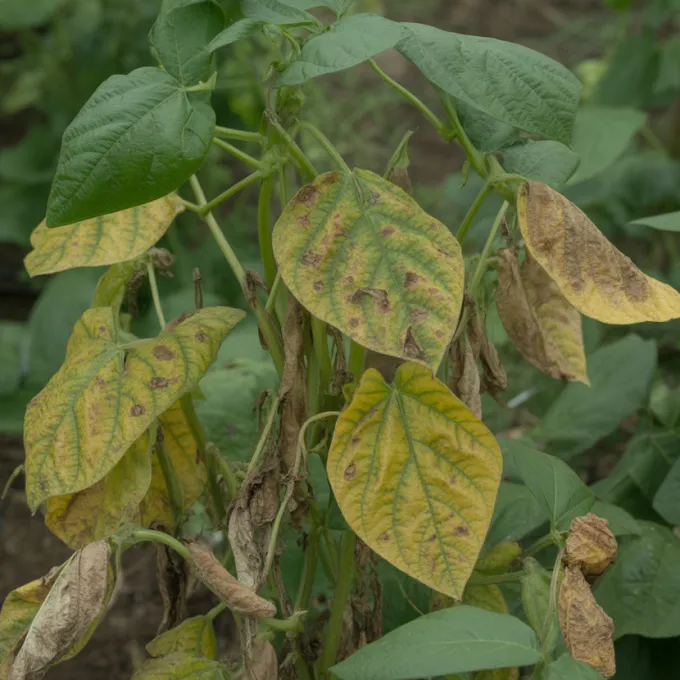
The first symptoms of the disease appear as leaf wilting, which becomes particularly noticeable during hot hours of the day when plants lose turgor. Over time, the leaf margins begin to turn yellow and then brown, acquiring a scorched appearance, which is a classic symptom of the infection.
In the later stages of pathogen development, longitudinal cracks or dark stripes may appear on the stems, indicating damage to the plant's vascular system. When cutting the stem or petiole, an exudate is clearly visible, and the vascular bundles acquire a characteristic brown discoloration.
The disease is often accompanied by stunted growth and shedding of flower buds, which leads to a critical decrease in crop productivity. In some cases, pods do not form at all, and the existing seeds become shriveled and covered with spots.
When seeds are infected, characteristic bacterial spots often appear on their surface, usually with a yellowish or orange border, which is a diagnostic sign for this pathogen. The color of these spots may vary depending on the specific bacterial strain.
It is important to differentiate this disease from Fusarium wilt, as in bacteriosis, the root system often remains visually healthy until the aerial part dies. Laboratory analysis for the presence of vascular exudate is used for accurate identification.
Pathogen
The causative agent of the disease is the gram-positive bacterium Curtobacterium flaccumfaciens (formerly known as Corynebacterium flaccumfaciens). It is a soil-borne and seed-borne pathogen capable of maintaining viability in plant residues for a long time.
The bacterium enters the plant through mechanical damage or natural openings, such as stomata, and subsequently colonizes the plant's xylem. The development of the pathogen within the vascular system leads to the clogging of vessels by its metabolic products.
Besides beans, the pathogen has a wide host range and affects other legume species, and is occasionally found on fodder beet, causing systemic infection. The bacterium's ability to enter a dormant state allows it to survive unfavorable environmental conditions.
The transmission of infection occurs primarily through contaminated seed material, making seeds the main vector for spreading the disease to new areas. Bacteria can persist on the surface of seeds and internally.
During the growing season, the pathogen spreads via rain splashes, irrigation water, and insects that damage plant tissues. Mechanical cultivation of fields can also facilitate the transfer of bacteria from infected to healthy plants.
Conditions for development
The most favorable conditions for the intensive development of bacterial wilt are high air temperatures, often exceeding 25–30 degrees Celsius. Hot weather promotes rapid bacterial division within the plant vessels.
High soil and air humidity significantly increase the risk of epiphytotics, as moisture is essential for the bacteria to emerge from infected tissues and spread. Frequent rainfall during the flowering period creates an ideal environment for infection.
Poor agricultural practices, such as high-density sowing, promote a microclimate with high humidity, which facilitates the infection process. It is also important to consider the presence of insect pests that create entry points for the pathogen.
In fields with poor drainage and standing water, the disease spreads much faster, covering large areas in a short time. Soil factors also play a role, especially in fields with an accumulation of inoculum from previous crops.
Temperature fluctuations combined with excessive irrigation create stress for plants, reducing their natural immunity. In such conditions, even a minor presence of bacteria in the soil can lead to mass infection of the crop.
Why it matters
The primary damage from bacterial wilt lies in the total loss of marketable product and a significant reduction in legume yields. Under severe infection, grain losses can reach 50–80% of the potential volume.
Infected plants lose the ability to perform normal photosynthesis due to vascular clogging, which leads to premature death of the entire aerial mass. Wilted plants often die before the pod formation phase is completed.
Seeds obtained from infected plants become the primary source of infection for the next season, making them unsuitable for planting. Seed quality drops sharply upon infection, reducing germination rates and vigor.
The pathogen poses a serious threat to breeding centers and farms specializing in elite seed production, as the latent form of infection can remain undetected for a long time. The spread of the disease to forage crops complicates crop rotation schedules.
Economic losses include not only direct crop failure but also the costs of quarantine measures, discarding seed batches, and the necessity of adhering to long breaks in bean cultivation on infested fields.
Protection
The main control measure is the use of strictly healthy seed material that has undergone thorough phytosanitary inspection. It is unacceptable to plant seeds from fields where symptoms of bacteriosis have been previously detected.
Adherence to scientifically-based crop rotation is the foundation of prevention, requiring at least a 3–4 year break before returning beans to the same field. It is crucial to avoid proximity to other susceptible legume crops.
Spatial isolation of fields from infested areas and the destruction of plant residues after harvest significantly lower the infection background. Deep autumn plowing helps accelerate the mineralization of organic matter and the death of bacteria.
The use of insecticides to control insect pest populations helps minimize mechanical plant injuries through which infection enters. This is especially relevant during active growing phases.
Chemical control of fields with fungicides and bactericides is mainly preventive, as direct action on bacteria inside vascular tissues is difficult. Treating seeds with specialized seed dressings before planting remains the most effective protection method in early stages.
Pathogens and affected parts
Affects crops · 1
Discussion
No discussions yet — be the first.