
Bacterial spot of tomato and pepper
Xanthomonas vesicatoria
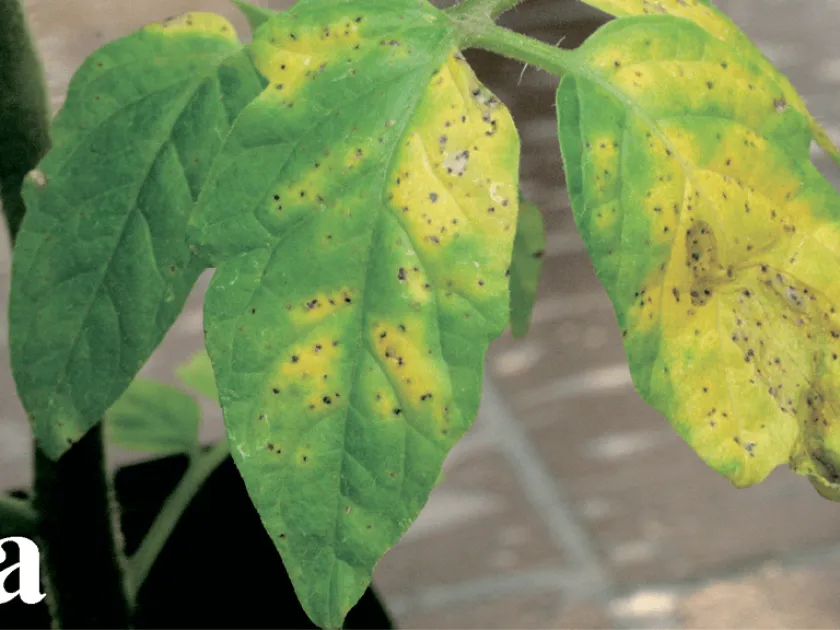
Description
Symptoms
Early symptoms appear as small, water-soaked, circular or irregular spots on leaves, which gradually turn dark brown or black with a distinct yellow halo.
On stems, the infection manifests as elongated streaks or scabby lesions that can lead to stem girdling and plant stunting under severe conditions.
Fruits develop small, raised, blister-like spots that expand into rough, sunken scabs, severely reducing the marketability and visual quality of the crop.
If the infection reaches the flowers, they may abscise (drop off) prematurely, leading to significant fruit set reduction and yield loss.
During extended periods of high humidity, lesions may coalesce, leading to necrotic patches that cause leaf curling and premature senescence of the foliage.
Pathogen
Bacterial spot is caused by the Gram-negative bacterium Xanthomonas vesicatoria, a highly contagious pathogen that affects the foliage, stems, and fruits of Solanaceous crops.
The bacteria can survive in infected seeds, crop debris, and on weed hosts, making it a persistent threat in many vegetable-growing regions worldwide.
The pathogen enters the host plant through stomata or mechanical wounds caused by heavy rain, wind-blown sand, or cultural practices like pruning and harvesting.
Once inside, the bacteria multiply rapidly within the intercellular spaces of the plant tissue, causing characteristic lesions that disrupt photosynthesis and metabolic functions.
Genetic diversity among bacterial strains means that resistance in tomato and pepper varieties is often overcome, requiring an integrated approach to management.
Conditions for development
Warm temperatures ranging from 25°C to 30°C combined with high humidity are the primary environmental drivers for the rapid development of bacterial spot.
Frequent rain events are particularly hazardous as they provide the necessary film of water for bacterial mobility and facilitate the splash dispersal of the pathogen.
Greenhouse environments with poor ventilation and condensation on plant surfaces create ideal microclimates for the rapid spread of the bacteria among plants.
Overhead irrigation acts as a major vector for the pathogen, as the spray effectively transfers bacteria from infected foliage to healthy neighboring plants.
Tender tissue, especially during rapid vegetative growth, is most susceptible to infection, making early-season management critical for successful harvest.
Why it matters
The primary economic impact is the rejection of harvested fruits due to unsightly scabs, which make the produce unsuitable for fresh market sale or processing.
Reduced photosynthetic capacity from leaf damage leads to smaller fruit size, lower nutritional content, and a shortened productive life span of the plant.
In seedling nurseries, an outbreak can lead to total crop loss, resulting in significant financial setbacks for growers and disrupted planting schedules.
Secondary infections, such as soft rot, are more likely to occur on fruit damaged by bacterial spot, leading to post-harvest losses in transit and storage.
- Marketable yield losses frequently exceeding 50% in untreated fields.
- Increased expenditure on copper-based bactericides and labor.
- Long-term soil contamination risks requiring extended crop rotation intervals.
Protection
The use of pathogen-free, certified seeds and treated transplants is the most effective first line of defense against the introduction of the disease.
Implementing a rigorous crop rotation plan that excludes Solanaceous crops for at least three years helps reduce the inoculum levels in the soil.
Strict sanitation practices, including the removal and destruction of crop debris and the control of volunteer plants, are essential to break the disease cycle.
Applying copper-based fungicides periodically can help protect foliage from infection, especially during weather conditions favorable to the pathogen.
Adopting drip irrigation systems and ensuring adequate plant spacing for airflow effectively minimizes leaf wetness and reduces the risk of disease spread.
Discussion
No discussions yet — be the first.