
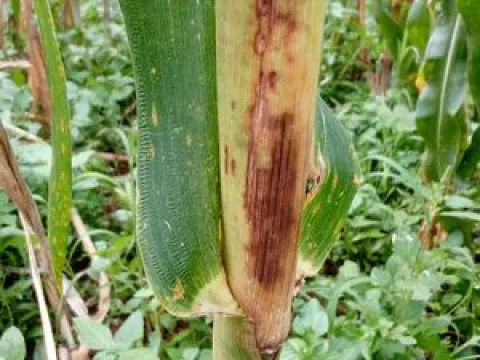
Bacterial stalk rot of maize
Dickeya zeae
The causative agent of this disease is the gram-negative bacterium Dickeya zeae. Formerly associated with the genus Erwinia, it is now classified within the Pectobacteriaceae family and is a major concern for global maize production.
What the section contains
Bacterial stalk rot of maize
This pathogen produces potent pectolytic enzymes that degrade the plant's cell walls, leading to tissue maceration and rapid collapse of the vascular system. It is highly efficient at invading both the pith and the vascular bundles of the stalk.
Dickeya zeae is a facultative anaerobe, allowing it to thrive in the low-oxygen environments found inside the dense tissues of the maize stalk. Its ability to form biofilms protects it from environmental stress and makes it highly persistent.
The bacteria can be seed-borne, soil-borne, or transmitted via contaminated water and insects. Its rapid life cycle enables it to create significant inoculum levels within a single growing season.
Genetic diversity among Dickeya strains poses a challenge for plant breeders aiming to develop durable resistance, as new variants of the bacteria can emerge and adapt to local environments.
Early symptoms appear as water-soaked spots on the leaves and leaf sheaths, which soon turn into necrotic areas. The most distinct sign is the sudden wilting of the plant despite adequate soil moisture.
The lower part of the stalk typically shows signs of dark, soft rotting. When the stalk is split open, the internal tissues appear discolored, mushy, and emit a strong, unpleasant, putrid odor characteristic of bacterial decay.
As the rot progresses, the stalk loses its structural rigidity, leading to lodging, where the plants bend or snap at the nodes. This collapse is often rapid and can affect large patches of the field within a few days.
The ears of infected plants may also show signs of rot, appearing stunted, deformed, or covered in a bacterial exudate. The grain quality is severely compromised, often becoming shriveled or completely rotten.
- Water-soaked lesions on leaves and sheaths.
- Rapid, irreversible wilting of the whole plant.
- Soft, mushy, and discolored interior of the stalk.
- Distinct putrid odor from infected stalk tissue.
- Bacterial oozing on stems under high humidity.
Disease development is strongly favored by high temperatures, typically ranging from 25°C to 35°C, and high humidity levels. These conditions accelerate both the metabolism of the pathogen and the spread of the bacteria.
Physical injuries caused by insects, hail, or mechanical cultivation serve as entry points for the bacteria. Wounded tissue is significantly more susceptible to infection than intact plant surfaces.
Excessive irrigation or poor field drainage provides the moisture necessary for bacterial dispersal across the field. Standing water often acts as a transport medium for Dickeya zeae cells.
High nitrogen fertilization rates can result in lush, succulent growth that is more easily penetrated by the pathogen. Balanced crop nutrition is crucial for maintaining the plant's natural resistance.
Frequent rainfall during the vegetative growth stages promotes the splash-dispersal of bacteria from the soil or lower leaves to the upper parts of the plant, significantly increasing the severity of the outbreak.
Bacterial stalk rot can cause devastating yield losses, sometimes resulting in total crop failure in heavily infested fields. The sudden collapse of plants makes mechanical harvesting difficult or impossible.
The economic impact includes not only the reduction in grain quantity but also a severe decrease in grain quality. Infected corn is often unfit for human consumption or livestock feed due to tissue damage.
The presence of Dickeya zeae in a field may necessitate long-term changes in crop rotation plans. It restricts the farmer's ability to grow maize in affected areas for several years, causing economic strain.
Secondary infections by opportunistic fungi often follow the bacterial colonization, further accelerating the degradation of the plant tissue and complicating the diagnosis.
The rapid spread of the disease within a short window of time makes timely intervention extremely difficult, often leaving farmers with few options other than harvest adjustment or field abandonment.
Implementing long-term crop rotation with non-host crops is essential to reduce the bacterial population in the soil. Avoiding continuous corn cultivation is the most effective preventative strategy.
Selecting hybrids with documented tolerance or resistance to bacterial stalk rot is the primary tool for mitigating risks. Seed treatment and early scouting help in managing initial pressure.
Effective management of corn borers and other stalk-feeding insects is critical, as they create the injuries required for the bacteria to colonize the host. Integrated pest management programs are recommended.
Improving field drainage and ensuring optimal plant density can reduce the humidity levels that favor the pathogen. Proper sanitation, including the destruction of crop debris, helps limit the survival of the inoculum.
Cleaning and disinfecting farm machinery after working in affected areas prevents the movement of the bacteria to uninfected parts of the farm. Vigilance and early detection are key to minimizing damage.