
Bacterial wilt
Ralstonia
Bacterial wilt is caused by the soil-borne bacterium Ralstonia solanacearum. It is one of the most destructive plant pathogens globally, capable of infecting hundreds of plant species.
What the section contains
Bacterial wilt
The bacterium invades the vascular system of the host plant, specifically the xylem, where it multiplies rapidly. This creates a biofilm that physically blocks the transport of water and nutrients, leading to wilting.
This pathogen survives well in contaminated soil, water, and infected plant debris. It can persist for several years, making eradication extremely challenging for farmers.
Spread occurs primarily through infected seed potatoes, contaminated tools, machinery, and irrigation water, especially when water flows from infected to healthy fields.
The pathogen is highly diverse, categorized into different races and biovars, which allows it to thrive in various climates, from temperate to tropical zones.
The first symptom is the drooping of individual leaves during the hottest part of the day, with recovery at night. As the infection progresses, wilting becomes permanent and the plant dies.
A cross-section of the stem reveals a distinct browning of the vascular ring. Applying gentle pressure to the cut surface often causes a milky white bacterial ooze to emerge.
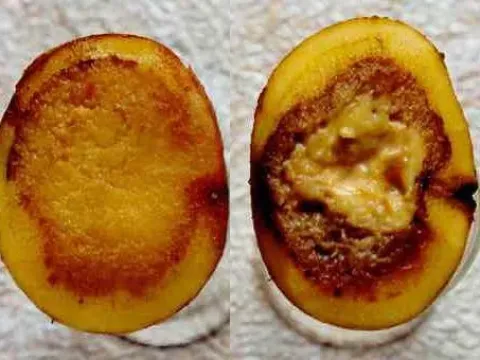
Tubers also show internal symptoms, including vascular discoloration that appears as a brown ring. In advanced stages, the internal tissue becomes soft and eventually decays.
Under humid conditions, sticky droplets of bacterial exudate can be seen emerging from the eyes of the tuber or the stolon attachment point, often trapping soil particles.
The disease can lead to the complete decay of the tuber's interior, leaving a foul-smelling, mushy mass that makes the crop entirely unsuitable for storage or consumption.
Development of the disease is strongly correlated with high soil temperatures, typically between +25°C and +35°C, making hot weather a critical period for monitoring.
High soil moisture is essential for the bacteria to spread. In saturated soil, the bacteria swim through water films to colonize the roots of healthy neighboring plants.
Improper irrigation management, especially where runoff water flows across the field, significantly increases the risk of wide-scale contamination.
Frequent cropping of susceptible plants like potatoes, tomatoes, or peppers in the same field leads to a buildup of the pathogen population in the soil.
Physical injuries to the roots caused by tillage or soil-borne pests provide easy entry points for the bacteria to infect the plant tissue.
The economic impact of bacterial wilt is severe, as it can cause total yield loss within a single season. It is a major threat to global potato production.
Because it is a regulated quarantine pest in many regions, the presence of the pathogen on a farm can lead to strict movement restrictions and export bans.
Infected harvests are almost always unsalvageable. The presence of just a few infected tubers can destroy an entire storage facility due to rapid decay spread.
The long-term persistence of the pathogen in the soil forces farmers to abandon traditional crop rotations, significantly reducing the profitability of the land.
The hidden nature of the infection means that healthy-looking planting stock can carry the bacteria, leading to outbreaks in previously clean fields.
The most effective strategy for managing bacterial wilt is a holistic approach combining strict sanitation and cultural practices.
- Plant only certified, disease-free seed potatoes obtained from reputable sources.
- Implement long-term crop rotations (5+ years) that do not include Solanaceous host plants.
- Maintain strict hygiene by disinfecting all farm equipment, crates, and footwear after moving from infected areas.
- Rogue and destroy infected plants immediately upon detection, including surrounding soil.
- Monitor irrigation sources to ensure they are not contaminated with run-off water from upstream infested fields.