
Bacterial soft rot of cacti
Pectobacterium cacticida
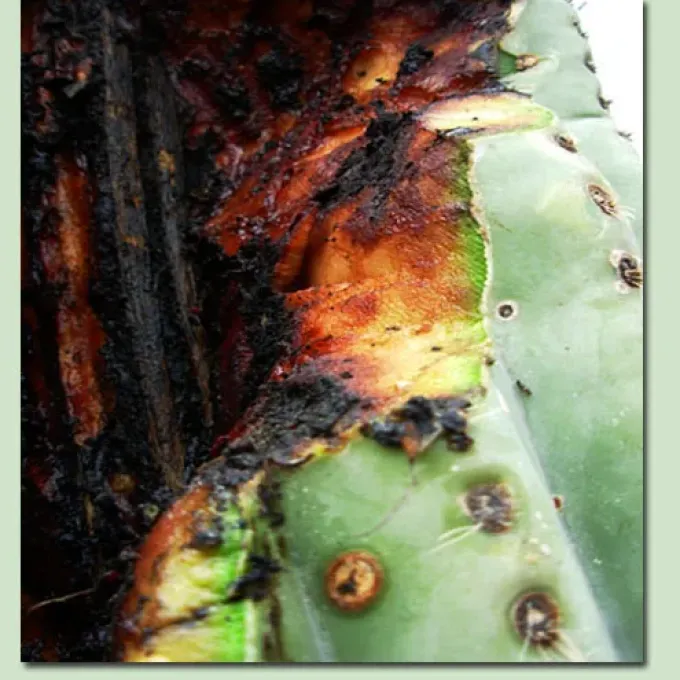
Description
Symptoms
The initial signs of infection include small, water-soaked spots on the stem that rapidly enlarge and darken in color.
Affected tissue loses structural integrity, becoming soft and mushy, often emitting a foul, characteristic odor as fermentation occurs.
The epidermis of the cactus may sag or rupture, leading to the discharge of the liquefying internal pulp of the plant.
In advanced stages, the disease spreads through the vascular system, leading to total collapse of the succulent's internal body.
Unlike fungal rots, which often develop more slowly, bacterial soft rot can turn a healthy cactus into a pile of decay in just a few days.
Pathogen
The causal agent of this disease is the gram-negative bacterium Pectobacterium cacticida, which belongs to the Pectobacteriaceae family.
This rod-shaped bacterium thrives by producing cell wall-degrading enzymes, primarily pectinases, within the succulent host tissue.
These enzymes dissolve the middle lamellae of plant cells, causing the internal structure of the cactus to collapse into a soft, watery mass.
The bacterium can persist in plant debris, contaminated soil, or on greenhouse surfaces, making it a persistent environmental hazard.
Pectobacterium cacticida is biologically adapted to rapid growth in fleshy plant organs, leading to aggressive tissue necrosis.
Conditions for development
High moisture levels combined with poor soil drainage are the primary drivers of bacterial soft rot outbreaks in cacti collections.
High relative humidity and stagnant air circulation promote bacterial proliferation, especially in overcrowded greenhouse environments.
Physical injuries to the cactus skin, whether from handling, repotting, or insect damage, provide direct entry points for the bacteria.
Warm temperatures (typically above 25°C) significantly accelerate the multiplication of Pectobacterium cacticida within the plant.
Poor sanitation practices, such as using unsterilized tools or reusing infested potting substrate, are major contributors to spread.
Why it matters
Bacterial soft rot is considered one of the most destructive diseases for cacti, often resulting in the total loss of the specimen.
The speed at which the infection progresses leaves very little window for diagnostic detection and effective intervention.
Its high contagiousness poses a significant risk to nursery stocks, where one infected plant can threaten the entire inventory.
The economic impact involves not only the loss of specimen plants but also the cost of labor for containment and quarantine measures.
Once the central core of the cactus is infected, systemic recovery is virtually impossible, leading to inevitable plant mortality.
Protection
Effective management requires immediate removal and destruction of the infected cactus to prevent the spread to adjacent healthy plants.
If caught early, surgically excise the rotting tissue, ensuring you cut well into the healthy green tissue, and disinfect the blade after every cut.
Treat the exposed surface of the remaining healthy part with an appropriate disinfectant, such as powdered charcoal or sulfur dust, and keep it dry.
Implement strict hygiene protocols, including the sterilization of all tools and pots that come into contact with potentially contaminated material.
- Ensure proper ventilation and air movement.
- Avoid over-watering and maintain a well-draining substrate.
- Monitor for and control insect vectors.
- Use sterile soil mixes for all propagation and repotting.
Discussion
No discussions yet — be the first.