
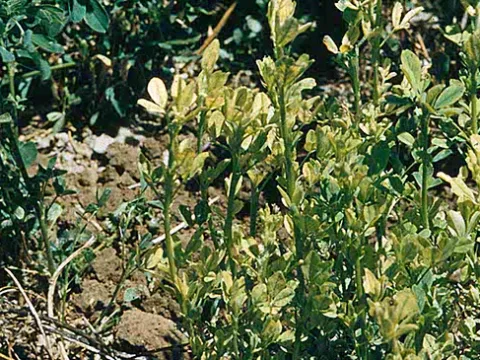
Bacterial wilt of alfalfa
Clavibacter insidiosus
The causal agent of this disease is the Gram-positive bacterium Clavibacter insidiosus, which primarily affects the vascular system of alfalfa plants.
What the section contains
Bacterial wilt of alfalfa
The bacteria colonize the xylem vessels, where they multiply and produce extracellular polysaccharides that restrict the upward movement of water and nutrients.
The pathogen is highly persistent and can survive in infected crop residues, soil, and dormant plant tissues for several years.
Dissemination often occurs through irrigation water, contaminated farming equipment, and soil-inhabiting nematodes that cause root wounds.
Systemic infection leads to the gradual degradation of the plant, starting from the roots and spreading throughout the entire vascular architecture.
Initial symptoms include chlorosis of the foliage, where leaves turn yellow, curl at the margins, and become stunted in overall growth.
A distinct sign is the shortened internodes, resulting in a bushy, dwarfed appearance of the plant that makes it stand out from healthy alfalfa patches.
Internal diagnostics reveal a characteristic discoloration of the vascular ring. A cross-section of the crown or root shows a brown or reddish-brown stained area.
During hot, dry spells, infected plants exhibit severe wilting because the compromised vascular system cannot transport enough water to the foliage.
As the disease progresses, the root system undergoes decay, eventually leading to plant death and the formation of thin or barren spots in the field.
High soil moisture and frequent rain events significantly favor the spread and activity of Clavibacter insidiosus within the plant tissue.
The disease development is most rapid at temperatures between 20°C and 25°C, corresponding to peak growing conditions for the crop.
Mechanical damage to roots and crowns caused by farm equipment or winter heaving provides ideal entry points for the bacteria to colonize the host.
The presence of root-knot or lesion nematodes exacerbates the disease, as they create necessary injuries and can facilitate the movement of bacteria in the soil.
Continuous cropping of alfalfa on the same ground increases the soil inoculum level, making recurring infections nearly inevitable without proper rotation.
The primary economic impact is a drastic reduction in forage yield and quality, as infected plants become unproductive and die prematurely.
The nutritive value of the hay is compromised due to leaf yellowing and shedding, resulting in lower protein levels and overall feed quality.
Stand thinning allows invasive weeds to proliferate, forcing farmers to increase herbicide use and ultimately leading to early field termination.
Infected stands show reduced cold hardiness, which leads to increased plant loss during severe winters and poor stand persistence over multiple years.
Long-term field productivity is threatened, as the persistence of the pathogen in the soil mandates a long waiting period before re-seeding alfalfa.
Planting resistant alfalfa varieties is the most effective and sustainable strategy for managing bacterial wilt in commercial forage production.
Implementing a long-term crop rotation strategy—typically waiting 4 to 5 years before re-planting alfalfa—is essential to reduce soil inoculum.
Maintaining high equipment sanitation and avoiding mowing operations when fields are excessively wet helps prevent the spread of the pathogen.
Ensuring that only high-quality, pathogen-free certified seeds are used prevents the introduction of the bacteria into clean areas.
Cultural practices that minimize plant stress and damage, such as proper fertilization and nematode management, are vital for maintaining stand health.