
Bacterial spot of pepper and tomato
Xanthomonas euvesicatoria
Bacterial spot is caused by the Gram-negative bacterium Xanthomonas euvesicatoria. It is a highly destructive pathogen that specifically targets Solanaceae crops, including peppers and tomatoes, worldwide.
What the section contains
Bacterial spot of pepper and tomato
The pathogen can survive in infected seeds, crop debris within the soil, and on volunteer weeds. It enters the plant host through natural openings like stomata or through wounds caused by pruning, wind, or handling.
Once inside the leaf tissue, the bacteria multiply rapidly in the intercellular spaces. This metabolic disruption leads to tissue necrosis and the characteristic spotting that defines the infection.
The bacteria are highly mobile under moist conditions and can spread quickly through splash irrigation or rain. Because of its persistence, it is considered a major limiting factor in intensive greenhouse production.
Different races of the pathogen exist, which adds complexity to breeding programs. Consequently, integrated management strategies are required to keep the population of the pathogen below the economic threshold.
Initial symptoms include small, water-soaked, yellowish-green spots on the leaves. As the disease progresses, these spots expand, darken into brown or black lesions, and are often surrounded by a chlorotic halo.
On stems and petioles, the infection appears as elongated dark cankers. Severe cases of stem infection can cause the collapse of entire branches or the death of the plant if the stem is girdled.
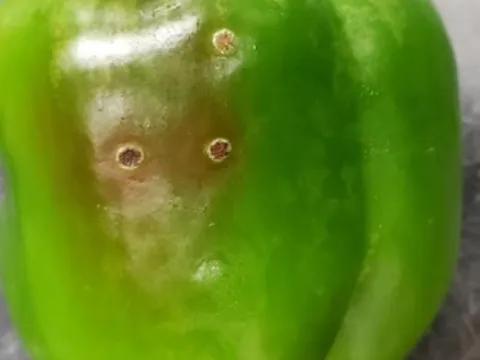
Fruit symptoms are particularly damaging: they manifest as small, raised, scab-like spots. As they grow, these lesions turn dark brown, become sunken and crusty, ruining the fruit's aesthetic and commercial value.
Under conditions of high relative humidity, a bacterial ooze may be visible on the surface of the lesions. This ooze serves as an inoculum source for secondary infections during the growing season.
- Water-soaked spots turning dark and necrotic.
- Yellowing and premature abscission of leaves.
- Raised, corky scabs on the fruit surface.
- Dark cankers on stems and leaf stalks.
- Stunted growth and overall plant decline.
The disease thrives in warm and humid environments. An optimal temperature range for the pathogen is between 25 and 30 degrees Celsius, with high humidity (above 80%) being a critical factor.
Rainy weather combined with wind is the primary driver of field-scale outbreaks, as splashing water carries the bacteria from infected plant debris or lower leaves to the healthy foliage above.
In greenhouses, poor ventilation and high humidity levels facilitate the rapid spread of the bacteria. Condensation dripping from the ceiling onto the canopy is a major source of transmission.
Inadequate spacing of plants prevents proper airflow, creating a localized humid microclimate. This humidity is essential for the bacteria to navigate the leaf surface and successfully infect the plant.
Extended periods of leaf wetness are essential for the initiation of infection. If the foliage stays wet for long durations, the probability of an epidemic increases significantly.
The primary economic impact is the direct loss of yield. Marketable yields can be reduced by 50 percent or more in severe cases, as damaged fruit is unsuitable for fresh market sales.
Defoliation caused by the infection reduces the plant's photosynthetic capacity. This leads to weakened plants, smaller fruit size, and poor quality produce that lacks sugar and nutritional density.
Bacterial spot weakens the plant's natural resistance, making it more vulnerable to opportunistic fungal pathogens. This synergy can lead to total crop failure if not managed correctly.
The costs associated with repeated fungicide applications and the labor required for sanitation significantly increase production costs, diminishing the overall profitability of the farm.
Export restrictions and quarantine measures may be imposed in certain regions to prevent the spread of the pathogen, which can disrupt international trade for affected growers.
The most important control strategy is the use of disease-free, certified seeds and seedlings. Treating seeds with hot water or chemical disinfectants can effectively eliminate seed-borne bacteria.
Crop rotation is crucial to prevent the build-up of the pathogen in the soil. A rotation interval of at least three years with non-solanaceous crops is highly recommended to starve the bacteria.
Copper-based bactericides remain the standard chemical control. Regular preventive sprays can create a protective barrier on the plant tissue to inhibit bacterial entry during the season.
Good sanitation practices, such as removing and burying or burning crop residues, help reduce the primary inoculum load. Tools used for pruning should be disinfected between plants.
Modern management also includes using drip irrigation rather than overhead sprinklers to keep the foliage dry, combined with optimized greenhouse climate control to minimize humidity.