
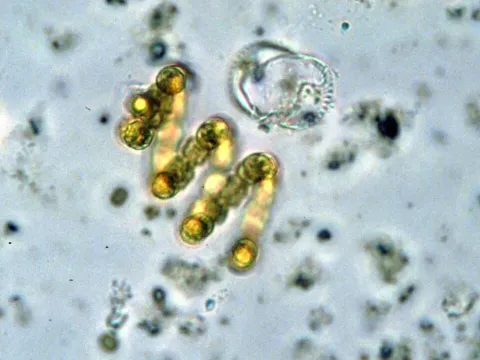
Synechococcaceae
Synechococcaceae
Synechococcaceae are a family of unicellular cyanobacteria that can colonize surfaces in agricultural settings, particularly in hydroponics and greenhouses.
What the section contains
Synechococcaceae
Although not classic plant pathogens, they act as environmental stressors that disrupt the normal physiological processes of plants by forming dense biofilms.
These organisms are photoautotrophic, meaning they thrive in environments with sufficient light, moisture, and high nutrient concentrations.
They do not invade plant tissue directly but create a physical barrier on leaves and stems, which hinders gas exchange and transpiration.
Their dissemination is typically linked to contaminated water sources, irrigation equipment, and poor sanitation practices within the growing facility.
The primary symptom of their presence is the formation of a slimy, blue-green or dark-green film on leaves, stems, or the surface of growing media.
In hydroponic systems, the nutrient solution may turn noticeably green or cloudy, indicating a significant proliferation of the cyanobacterial population.
Plants affected by these organisms often show signs of stunted growth, leaf yellowing, and an overall lack of vigor due to impaired metabolic functions.
Clogging of irrigation emitters, tubes, and filters by slimy deposits is a frequent operational issue associated with the presence of Synechococcaceae.
- Development of slippery deposits on greenhouse equipment.
- Inhibited photosynthesis leading to chlorosis.
- Formation of green biofilms in nutrient reservoirs.
Proliferation is highly favored by exposure to direct sunlight, which is necessary for cyanobacteria to undergo photosynthesis and multiply rapidly.
High nutrient availability, especially nitrates and phosphates in irrigation water, provides the optimal chemical environment for exponential growth.
Temperatures ranging from 20°C to 30°C create a suitable environment for the physiological activity of these cyanobacteria, leading to outbreaks.
Poor circulation of air and persistent surface moisture create zones where the organisms can firmly attach and grow on plant tissues.
Lack of systematic cleaning of reservoirs and water lines allows for the buildup of biomass that eventually colonizes the entire growing system.
The accumulation of cyanobacterial films on leaves prevents adequate sunlight penetration and gas exchange, reducing the overall photosynthetic efficiency.
In the root zone, the rapid growth of Synechococcaceae consumes dissolved oxygen, increasing the risk of root rot and hypoxia for the host plants.
The release of secondary metabolites can potentially affect root development, creating an allelopathic pressure on young or sensitive plant crops.
Economic losses occur due to clogged irrigation infrastructure, requiring frequent maintenance and replacement of sensitive equipment.
Furthermore, these films provide a suitable environment for the subsequent colonization by true pathogenic fungi and opportunistic bacteria.
The most effective strategy is the total light-proofing of water reservoirs and nutrient tanks to starve the cyanobacteria of necessary light energy.
Regular implementation of disinfection protocols for the entire irrigation system using hydrogen peroxide or approved algaecides is essential.
Installing UV sterilization units in the water supply line can effectively neutralize the cyanobacteria before they reach the plant root zones.
Optimizing greenhouse ventilation to reduce air humidity helps in keeping plant surfaces dry and resistant to the attachment of cyanobacterial cells.
Routine monitoring of nutrient solution parameters and prompt cleaning of any green surface deposits prevent small outbreaks from becoming widespread.