
Swine erysipelas
Erysipelothrix rhusiopathiae
The causative agent of swine erysipelas is Erysipelothrix rhusiopathiae, a gram-positive, non-spore-forming, rod-shaped bacterium with high environmental resistance.
What the section contains
Swine erysipelas
This pathogen can survive for extended periods in soil, manure, and water, making it a persistent threat in various agricultural environments worldwide.
The bacteria exhibit significant resistance to drying and can thrive in diverse conditions, which complicates the cleaning and disinfection processes in livestock facilities.
Erysipelothrix rhusiopathiae is known to colonize the tonsils and lymphatic tissues of carrier animals, which can act as silent sources of infection within a herd.
It is important to note that this bacterium is zoonotic, meaning it can infect humans, so strict adherence to hygiene protocols is necessary during farm operations.
The clinical manifestations of the disease vary based on the form, ranging from acute septicemia to chronic joint and cardiac involvement in affected pigs.
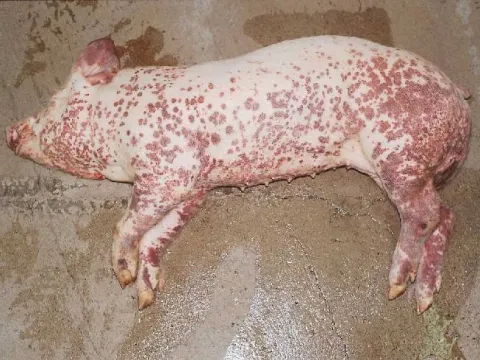
Acute forms are characterized by high fever, loss of appetite, depression, and the sudden appearance of characteristic skin lesions known as diamond skin disease.
These skin lesions typically present as red, square, or diamond-shaped patches that may eventually turn dark and necrotic, leading to the formation of scabs.
Subacute and chronic cases are often associated with arthritis, causing swollen and painful joints, as well as valvular endocarditis leading to heart failure.
Animals with chronic forms of the disease may appear stunted, lethargic, and show signs of poor physical condition despite having overcome the initial infection.
Outbreaks of swine erysipelas are most commonly associated with warm and humid weather conditions, which favor the proliferation of the bacteria.
Transmission occurs through the ingestion of contaminated feed, water, or contact with the feces and secretions of infected carrier animals within the facility.
Poor sanitation, high stocking density, and inadequate ventilation in pig housing create an environment that facilitates the rapid spread of the pathogen.
Environmental stress factors, such as transport, sudden temperature changes, or nutritional deficiencies, can trigger clinical disease in asymptomatic carriers.
The introduction of new animals into a herd without adequate quarantine measures is a major risk factor for the entry and spread of the infection.
The economic impact of swine erysipelas is significant due to high mortality rates in unvaccinated herds and the costs associated with prolonged treatment.
Recovered animals often suffer from reduced growth rates and poor feed conversion, which directly affects the profitability of meat production operations.
Chronic arthritis resulting from the disease causes significant lameness, often leading to the early culling of valuable breeding or finishing stock.
Outbreaks frequently lead to government-mandated movement restrictions and quarantines, disrupting supply chains and causing substantial financial losses.
The necessary veterinary interventions, including medications and laboratory diagnostics, add a heavy financial burden to the farm's operating budget.
The most effective strategy for managing swine erysipelas is a rigorous vaccination program for the entire herd, tailored to the specific needs of the farm.
Prompt isolation of any animal showing clinical signs, followed by appropriate antibiotic treatment, is crucial to minimize the spread within the population.
Regular and thorough cleaning of pens using approved disinfectants is necessary to reduce the environmental load of Erysipelothrix rhusiopathiae.
Biosecurity measures, including pest and rodent control, should be implemented to prevent mechanical transmission of the bacteria between different farm areas.
Strict quarantine protocols for all newly introduced animals ensure that potential carriers are identified before they have the chance to infect the existing herd.