
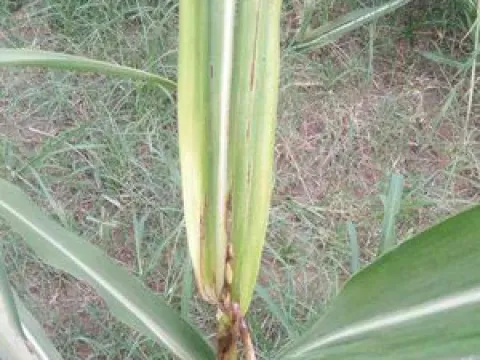
Sugarcane white leaf spot
Sugarcane white
The primary symptom of the disease is the development of narrow, elongated white or yellowish stripes along the leaf blades.
What the section contains
Sugarcane white leaf spot
These stripes often merge as the disease progresses, covering large areas of the leaf surface and causing significant chlorosis.
Minute black dots known as pycnidia, which serve as the fungal fruiting bodies, frequently appear within the bleached leaf lesions.
Severe infections cause the leaves to dry out and die starting from the tips, which significantly weakens the overall plant structure.
Heavily infected fields exhibit a stunted and pale appearance, reflecting the reduced metabolic activity caused by the fungal attack.
The disease is caused by the pathogenic fungus Stagonospora sacchari, which was formerly classified as Phyllosticta sacchari.
The fungus produces spores that are easily disseminated by wind currents and splashing rain during the humid growing season.
It survives in crop debris left on the field after harvest, providing a consistent source of inoculum for subsequent planting cycles.
The fungal mycelium invades leaf tissues by entering through stomata or mechanical wounds on the leaf surface.
Its biological cycle is highly dependent on environmental moisture, which enables the fungus to reproduce and colonize tissues effectively.
High relative humidity and frequent rainfall are the most critical environmental conditions favoring the development of this disease.
Temperatures ranging from 20 to 28 degrees Celsius are optimal for spore germination and rapid mycelial colonization of the leaves.
Poor air circulation within dense sugarcane stands creates a microenvironment that traps moisture, accelerating the spread of the pathogen.
Prolonged foggy periods and heavy dew are also major contributors to the initial outbreaks of white leaf spot on younger plants.
The lack of proper crop rotation and the reuse of infected planting setts contribute to a high disease incidence rate.
The reduction in green leaf surface area limits photosynthesis, leading to lower sucrose accumulation in the sugarcane stalks.
Yield losses are primarily attributed to the decreased weight and quality of the harvest, impacting the sugar extraction efficiency.
Infected plants are physiologically stressed, making them more susceptible to secondary attacks by other pathogens and insect pests.
Industrial processing of diseased cane is more costly due to the reduced sugar content and potential contaminants in the raw material.
Under favorable conditions for the fungus, total crop losses can range significantly, requiring immediate management interventions.
The most effective strategy for managing white leaf spot is the cultivation of resistant or tolerant sugarcane varieties.
Proper agronomic practices, such as maintaining adequate spacing between rows, help improve air circulation and reduce humidity levels.
Sanitation is crucial; all crop residues must be removed or destroyed to eliminate the primary sources of overwintering inoculum.
Application of systemic or contact fungicides may be necessary in high-risk regions or when early signs of infection appear.
- Selection of certified disease-free planting material.
- Improved drainage to prevent water stagnation in the soil.
- Monitoring weather patterns to time preventive measures.