
Swine Erysipelas
Erysipelothricaceae
The causative agent of the disease is the bacterium Erysipelothrix rhusiopathiae, which belongs to the Erysipelotrichaceae family. It is a gram-positive, rod-shaped, non-spore-forming bacterium.
What the section contains
Swine Erysipelas
This pathogen is known for its high environmental stability. It can survive in soil, manure, and water sources for long periods, making it a persistent threat in agricultural environments.
It is important to emphasize that this is a zoonotic pathogen, meaning it poses a significant risk to humans. Human infection, often called erysipeloid, commonly occurs through contact with infected animals or meat products.
The bacteria thrive in warm, humid conditions but are susceptible to standard disinfectants and solar radiation. Proper sanitation and hygiene are essential to disrupt the survival cycle of the pathogen.
Entry into the host usually occurs through skin abrasions, the digestive system via contaminated feed, or respiratory pathways, leading to systemic infection and potential organ damage.
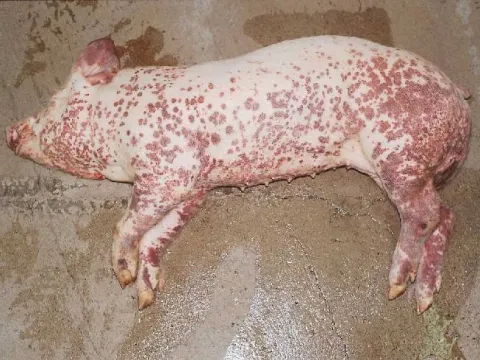
The disease presents in acute, subacute, and chronic forms. The acute form is characterized by a sudden onset, high fever, and significant lethargy in the affected pigs.
A classic diagnostic sign is the appearance of red, diamond-shaped skin lesions. These lesions may become necrotic and slough off in later stages of the disease.
Affected pigs show a complete lack of appetite, constipation, and visible discomfort. They may exhibit an arched back and a stiff gait due to joint inflammation and pain.
In chronic cases, symptoms include arthritis with swollen joints, endocarditis affecting heart function, and skin necrosis. These animals often fail to thrive and remain stunted.
Mortality in untreated acute cases is high, causing rapid losses. Recognizing these symptoms early is critical for initiating treatment and preventing the collapse of the herd's health status.
Outbreaks are most common during summer and autumn when environmental temperatures are optimal for bacterial proliferation. High humidity levels further promote the persistence of the pathogen.
Poor management practices, such as overcrowding and inadequate ventilation, create stress and facilitate the transmission of the bacteria among susceptible animals in the group.
Rodents and insects are common mechanical vectors of the disease. Their presence on a farm drastically increases the likelihood of spreading the infection between different pig pens.
Stressors such as poor nutrition, heat stress, or moving animals to new enclosures weaken the immune system, making pigs significantly more vulnerable to the infection.
Asymptomatic carriers within the herd play a major role in the maintenance of the disease. They shed bacteria continuously, which often leads to recurring outbreaks if left unmanaged.
Swine erysipelas causes significant economic damage to the livestock industry. Financial losses are driven by high mortality rates and the cost of necessary veterinary interventions.
Production efficiency drops sharply, as affected animals stop gaining weight. Furthermore, the restriction on the movement and sale of animals under quarantine causes severe market disruption.
Meat products from infected animals are often condemned during inspection, leading to direct financial losses and potential concerns regarding public health safety.
Long-term care for chronically affected pigs is costly and rarely results in a full return to productivity. These animals are often culled, representing a total loss of investment.
Farm operators must allocate substantial funds for prevention and biosecurity to avoid the catastrophic impacts of an uncontrolled outbreak on their facility.
Regular vaccination is the cornerstone of prevention for swine erysipelas. It is the most reliable way to maintain immunity levels across the entire herd throughout the year.
Strict quarantine and immediate isolation of any symptomatic animals are essential to prevent the spread of bacteria. Early intervention limits the exposure of the healthy population.
Treatment involves the administration of hyperimmune serum and broad-spectrum antibiotics, such as penicillins. Success depends on how quickly these are administered after infection.
Implementing rigorous cleaning and disinfection protocols for housing and equipment is non-negotiable. Regular pest control programs are also required to eliminate potential vectors.
Workers must follow health and safety guidelines, including the use of protective gear, to prevent zoonotic transmission. Proper staff training significantly reduces the risk of human exposure.