
Streptomycosis
Streptomyces griseochromogenes
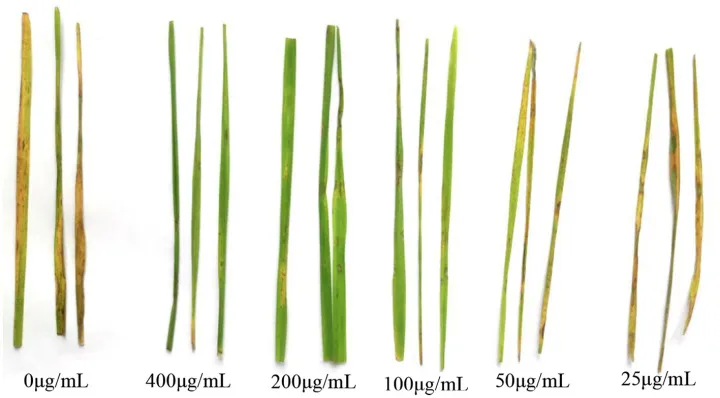
Description
Pathogen
The causal agent of this disease is the soil-borne actinobacterium Streptomyces griseochromogenes. This microorganism belongs to the actinomycetes group and naturally occurs in soil as a saprophyte, but can become parasitic under favorable ecological conditions.
The bacterium produces specific secondary metabolites, including antibiotic compounds, which interfere with the metabolism of plant cells. These toxins suppress vital physiological processes, resulting in tissue necrosis and wilting.
The pathogen persists in plant debris and deep soil layers, demonstrating high resistance to abiotic stress factors. It primarily infects the root system, entering through micro-wounds or natural openings in the plant tissue.
Biologically, Streptomyces griseochromogenes is known as a producer of blasticidin S, making it a critical subject of study in both phytopathology and industrial microbiology.
The infectious process is often characterized by a long incubation phase, which makes early detection and diagnosis in agricultural fields quite difficult.
Conditions for development
The development of the disease is closely tied to soil temperature and moisture levels. Optimal conditions generally include moderate temperatures and soil moisture exceeding 60% of field capacity.
Soil pH is a critical factor: this pathogen prefers neutral to slightly alkaline environments. In acidic soils, the activity of actinomycetes is typically suppressed, which can be leveraged as a natural control strategy.
Continuous cropping of susceptible species contributes to the buildup of the pathogen in the soil, leading to an imbalance in the rhizosphere microflora and favoring the dominance of Streptomyces.
Mechanical damage to roots during agricultural operations, such as cultivation or weeding, significantly increases the risk of infection by providing direct access for the bacteria to the vascular system.
Poor soil organic matter content weakens the competitive ability of beneficial micro-organisms that would otherwise antagonize the pathogen.
Why it matters
The harmfulness of Streptomyces griseochromogenes lies in its ability to inhibit normal plant growth and development, leading to significant yield losses and reduced crop quality.
Damage to the root system results in poor nutrient and water uptake, which manifests as leaf chlorosis and the premature wilting of plant organs.
In tuberous or root crops, the pathogen causes superficial necrosis, roughening, and spotting, which severely degrades the market value and storage stability of the harvest.
Heavy infestation during the seedling stage can cause mass plant mortality, leading to sparse plant stands and a failure to achieve target plant populations.
Economic losses arise not only from reduced total yield but also from increased costs for phytosanitary measures and losses during post-harvest storage.
Protection
The cornerstone of protection is a well-planned crop rotation that includes non-host crops to disrupt the life cycle of the pathogen within the soil.
Liming acidic soils is an effective practice to alter the pH level, making the environment less favorable for the proliferation of these specific actinomycetes.
The application of biological control agents based on antagonistic bacteria, such as Bacillus subtilis, helps to suppress the pathogen population in the rhizosphere and boosts systemic plant immunity.
Cultural practices should focus on minimizing root damage and ensuring an optimal nutritional balance, which reduces the overall susceptibility of crops to infections.
- Selection of resistant plant varieties.
- Deep incorporation of infected crop debris.
- Disinfection of farming equipment.
- Balanced application of micro-fertilizers.
Discussion
No discussions yet — be the first.