
Streptomycosis
Streptomyces galilaeus
The causal agent of this disease is the soil-borne bacterium Streptomyces galilaeus, which belongs to the order Actinomycetales. These microorganisms possess a mycelial structure, often leading to them being misidentified as fungi in traditional diagnostic settings.
What the section contains
Streptomycosis
These bacteria typically exist as saprophytes in the soil, decomposing organic matter. However, under specific environmental conditions, they shift to a pathogenic lifestyle, attacking the roots and tubers of various cultivated plants.
The infection process begins when bacteria colonize the surface of host tissues, often entering through lenticels, small wounds, or cracks in the skin of tubers. They secrete specific enzymes that break down plant cell walls, causing localized necrosis.
Streptomyces galilaeus is characterized by its exceptional resilience. It can form spores that survive adverse environmental conditions, including drought and cold, persisting in the soil profile for several years without a host.
Classified as a bacterial infection, it specifically targets underground plant organs. Its distribution pattern within a field is usually localized, heavily influenced by the physical and chemical properties of the soil at the site of cultivation.
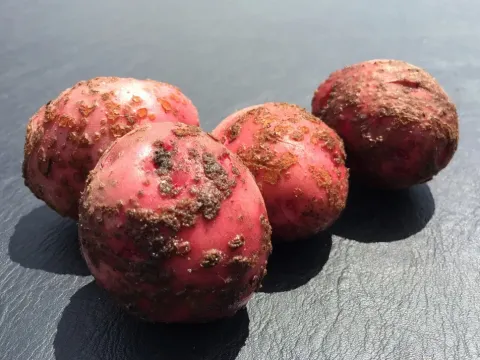
The primary symptom of streptomycosis is the development of superficial, necrotic lesions on the surface of tubers or root crops. These lesions often present as scab-like patches that can be brown or dark in color.
As the disease progresses, these lesions expand and may merge, creating large, irregular areas of damaged tissue. In some plant species, the skin surrounding the infection site becomes corky and cracked, reducing the aesthetic quality of the crop.
Above-ground, infected plants often exhibit signs of physiological distress. Leaves may turn chlorotic, and the overall plant vigor is reduced, as the damaged root system struggles to provide adequate nutrition and water to the canopy.
A closer inspection of the root system often reveals the decay of secondary and tertiary feeder roots. This prevents efficient nutrient uptake, leaving the plant vulnerable to environmental stresses and secondary pathogens.
- Development of necrotic scab-like lesions
- Corky appearance of the tuber epidermis
- Cracking and splitting of the outer tissue
- Reduced plant growth and overall vitality
The disease thrives in alkaline soils, particularly those with a pH above 7.0. In such environments, the activity of Streptomyces galilaeus is enhanced, making crops significantly more susceptible to infection.
Optimal temperature for the development of this pathogen ranges from +20 to +25 degrees Celsius. This range typically coincides with the tuberization or root-bulking phase, making it a critical window for crop protection.
Low soil moisture levels in sandy or light-textured soils promote the spread of the disease. Well-aerated soils with high oxygen content are preferred by these bacteria, facilitating their movement and colonization.
The application of fresh, uncomposted manure is a major contributing factor to the incidence of streptomycosis. High organic load in the soil creates a nutrient-rich environment that supports massive bacterial proliferation.
The pathogen is spread primarily through contaminated seed stock and the movement of soil via agricultural machinery. Continuous cropping of susceptible species on the same field leads to the progressive accumulation of the infectious load.
The main impact of streptomycosis is the severe degradation of crop quality. The superficial damage renders tubers and root crops unattractive, leading to significant commercial losses as the produce is rejected by markets.
Infected crops exhibit increased transpiration and water loss, leading to rapid shriveling during storage. Furthermore, the lesions serve as entry points for soft-rot bacteria and other opportunistic fungi, causing substantial decay in storage facilities.
Yield reduction occurs not only due to the quality loss but also due to inhibited plant metabolism. Significant portions of the potential harvest may be lost if the infection levels are high during the critical growth phases.
The presence of the pathogen imposes long-term constraints on land use. Fields heavily infested with Streptomyces galilaeus may require several years of rest or non-host crop cycles to restore soil health.
Economic damage is exacerbated by the high costs of soil sanitation and the need for rigorous testing of seed stock. Farmers may face increased expenses in protective measures and potential loss of historical productivity on certain plots.
Implementing a proper crop rotation system is the most effective cultural control measure. Rotating susceptible crops with cereals or specific green manure crops helps to reduce the pathogen population in the soil.
Managing soil pH is vital for prevention. The use of physiologically acid fertilizers can help lower the soil pH to levels that are inhibitory to the development of Streptomyces galilaeus.
The use of certified, disease-free planting material is essential to prevent the introduction of the pathogen into clean fields. Seed treatment with appropriate bactericides or fungicides prior to planting is a standard protective step.
Maintaining optimal soil moisture during the growing season is crucial. Adequate irrigation during dry spells prevents the soil from becoming overly dry and aerated, thereby limiting the niche for the bacteria to flourish.
Sanitation practices should be strictly observed, including the cleaning of machinery and tools between different field sites. Avoiding the use of fresh, uncomposted organic fertilizers is also a key recommendation for maintaining healthy soil biology.