
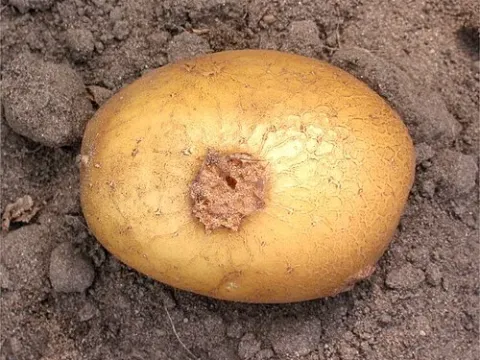
Streptomyces scab
Streptomyces netropsis
The causative agent of this disease is the actinomycete bacterium Streptomyces netropsis, which is characterized by a mycelial growth form similar to fungi.
What the section contains
Streptomyces scab
It is a saprophytic organism in the soil that can switch to a pathogenic mode, infecting the tubers of various crops, particularly potatoes.
These bacteria possess a high capacity for survival in soil environments, remaining dormant for extended periods in the absence of a host.
The organism thrives on organic matter, which explains why the incorporation of fresh manure often triggers outbreaks of the disease.
Colonization begins when the bacteria gain entry through lenticels or small mechanical wounds on the skin of developing tubers.
Symptoms appear as localized lesions, scabs, or corky outgrowths on the surface of the tubers, varying in size and severity.
Early signs often look like shallow, slightly raised, or depressed spots that may darken as the lesion matures.
The skin in affected areas becomes rough and loses its natural texture, often showing a cracked or "scabby" appearance.
In severe cases, the lesions coalesce to cover large portions of the tuber, significantly damaging the external appearance.
The underlying flesh typically remains healthy, but the structural integrity and marketability of the tuber are severely compromised.
Development is most aggressive in soils with a neutral to alkaline pH level, as the bacteria are inhibited in more acidic environments.
Optimal temperatures for the activity of Streptomyces netropsis range between 20°C and 25°C, corresponding with the tuber bulking phase.
Soil moisture plays a critical role; dry soil conditions during the early stages of tuber development significantly increase the disease incidence.
High levels of soil aeration combined with warm temperatures create an ideal environment for the proliferation of the pathogen.
The repeated cultivation of host crops in the same soil without adequate rotation leads to the accumulation of the bacterial population.
The primary economic impact is the loss of commercial grade, as scabby potatoes are rejected for high-value fresh market sale.
The appearance of the tubers makes them unacceptable for consumers, leading to high sorting costs and significant post-harvest losses.
Open lesions provide entry points for secondary pathogens like soft rot bacteria and various fungi during winter storage.
Starch content and overall nutritional quality may be indirectly affected by the poor physiological health of the infected tubers.
Farmers face reduced profitability due to lower marketable yields and the potential for long-term contamination of their fields.
Crop rotation with acid-loving or acidifying cover crops is a highly recommended strategy to lower soil pH below the pathogen's tolerance range.
Avoid heavy liming of fields shortly before planting potatoes to keep the soil environment unfavorable for actinomycetes.
Selection of resistant potato varieties is the cornerstone of an integrated pest management program for controlling this disease.
Ensure the use of high-quality, disease-free seed tubers and treat them with appropriate biological or chemical agents before planting.
Proper water management, especially ensuring adequate irrigation during the tuber formation stage, helps to suppress infection significantly.