
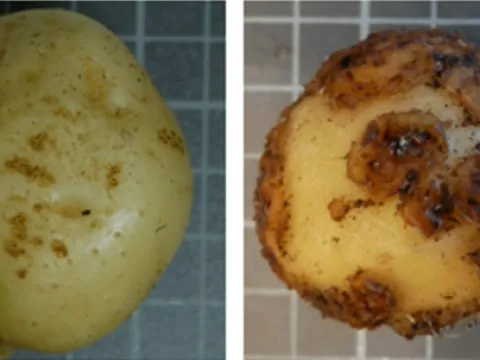
Streptomycosis
Streptomyces albireticuli
The causative agent of this disease is the soil-borne actinomycete bacterium Streptomyces albireticuli. This microorganism is well-known for its ability to persist in the soil environment for extended periods as spores or mycelium fragments.
What the section contains
Streptomycosis
Unlike true fungi, this pathogen is a Gram-positive bacterium that thrives in the topsoil. It decomposes organic matter but can become parasitic when environmental conditions and host plant susceptibility align.
The bacterium infects plants primarily through the root system or small mechanical wounds in the stem tissue. Once inside, it utilizes specific enzymatic pathways to break down plant cell walls to secure nutrients.
Inside the vascular system, the pathogen spreads rapidly, causing systematic blockages. This disruption of nutrient and water flow leads to the characteristic wilting and chlorosis symptoms seen in infected plants.
The biological resilience of this species allows it to survive in various soil types. It is particularly effective at dormant phase transition, which makes the pathogen a persistent threat in agricultural fields.
The primary symptom of streptomycosis is the development of necrotic spots on foliage, often bordered by a yellow halo. These lesions progressively grow and may cause premature leaf drop.
Infections targeting the roots and root collar lead to severe rot. As the root system deteriorates, plants show classic signs of water stress, including wilting during the hottest parts of the day, even if soil moisture is sufficient.
Vascular browning is a critical diagnostic feature. If an infected stem is cross-cut, the internal tissue will exhibit a discolored appearance, indicating the bacterial infection within the xylem and phloem.
Under high humidity conditions, a sparse, grayish bacterial exudate may form on the surface of infected tissues. This is a common feature of severe bacterial colonization and helps distinguish it from fungal infections.
If left unchecked, the disease leads to total plant collapse. The tissue becomes soft and eventually desiccates, resulting in significant yield loss and the death of the plant during the vegetative cycle.
High soil moisture is the most significant factor in the development of streptomycosis. Excessive watering or poor drainage creates a favorable microenvironment for the rapid growth of the bacterial population.
Optimal temperatures for the activity of Streptomyces albireticuli are between 22°C and 28°C. During these thermal conditions, the pathogen is most virulent and actively spreads between plants.
Poor aeration of the soil contributes to the disease pressure. Compacted soils that prevent air circulation increase the likelihood of roots being damaged by anaerobic conditions, thereby becoming easier targets for bacteria.
The presence of uncomposted plant debris provides an abundant food source for the pathogen. Fields with poor sanitation practices often show a high prevalence of the disease year after year.
Neutral or slightly alkaline pH levels in the soil can further encourage the colonization of the bacterium, making liming practices a factor that needs careful monitoring in fields prone to this disease.
The economic impact of streptomycosis is high due to the reduction in both quantity and quality of the harvest. Crops infected by this pathogen show stunted growth and poor fruit development.
Post-harvest losses are a significant concern. Produce harvested from infected fields often develops soft rot during storage, leading to complete economic loss for the farmer.
Plants affected by the disease are significantly more vulnerable to secondary infections from other pathogens. This creates a cascade effect where the initial bacterial stress leads to a total crop failure.
The difficulty of treating a bacterial infection in the soil makes management costs high. Farmers must rely on specialized bactericides or long-term crop rotation, which impacts land use flexibility.
In severe cases, the disease can wipe out entire plantings, requiring replanting and additional labor costs. This instability is a major risk for producers of sensitive vegetable and root crops.
The cornerstone of management is a robust crop rotation scheme. Avoid planting sensitive host crops in fields with a history of the disease for at least 4 to 5 years to break the infection cycle.
Improving soil structure is essential. Proper drainage and aeration reduce the humidity levels that favor the bacterium, while deep tillage helps to bury and decompose infected plant materials.
The use of biological control agents, such as beneficial bacteria that act as antagonists to Streptomyces, can be highly effective when applied to the soil before planting.
Pest management is also vital. Since root-feeding insects create entry points for the pathogen, keeping these populations low significantly reduces the probability of a streptomycosis outbreak.
- Utilize resistant or tolerant crop varieties.
- Practice strict sanitation by removing crop residues.
- Maintain balanced fertilization to avoid excessive nutrient stress.
- Apply specialized bacterial control agents during high-risk seasons.